
Blogs Are Back - Discover and Follow Independent Blogs
Blogs Are Back,
2026/02/25

This is yet another RSS reader (YARR) that I'm mentioning here for a few reasons. One is the beautiful design, which shows what people can do these days. Another is the way feed data is stored locally (with an option to sync) which is how I built my own (comparatively very ugly reader). And third was the use of Turbopack, "an incremental bundler optimized for JavaScript and TypeScript, written in Rust, and built into Next.js", which should serve as a reminder of how much web infrastructure is available to people now that they can use AI without spending years (literally!) learning how to make it work.
Web: [Direct Link] [This Post][Share]
A Complete Guide to Bookmarklets
CSS-Tricks,
2026/02/25
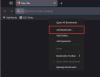
I use a few bookmarklets I have written myself as part of my newsletter workflow. One sends items to Pinboard to read later. Another (which I am using as I type this) provides a direct way for me to write these posts right from the article I'm reading in my browser. This article is, as the title suggests, a guide to bookmarklets. This article discusses bookmarklets that change the style of the web page by altering the cascading style sheet (CSS). There are also some links to cool bookmarklets, like this set of web development bookmarklets.
Web: [Direct Link] [This Post][Share]
New Coursera report shows that 95% of students and educators are using AI on campus - but only a quarter of educators worldwide feel prepared to use it effectively
Jack Moran,
Coursera Blog,
2026/02/25
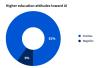
I've mentioned this before but as things get increasingly fluid using 'students' as your survey population may become increasingly misleading. I think that's partially the case here. In addition to the generally positive remarks about AI (95% are using AI tools) we read, "students report that AI is enhancing their learning - rather than replacing traditional study methods." That's exactly what you would expect to hear from students, Properly So-Called. They are uniquely those people who have been able to access and succeed in higher education institutions. But what about the rest of the world? The report (30 page PDF) is behind a spamwall but you can access it without filling out the form here.
Web: [Direct Link] [This Post][Share]
Bridging technical and emotional skill gaps: AI-enhanced adaptive learning and emotional intelligence in project management education
Kristen Karmazinuk, Jim Helik,
Research in Learning Technology,
2026/02/25
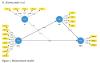
According to this article (20 page PDF), "AI-enhanced features, such as real-time feedback, simulations, and reflective prompts, enhance understanding of project management concepts while fostering EI capacities such as empathy, collaboration, and conflict resolution." The mixed methods study is based on an online survey with 152 responses collected. Some interesting observations about personalization: "Meaningful personalisation depended on user input. While adaptive tools can tailor content, their effectiveness hinges on learner engagement. As one participant observed, 'Personalization? It's about how you prompt it. If you're vague, you get vague'... Participants noted that precise, iterative input was essential for meaningful, context-sensitive feedback."
Web: [Direct Link] [This Post][Share]
The Future of Computational Social Science
David Lazer, Katherine Ognyanova,
2026/02/25
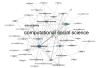
This is from a couple of years ago and published behind a paywall so I didn't get to see it until a search unearthed an open access PDF. The concept has been around for a while, at least since Lazar's 2009 article, and probably longer. It describes social science in terms of massive data sets, agent-based simulations, digital records of human behavior, connections and networks, data text analysis, new modalities (audio, video, images, GIS, sensors), and archival data. It is understood theoretically as a process of mapping signals and known constructs to each other, though I think there's room for new approaches here. Good article, clearly written and accessible. 31 page PDF. See Katherine Ognyanova's website for a lot more related work. Also see Lazer Lab, "based on the idea that how people and organizations are connected together is critical to understanding the functioning, success and failure of actors and systems."
Web: [Direct Link] [This Post][Share]
There are many ways to read OLDaily; pick whatever works best for you:
- Read in your web browser on this web page, updated weekdays
- Receive a daily or weekly email newsletter by subscribing here
- Subscribe to the RSS feed using your favourite feed reader
- Follow @OLDaily@mastodon.social on Mastodon or elsewhere in the fediverse
- Follow @OLDaily on Bluesky
- Read OLDaily as a LinkedIn Newsletter
- Integrate the open API using the JSON feed
This newsletter is sent only at the request of subscribers. If you would like to unsubscribe, Click here.
Know a friend who might enjoy this newsletter? Feel free to forward OLDaily to your colleagues. If you received this issue from a friend and would like a free subscription of your own, you can join our mailing list. Click here to subscribe.
Copyright 2026 Stephen Downes Contact: stephen@downes.ca
This work is licensed under a Creative Commons License.