
Building Europe’s Public AI Stack
Felix Sieker,
reframe[Tech],
2026/01/26
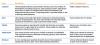
There's a lot of discussion happening in the European Union about how to respond to what is emerging as a dependency on foreign infrastructure (most notably from the U.S.) in AI. "If Europe is vulnerable because it rents key infrastructure from American giants, then the answer must be to grow some giants of its own. It's part of the motive behind EuroStack." I'm not sure how this will evolve in practice, but there seems to be a consensus around something like a 'public stack' (12 page PDF) (which includes a Diamond ERA of open access knowledge resources). "The key question is not whether Europe can win an abstract 'AI race', but what kind of AI infrastructure it wants to rely on – and who that infrastructure should serve." This takes form in some of the practical advice being offered to ministries and schools. "Focus on four practical ideas. First, portability... visible queue service-level agreements and commitments so coursework runs when needed. Third, energy awareness... Finally, transparent data governance: a Gaia-X style labeling system can show whether a tool keeps student data in-region, supports audits by data protection officers, and manages copyrighted material appropriately."
Web: [Direct Link] [This Post][Share]
Higher education and AI in late 2025/early 2026
Bryan Alexander,
2026/01/26

This is an interesting scan of what's happening in U.S. higher education with respect to artificial intelligence. There are some specific examples, such as Purdue's new requirement that "all students will need to achieve 'AI working competency'", Wayne State's launch of an Institute for AI and DAta Science (AIDAS), Udemy's new AI-supported model, and more like this. Then there are the overviews, which Bryan Alexander summarizes as follows: "We are still seeing a wide range of academic uses across the curriculum, at multiple scales (single student up to entire university), a lot of collaborative projects. The deep divide over AI within the academy persists." Worryingly, "The Chronicle survey and Bogost's essay depict colleges and universities as institutions, and academic workers as individuals, struggling to keep up and respond well to the challenge."
Web: [Direct Link] [This Post][Share]
Dr. Lahana’s Multimodal Makerspace: A Reality Check for the “Laptops Broke Kids” Narrative
Lisa Nielsen,
The Innovative Educator,
2026/01/26

Lisa Nielsen is on point with this argument, I think. "We need to be honest," she writes. "students do not need less technology. They need better learning." The argument has two parts. The first part is an illustration of what students can do with technology, offering the example provided by Lou Lahana's makerspace at The Island School in Manhattan. Read more here. The second part offers an alternative explanation for perceived declines in student performance. "I wrote about this directly in: Laptops Did Not Take Away Their Brains. The School Model Did. She adds, "Inequitable access to effective models of learning is the real divide. The gap is not who gets devices. The gap is who gets powerful learning experiences where technology is used to research, create, build, iterate, publish, and act, and who gets drill and test prep, whether on paper or on a screen."
Web: [Direct Link] [This Post][Share]
Teaching Learners for the Long Tail of Time
Ted Curran,
Ted Curran.net,
2026/01/26

In these days of artificial intelligence, writes Ted Curran, "it's even more important to have a private repository of knowledge you trust under your own personal control." Unsurprisingly, I agree. "Rather than being trained on a vast dataset of random sites across the web, you can train a model based only on your own writing and personal documents that you've saved in a specific repository. This enables you to reap the benefits of AI chatbots while limiting the focus to only the documents you're interested in." That's similar to what I would like to do with my own work from over the years.
Web: [Direct Link] [This Post][Share]
Unreasonable Effectiveness
Eryk Salvaggio,
Cybernetic Forests,
2026/01/26

This was a fun read, as considers the implications of Gary Lupyan and Blaise Agüera y Arcas's paper The unreasonable effectiveness of pattern matching in which they describe "an astonishing ability of large language models (LLMs) to make sense of 'Jabberwocky' language in which most or all content words have been randomly replaced by nonsense strings." The upshot (in my own words) is that LLMs are finding indicators of meaning we didn't know were there (but probably used intuitively to understand sentences). "You can write garbage, and the structure of the garbage will still infer a kind of meaning."
Web: [Direct Link] [This Post][Share]
Unexpected Link Back Trail to David Warlick
Alan Levine,
CogDogBlog,
2026/01/26

Alan Levine follows a trail of memories through the web and finds himself at David Warlick. For those who don't remember, "he was a pivotal influence in the early blog/ed tech years, when so many of the ideas flowed back and forth from K-12 to higher educators and back." I too remember David Warlick and covered a number of his posts here. Like Alan I wish him well, though you'll read that it's getting to that time of life for all of us...
Web: [Direct Link] [This Post][Share]
LLM Cultural Censorship Is Corporate Risk Management
Steve Hargadon,
2026/01/26

In seventeen well-crafted (and likely 'output shaped') paragraphs Steve Hargadon argues that "the cultural censorship embedded in LLMs is not a failed attempt at universal ethics. It is institutional risk management, expressed in the cultural and legal language of the institution's home jurisdiction." This statement, too, depends on one's point of view. There's no doubt that at least some people working on this topic believe they are doing ethics; for others (as I have argued elsewhere) they are pursuing a political agenda, and no doubt there are many, as Hargadon suggests, engaged in institutional risk management. Image: Steve Hargadon.
Web: [Direct Link] [This Post][Share]
Vimeo Lays Off 'Most' of Its Staff, Allegedly Includes 'the Entire Video Team'
Bruce Gil,
Gizmodo,
2026/01/26

If you have videos on Vimeo, get them off now. "Employees reported major job cuts this week, just months after the video hosting site was bought by Bending Spoons... a former Vimeo staffer also posted on X that "almost everyone at Vimeo was laid off," including the entire video team." While YouTube is probably a good landing sport for now, you may want to consider federated hosting sites such as Peertube.
Web: [Direct Link] [This Post][Share]
There are many ways to read OLDaily; pick whatever works best for you:
- Read in your web browser on this web page, updated weekdays
- Receive a daily or weekly email newsletter by subscribing here
- Subscribe to the RSS feed using your favourite feed reader
- Follow @OLDaily@mastodon.social on Mastodon or elsewhere in the fediverse
- Follow @OLDaily on Bluesky
- Read OLDaily as a LinkedIn Newsletter
- Integrate the open API using the JSON feed
This newsletter is sent only at the request of subscribers. If you would like to unsubscribe, Click here.
Know a friend who might enjoy this newsletter? Feel free to forward OLDaily to your colleagues. If you received this issue from a friend and would like a free subscription of your own, you can join our mailing list. Click here to subscribe.
Copyright 2026 Stephen Downes Contact: stephen@downes.ca
This work is licensed under a Creative Commons License.