
Working Towards Ethical Engagement of GenAI in Higher Education: Insights and Recommendations for Post-Secondary Educators
Ki Wight, Leah Burns, Mia Portelance,
BCcampus,
2026/01/12

This isn't a bad article as these articles go, so I hope the authors forgive me for using it as a stalking horse for some of my ongoing complaints about articles dealing with ethics and AI. First of these is the almost near-universal focus on 'issues' and 'concerns' and general attitude of making sure Nothing Bad Happens. That's not what ethics is; the lawyers have robbed us of our spirit. Second is the generic nature of the recommendations. You could substitute almost anything for 'AI' and get the same recommendations. Eg., "Provide clear instructions and methods for using emojis as part of the creative or communication process." Or "Integrate critical emoji and media literacy skills into course design." An article on 'AI ethics' should focus on what's unique about AI, and not just be a stand-in for all our previous thoughts about ethics.
Web: [Direct Link] [This Post][Share]
The University, the Chatbot, and a Call for a New Mission for Higher Education
Tanya Gamby, David Kil, Rachel Koblic, Paul LeBlanc, Mihnea Moldoveanu, George Siemens,
EDUCAUSE Review,
2026/01/12

The authors write, "In an age when information is overwhelmingly abundant and AI can perform most of the cognitive heavy lifting—from computation to writing—more efficiently than any person, the transmission of knowledge is no longer the defining advantage of colleges and universities; it is their greatest vulnerability if it remains the central mission of their work." It's hard to dispute this. But is this the right response? "Higher education institutions must move beyond simply transmitting knowledge and instead prioritize holistic human development, integrating mental health, social-emotional learning, and ethical reasoning into academic structures to prepare students for meaningful lives and responsible citizenship." Just switching from one kind of content to another kind of content doesn't really respond to the crisis.
Web: [Direct Link] [This Post][Share]
Frankie Egan: Brains Blog precis of Deflating Mental Representation
Frances Egan,
The Brains Blog,
2026/01/12

This is a precis of Deflating Mental Representation, which is unfortunately behind a paywall on MIT Press. That said, this short article gives us a good sense of what I think is really the right way to think of (what people call) mental representations. There are three major elements: first, we should not suppose there is a special relationship between the brain (or mental) state and what the representation is about; second, the same mental state may have different 'content', or none at all; and third, we attribute 'content' to mental states for purely pragmatic purposes. In other words, we can talk about mental states as though they represent the real world, but we should make the mistake of actually asserting that. It's just a gloss (see the comment on the meanings of 'gloss'). Though credited to Dan Burnston on the blog post, I'm going to assume this is written by Frances (Frankie) Egan.
Web: [Direct Link] [This Post][Share]
Evolving Education: A Manifesto to Reimagine Higher Education
Juliana Gonçalves, Trivik Verma, Jing Spaaij,
TU Delft,
2026/01/12
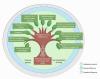
This is a book (354 page PDF) of manifestos written individually or collectively by participants involved in a workshop held at TU Delft in which academics, educators, students, and alumni reflected the concept of "open education". The authors are writing from an engineering, architectural and urbanist perspective and produced a wide range of visions. But there are themes that frequently recur. For example, Mehmet Ali Gasseloglu and S. Zeynep Yılmaz Kılıç argue "Education should... be structured as a dynamic, reciprocal process of inquiry and engagement, one that empowers students as co-producers of knowledge." Juri Mets and Erna Engelbrecht argue that "Educational innovation must move beyond traditional, linear models of learning and assessment to prioritize deep intellectual engagement and complex problem-solving." And Wander M. van Baalen, Thijs Heijmeskamp, and Steven Flipse argue "as transdisciplinary discourse continuously teaches us, this work is not something that should, or even can be done in isolation. It is about a recognition of the interdependencies of various issues in the world." Image: Juliette Cortes-Arevalo and Camilo Benitez-Avila. Via Olga Ioannou.
Web: [Direct Link] [This Post][Share]
I saw someone gatekeep their "SEO Blog System" behind a paywall… so I built my own (and it’s better)
AI With Sohail, Reddit,
2026/01/12
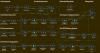
As usual with Reddit, ignore the comments and focus on the main post. As for the main post, it's less important to understand in detail than to think about the sort of thing it entails. What it is is a description of a search-engine optimized (SEO) content development and publication system to generate what amounts to an AI-authored blog. It uses an application called n8n to connect various services that handle things like keyword suggestions (for content ideas), Perplexity and Wikipedia research (for content), content authoring, image generation (with Nano Banana) and publication. According to the author, the total cost is roughly $50/month for 12-20 Articles. Sure, we can (and should) criticize the pollution of the blogosphere, and it points to the importance of cultivating a curated list of sources, but what if it's generating better content than you are? What then?
Web: [Direct Link] [This Post][Share]
Under the Hood: Universal Commerce Protocol
Amit Handa, Ashish Gupta,
Google for Developers,
2026/01/12
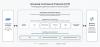
I can see the benefit the Universal Commerce Protocol (UCP), but the smarmy tone of this announcement turns me off. "By establishing a common language and functional primitives, UCP enables seamless commerce journeys between consumer surfaces, businesses, and payment providers." Ick. Anyhow, the intent of the standard is to support AI agents through a process of discovery, shopping cat, authentication (euphemistically called 'identity linking'), checkout (ie., credit card transactions), and order (which presumably includes fulfillment). It was developed by Shopify, Etsy, Wayfair, Target, and Walmart and endorsed by companies like Adyen, American Express, Best Buy, Flipkart, Macy's Inc, Mastercard, Stripe, The Home Depot, Visa, Zalando and many more.
Web: [Direct Link] [This Post][Share]
Killed, Not Starved: Deliberate Neglect of the OERF a Failure of Institutional Duty to Open Education
Wayne Mackintosh,
Open Education NZ,
2026/01/12

Wayne Mackintosh talks in detail about the events that let to the shuttering of the Open Educational Resources Foundation by 'the shareholder', specifically, Te Pūkenga (New Zealand Institute of Skills and Technology). Mackintosh is remarkably restrained throughout, focusing on facts of the matter, and not speculating at all about why Te Pūkenga would have rescinded the 'letter of comfort' or failed to renew board memberships. Though OERF was in fact self-sustaining, it was prevented from raising money to support itself. I'm hoping the global community can find a way to reconstitute OERF. In the meantime, as New Zealand enjoys its summer, I hope the foundation's staff can enjoy a well-earned vacation.
Web: [Direct Link] [This Post][Share]
There are many ways to read OLDaily; pick whatever works best for you:
- Read in your web browser on this web page, updated weekdays
- Receive a daily or weekly email newsletter by subscribing here
- Subscribe to the RSS feed using your favourite feed reader
- Follow @OLDaily@mastodon.social on Mastodon or elsewhere in the fediverse
- Follow @OLDaily on Bluesky
- Read OLDaily as a LinkedIn Newsletter
- Integrate the open API using the JSON feed
This newsletter is sent only at the request of subscribers. If you would like to unsubscribe, Click here.
Know a friend who might enjoy this newsletter? Feel free to forward OLDaily to your colleagues. If you received this issue from a friend and would like a free subscription of your own, you can join our mailing list. Click here to subscribe.
Copyright 2026 Stephen Downes Contact: stephen@downes.ca
This work is licensed under a Creative Commons License.