
When grades stop meaning anything
Kelsey Piper,
The Argument,
2025/11/26

Fill in the blank: 7 + 2 = [_] + 6. If you're like me, you instinctively said '1' and would have been among the 25 percent of students who got the question wrong in the University of California San Diego's (UCSD) remedial math class. Now, of course, I know (and so do you) that the correct answer is '3' and there's no chance that I would really be wrong about this. So what happened? My take is that there's something about the way the question is posed that leads to a quick wrong answer. I think a lot of math - and probably a lot of math testing - is like this (though I have no real evidence for that statement). It's like when people say "No one can do fractions." I think they can, they just aren't given the tools (simple things, like asking "what is 1/2 of 1/4" instead of "what is 1/2 times 1/4" (in both cases, it's 1/8)). I struggled with calculus, for no good reason other than that - it was presented to me as a bunch of stuff I had to remember, and not a bunch of stuff I should understand. Kelsey Piper says "Cargo cult equity needs to die." But I think we need to think more seriously about what equity actually means.
Web: [Direct Link] [This Post][Share]
Introducing Nested Learning: A new ML paradigm for continual learning
Ali Behrouz, Vahab Mirrokni,
Google Research,
2025/11/26
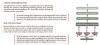
This article is a summary of the full paper (16 page PDF) describing what may be a significant advance in AI. It's called 'Nested Learning' and is described as follows: "Nested Learning treats a single ML model not as one continuous process, but as a system of interconnected, multi-level learning problems that are optimized simultaneously. We argue that the model's architecture and the rules used to train it (i.e., the optimization algorithm) are fundamentally the same concepts; they are just different 'levels' of optimization, each with its own internal flow of information ('context flow') and update rate." Though they deal with different subject matter, all of these layers are based on the same principles of associative memory. I admit I've been a bit slow on the uptake here (the paper is a couple of weeks old) but I've been swayed by reaction to it (with one writer calling it "Attention Is All You Need (V2)").
Web: [Direct Link] [This Post][Share]
Understanding Learning Strategy Use Through the Lens of Habit
Ann-Kathrin Krause, Jasmin Breitwieser, Garvin Brod,
Educational Psychology Review,
2025/11/26
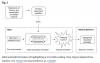
Maybe it's just me, but I always find a deep disconnect when I read studies like this talking about effective learning. Here, for example, we read, "students frequently rely on ineffective learning strategies instead of those that promote long-term retention." This is meant as a criticism of (so-called) 'self-regulated learning' (I prefer the term 'self-managed', but I digress) which asserts, essentially, that self-managed learners develop bad habits. Well, OK, I can see this. But what are the strategies being considered? The 'good' student (leading to better test results) are "spaced study sessions over time, tested herself, and elaborated on study material" while the bad student "relied on rereading and underlining in order to process material." Now, I don't know anyone who thought underlining would lead to remembering. It was detect patterns. My own experience is that, if you want to remember something, make it easier to remember by identifying the structure (not the same as a concept map, though I did that a lot; it's more of a memory palace effect, but using the work itself as the palace, a la Keith Spicer's Winging It). That's what launched me from a pretty good test taker to an expert test taker. Now this became a habit with me, and has served me exceptionally well over 45 years. So I feel quite disconnected with the article (30 page PDF). Via Robert Gibson.
Web: [Direct Link] [This Post][Share]
How Big Tech is quietly colonizing education
John Moravec,
Education Futures,
2025/11/26

According to John Moravec, frameworks for the use of AI in education normalize the use of AI in education, and at the same time, they distance teachers and administrators from the decisions being made about how and why it is so used. "In a century shaped by powerful digital systems, education cannot limit itself to procedures for safe use. It must reclaim its role as a steward of human judgment and collective purpose. That work begins when educators refuse to let AI define the terms of its integration and instead place education's values at the center of the conversation." That's fine, but, whose value is that, exactly?
Web: [Direct Link] [This Post][Share]
Introducing Nano Banana Pro
The Keyword,
2025/11/26
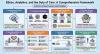
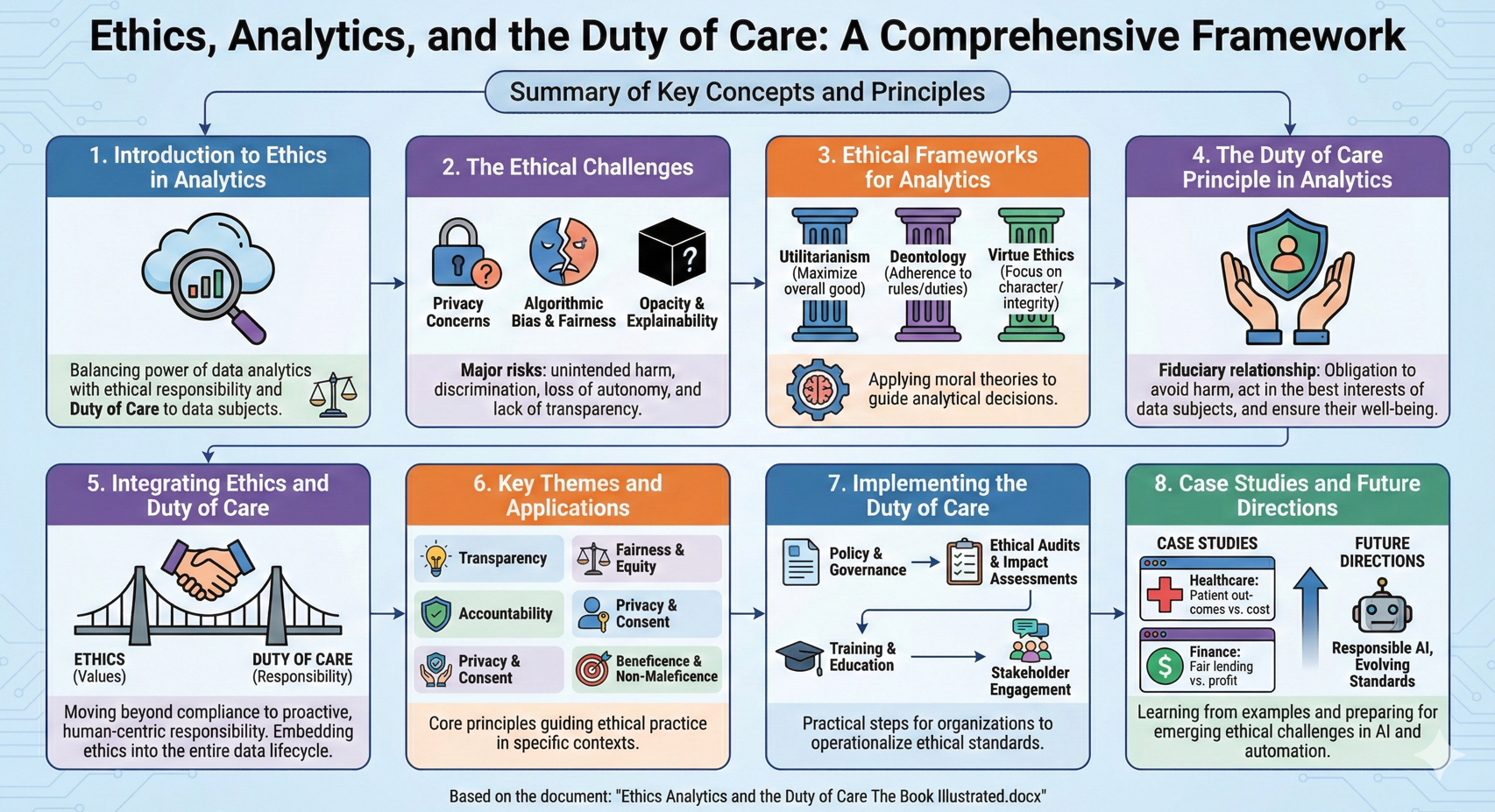
People have been expressing a lot of enthusiasm for the new Nano Banana image generator AI from Google. Here's Mike Caulfield, for example, with a nifty infographic from his 52 video walkthroughs of Critical Thinking with AI Mode. Here's a bunch more. You can make professional infographics with it. Now I've seen a bunch of these generated infographics and the technology is really impressive. But... what exactly is it representing? I thought I'd try with my 1,000 page manuscript on ethics and AI. I first loaded it into Gemini, thinking it was Nano Banana, and it created an interesting 'BANANA' acronym to represent the contents of the document, and does a pretty good job. Then I produced the image (view it here) and while it represents what I probably should have written to fit squarely into the mainstream (and the path to riches and fame) it completely misrepresents what I actually wrote. So there's more happening in Nano Banana than mere analysis of the documents being depicted as infographs. Much more.
Web: [Direct Link] [This Post][Share]
There are many ways to read OLDaily; pick whatever works best for you:
- Read in your web browser on this web page, updated weekdays
- Receive a daily or weekly email newsletter by subscribing here
- Subscribe to the RSS feed using your favourite feed reader
- Follow @OLDaily@mastodon.social on Mastodon or elsewhere in the fediverse
- Follow @OLDaily on Bluesky
- Read OLDaily as a LinkedIn Newsletter
- Integrate the open API using the JSON feed
This newsletter is sent only at the request of subscribers. If you would like to unsubscribe, Click here.
Know a friend who might enjoy this newsletter? Feel free to forward OLDaily to your colleagues. If you received this issue from a friend and would like a free subscription of your own, you can join our mailing list. Click here to subscribe.
Copyright 2025 Stephen Downes Contact: stephen@downes.ca
This work is licensed under a Creative Commons License.