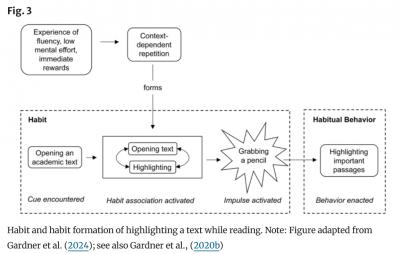
Maybe it's just me, but I always find a deep disconnect when I read studies like this talking about effective learning. Here, for example, we read, "students frequently rely on ineffective learning strategies instead of those that promote long-term retention." This is meant as a criticism of (so-called) 'self-regulated learning' (I prefer the term 'self-managed', but I digress) which asserts, essentially, that self-managed learners develop bad habits. Well, OK, I can see this. But what are the strategies being considered? The 'good' student (leading to better test results) are "spaced study sessions over time, tested herself, and elaborated on study material" while the bad student "relied on rereading and underlining in order to process material." Now, I don't know anyone who thought underlining would lead to remembering. It was detect patterns. My own experience is that, if you want to remember something, make it easier to remember by identifying the structure (not the same as a concept map, though I did that a lot; it's more of a memory palace effect, but using the work itself as the palace, a la Keith Spicer's Winging It). That's what launched me from a pretty good test taker to an expert test taker. Now this became a habit with me, and has served me exceptionally well over 45 years. So I feel quite disconnected with the article (30 page PDF). Via Robert Gibson.
Today: Total: [] [Share]