
Update #33: The lawsuit is over!
2025/11/14

This wraps up coverage of the lawsuit which we started in these pages some five years ago. "Proctorio submitted a Consent Dismissal Order (CDO) to dismiss the entire lawsuit." The injunction remains, but as Ian Linkletter describes, it doesn't prevent him from doing anything he actually wants to do, like link to public videos, or openly criticize Proctorio. "It cost my life savings ten times over," writes Linkletter, "and I am eternally grateful to the thousands of you from GoFundMe and the Association of Administrative and Professional Staff of UBC for funding my defence after I no longer could."
Web: [Direct Link] [This Post][Share]
Researchers surprised that with AI, toxicity is harder to fake than intelligence
Benj Edwards,
Ars Technica,
2025/11/14

It takes a bit to extract the relevant story from the paper (21 page PDF) but happily this article captures the gist: "the AI models struggled to match the level of casual negativity and spontaneous emotional expression common in human social media posts, with toxicity scores consistently lower than authentic human replies across all three platforms." So, um, I guess that's a good thing, though it speaks poorly about the human contributions to social discourse. Interestingly, it's not really a finding that has much applicability outside those social media forums where casual negativity and toxity are commonly found. Via Apostolos K.
Web: [Direct Link] [This Post][Share]
SIMA 2: A Gemini-Powered AI Agent for 3D Virtual Worlds
Google DeepMind,
2025/11/14
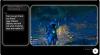
Here's another development in the field formerly known as the metaverse: Google Gemini introduces "SIMA 2... an interactive gaming companion. Not only can SIMA 2 follow human-language instructions in virtual worlds, it can now also think about its goals, converse with users, and improve itself over time." One of the example worlds mentioned in the Google post is No Man's Sky, a gaming world in which I am active. It's easy to imagine an AI performing steps of various tasks and missions. Here's a discussion of this.
Web: [Direct Link] [This Post][Share]
Disney CEO Bob Iger Says Disney+ Will Allow AI-Generated Content As Studio Embraces Controversial Technology
Josh Wilding,
ComicBookMovie.com,
2025/11/14

I would imagine that most people will read this as a statement that Disney will start creating and distributing AI generated content. That's not an inaccurate reading, but I would suggest it's incomplete. Disney is very protective of copyright, yet courts have ruled that AI generated content cannot be copyrighted. So what's Disney up to here? It seems to me they're trying to carve out exceptions to this principle, whereby they can, but others can't, use AI to create certain types of content, and specifically, content based on their existing IP. From there it's just a short step to establishing IP out of AI-generated content.
Web: [Direct Link] [This Post][Share]
Chalk & Change 2: Nick Gibb - the minister as expert
Harry Fletcher-Wood,
Improving Teaching,
2025/11/14

There's a lot in this article that I dislike, but rather than dwell on particulars I want to talk about the sweep of the article as a whole - the idea that a government minister believes he can become an expert in a few years by talking to people, and specifically, those people who support his already entrenched views, and implement policies based on this, contrary to the "paradigm cartel", the "tyranny of the expertois", who (presumably) have become experts in some other way, implementing policy in a few months ("elected in May. The bill was ready in June, and it was on the statute book, when the House rose at the end of July") and then turning the system over to private schools while saying "the quality of thinking about behaviour policy, retrieval practice, knowledge organisers, the content of the curriculum, pedagogy generally – it is way beyond anything that Michael Gove, or I, or Dominic Cummings could have thought up because we have unleashed professional autonomy to deliver those kind of things." It's education as ideology, or as I said earlier, 'the Davos picture'.
Web: [Direct Link] [This Post][Share]
The Weight of the Captain’s Chair
Carlo Iacono,
Hybrid Horizons,
2025/11/14

This is an exploration of the concept of 'agency', a core concept in learning, development, and of society itself. "We talk about it like it's empowerment, like it's freedom, like it's the thing everyone should want. We frame it as liberation from constraint, as the ability to choose your path, to author your life, to be the protagonist of your own story." And all of that is true, but Carlo Iacono focuses here on the other side: how difficult and even frightening it is to step out of the passenger's chain and make your own way and chart your own direction in life. Agency "is not about making different choices. It's about developing the capacity to sit with the full weight of being the one who chooses. About learning to feel the difference between 'this is what I should do' and 'this is what I've decided to do.'"
Web: [Direct Link] [This Post][Share]
Adopting AI across an institution is a pressing leadership challenge
Janice Kay, Rachel Maxwell,
WonkHe,
2025/11/14

I can see the reasoning, but there's an important way in which it is wrong. Here's the assertion being made in the article: "Being an AI-first institution is certainly not about chasing the latest tools or superficially focusing on staff and student 'AI literacy.' It is about embedding AI thoughtfully in every part of the university. Leaders need to articulate vision, model ethical behaviour, build staff capacity and student ability to become next generation AI leaders." I get that. But viewed from a slightly different perspective, the same sentence says this: "take every part of an institution that exists now, and apply AI to it." And that can't be right. It's like saying, "take every part of a train, and add flight to it." If AI is anything like what we think it will be, many parts of institutions won't exist, new parts will be added, and the focus and purpose of the institution will have changed.
Web: [Direct Link] [This Post][Share]
There are many ways to read OLDaily; pick whatever works best for you:
- Read in your web browser on this web page, updated weekdays
- Receive a daily or weekly email newsletter by subscribing here
- Subscribe to the RSS feed using your favourite feed reader
- Follow @OLDaily@mastodon.social on Mastodon or elsewhere in the fediverse
- Follow @OLDaily on Bluesky
- Read OLDaily as a LinkedIn Newsletter
- Integrate the open API using the JSON feed
This newsletter is sent only at the request of subscribers. If you would like to unsubscribe, Click here.
Know a friend who might enjoy this newsletter? Feel free to forward OLDaily to your colleagues. If you received this issue from a friend and would like a free subscription of your own, you can join our mailing list. Click here to subscribe.
Copyright 2025 Stephen Downes Contact: stephen@downes.ca
This work is licensed under a Creative Commons License.