
China's Unitree builds course for students to learn how to train, understand robot dogs
South China Morning Post via Yahoo Tech,
2025/10/28

According to this article, "Unitree Robotics has launched an education platform for students to train robot dogs and understand how they operate." Seems like a neat idea. Though the cynic on Reddit comments, "'How can we ever possibly provide enough training data for these robots?!' :looks at kids:". And, yeah. "Unitree's curriculum reflects recent efforts in China's robotics industry to increase available training data from both quadruped and humanoid robots, while helping deepen the sector's talent pool and raise public awareness."
Web: [Direct Link] [This Post][Share]
One third of all journalists are creator journalists, new report finds
Angela Fu,
Poynter,
2025/10/28
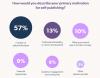
This is an interesting trends in media that may well make its way into the world of eucation. A 'creator journalist' is a journalist "independently publishing news, commentary or other content outside of a traditional media organization." According to this study (26 page PDF) reported in Poynter, "half of the creator journalists who responded said they have been self-publishing for more than five years, signifying that the segment is quite mature despite narratives that creator journalism is a new, fleeting trend." It's not really a way to make a living. "Just 6% said self-publishing is their full-time income, and an additional 10% said it makes up at least half of their income. Nearly 40% said they make no money from self-publishing." This is a topic that is close to me, of course. Like other newsletter publishers, I'm driven as much by the need for editorial freedom as anything else, though post retirement I'll also be looking to balance the effort with some income.
Web: [Direct Link] [This Post][Share]
Agentic AI and Security
Martin Fowler,
martinfowler.com,
2025/10/28
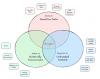
This isn't really an internet security newsletter so I leave the reporting to others, but this article is a quick read and nicely summarizes and illustrates Simon Willison's trifecta of security risks for agentic AI: access to sensitive data, ability to communicate externally, and exposure to untrusted content. Imagine, for example, that you allowed your email reader to execute commands on your bank account. The responses are about what you would expect: minimize access to sensitive data, block the ability to communicate externally, and limit access to untrusted content. How to do this? It's a good idea to run the application in a container with limited access to data. And make sure a human is checking on key transactions.
Web: [Direct Link] [This Post][Share]
Revealing Key Dimensions Underlying the Recognition of Dynamic Human Actions
André Bockes, Martin N. Hebart, Angelika Lingnau,
Nature, Communications Psychology,
2025/10/28
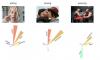
I confess, what drew me to this paper was its use of recognition and similarity. Long-time readers know these are central to my own understanding of cognition. In this case, the study asked, how do we recognize types of actions, and had subjects associate actions by similarity. "This approach revealed 28 meaningful dimensions (e.g. interaction, sport and craft) which capture information concerning human actions as well as a broad range of related domains (e.g. living and non-living things)." What's important here aren't the specific categories, but the importance of the multidimensional space underlying them. "Dimensions captured different types of information from broadly different domains, including human actions, living and non-living things, environment, substance, and force, at varying levels of abstraction." Via IDW.
Web: [Direct Link] [This Post][Share]
Optimizing Formative Assessment with Learning Analytics
Seyyed Kazem Banihashem, Dragan Gašević, Omid Noroozi, Halszka Jarodzka, Desiree Joosten-ten Brinke, Hendrik Drachsler,
Review of Educational Research,
2025/10/28
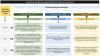
This is a long and sometimes wordy paper (49 page PDF) that nonetheless offers a worthwhile review of learning analytics literature in the area of formative assessment. As the authors observe, ", the understanding of formative assessment has evolved considerably, shifting from 'assessment of learning' toward 'assessment for learning' and 'assessment as learning'." The analysis focuses on the four traditional forms of learning analytics: descriptive, diagnostic, predictive and prescriptive. There is no discussion of generative or deontic analytics, and this I think reflects the selection of papers, most of which predate the 2022 emergence of large language models. Even in this sample, there is a prevalence of descriptive and diagnostic analytics; one of the paper's key recommendations is a greater emphasis on prescriptive analytics. "Implementing prescriptive learning analytics in formative assessment can optimize learning outcomes by tailoring instructional strategies to meet the unique needs of each student."
Web: [Direct Link] [This Post][Share]
There are many ways to read OLDaily; pick whatever works best for you:
- Read in your web browser on this web page, updated weekdays
- Receive a daily or weekly email newsletter by subscribing here
- Subscribe to the RSS feed using your favourite feed reader
- Follow @OLDaily@mastodon.social on Mastodon or elsewhere in the fediverse
- Follow @OLDaily on Bluesky
- Read OLDaily as a LinkedIn Newsletter
- Integrate the open API using the JSON feed
This newsletter is sent only at the request of subscribers. If you would like to unsubscribe, Click here.
Know a friend who might enjoy this newsletter? Feel free to forward OLDaily to your colleagues. If you received this issue from a friend and would like a free subscription of your own, you can join our mailing list. Click here to subscribe.
Copyright 2025 Stephen Downes Contact: stephen@downes.ca
This work is licensed under a Creative Commons License.