
From MOOCs to Mindsets: Stephen Downes on Connection, Openness, and the Future of Scalable Learning - LEARN Podcasts
Chris Colley,
ShiftED Podcast,
2025/10/07
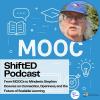
I am interviewed by Chris Colley for his podcast, which he introduces as follows: "The traditional classroom model, built on the transmission of content from expert to learner, is facing a profound challenge. What if the heart of learning isn't content at all - but connection? This question has fueled a quiet revolution in educational technology, one that emphasizes distributed networks over centralized control." There's audio and a transcript (which doesn't always get the speakers right).
Web: [Direct Link] [This Post][Share]
Evaluating educational technology: Consolidating across multiple impact indicators and rating systems
Natalia Kucirkova, Per Henning Uppstad, Richard Holeton, Dan Lin, Alison Clark-Wilson, Antonie Chigeda,
Computers & Education,
2025/10/07
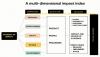
This paper (14 page PDF) argues convincingly that there is no consensus on the evaluation of educational technology and proposes "the Multiple EdTech Impact Index (MEII) and an impact benchmarking formula for EdTech tools" in response. MEII is based on "the 5Es framework, which corresponds to the 17 Sustainable Development Goals (SDGs) and categorizes impact into two dimensions relevant to educational outcomes (Efficacy and Effectiveness) and three dimensions relevant to broader impact outcomes (Ethics, Equity and Environment)." Additionally, these five indices are intended to be interdependent; by contrast, "current EdTech evaluation frameworks are not well-suited for capturing such interdependencies because they focus on specific quality indicators rather than overall impact." Thus, for example, you get "high effect sizes for specific tools, but their effect showed to benefit only 5 % of the target population." I think the authors' intent is laudable, but it is unlikely that an international consensus will be reached on things like equity, ethics and environment. See also the EdTech Impact Project.
Web: [Direct Link] [This Post][Share]
Do AI Reasoning Models Abstract and Reason Like Humans?
Melanie Mitchell,
AI: A Guide for Thinking Humans,
2025/10/07
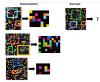
So how do humans abstract? And do AI reasoning models abstract in the same way? This paper offers a fascinating scenario within which to ask these questions, the Abstraction and Reasoning Corpus (ARC-AGI-1). There's also an ARC-AGI-2 and an ARC-AGI-3 preview; you can try the task for yourself here. The inferences are not obvious to me; but I eventually I got the ones in the article. Part of the difficulty (to my mind) is that they expect you to discern the author's intent (which, of course, the computers aren't doing): "just looking at their accuracy does not tell the whole story. Are they getting the right answers for the 'right' reasons—i.e., are they grasping the abstractions intended by the humans that created the tasks?" What is this intent? "The natural-language transformation rule that describes the demonstrations and can be applied to the grid." To my mind, the sample under-determines the rule (it's a characteristic problem of induction). And I don't think humans actually abstract and reason this way.
Web: [Direct Link] [This Post][Share]
Dapr - Distributed Application Runtime
Dapr Maintainers,
2025/10/07
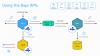
Distributed Application Runtime (dapr) is an open source set of APIs for cloud-native applications. It was created by Microsoft and is now run by the Cloud Native Computing Foundation (CNCF). The idea is that dapr runs as 'sidecars' alongside your application or service. When you want to do something in the cloud (publish, subscribe, access secrets) you communicate with your sidecar, which contacts whatever service is configured. There's a lot of similarities between this and n8n, which is another system for connecting distributed applications. View the Concepts section to get the basic idea, or view the slideshows for a more visual presentation. Dapr directly addresses a bunch of issues I ran into while developing CList last year. Via Simardeep Singh.
Web: [Direct Link] [This Post][Share]
View of Ethics of Socially Disruptive Technologies
Ibo van de Poel, et al.,
Open Book Publishers,
2025/10/07
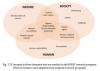
From the introductory chapter: "At first sight, it seems that important concepts - agency, freedom, life, vulnerability, well-being, to name just a few - are rather stable... But under closer scrutiny, this does not appear to be the case. Ethical concepts are frequently up for debate, and subject to uncertainty, as well as change... We claim that technological development often plays a notable role in disrupting fundamental concepts - a role that has only recently been appreciated, but will be given pride of place in this book." This noteworthy open book (188 page PDF) is well worth a read. See also the review by Ratan Sarkar. Via Sven Nyholm.
Web: [Direct Link] [This Post][Share]
The Future is NOT Self-Hosted
Drew Lyton,
2025/10/07

I've considered this, setting up my own personal cloud and moving all my content off the platforms and onto a space I control. But as Drew Lyton discovered, this is not easy to do. It takes a lot of work and requires quite a bit of knowledge. And it's not cheap. So even though commercial cloud companies are squeezing their customers for more money and less ownership, the self-hosted cloud is not the answer. So what is? "Instead of building our own clouds, I want us to own the cloud. Keep all of the great parts about this feat of technical infrastructure, but put it in the hands of the people rather than corporations. I'm talking publicly funded, accessible, at cost cloud-services." We already have public libraries offering web 1.0 services, he writes. Having them offer web 2.0 services isn't a stretch. Or if not that, then community cooperatives. Via Stephen Harlow.
Web: [Direct Link] [This Post][Share]
There are many ways to read OLDaily; pick whatever works best for you:
- Read in your web browser on this web page, updated weekdays
- Receive a daily or weekly email newsletter by subscribing here
- Subscribe to the RSS feed using your favourite feed reader
- Follow @OLDaily@mastodon.social on Mastodon or elsewhere in the fediverse
- Follow @OLDaily on Bluesky
- Read OLDaily as a LinkedIn Newsletter
- Integrate the open API using the JSON feed
This newsletter is sent only at the request of subscribers. If you would like to unsubscribe, Click here.
Know a friend who might enjoy this newsletter? Feel free to forward OLDaily to your colleagues. If you received this issue from a friend and would like a free subscription of your own, you can join our mailing list. Click here to subscribe.
Copyright 2025 Stephen Downes Contact: stephen@downes.ca
This work is licensed under a Creative Commons License.