
Why AI-assisted Literature Reviews Currently Fall Short
Faun Rice,
The Important Work,
2025/10/06

This article looks at how well an AI-assisted literature search works in an area with a limited number of publications (and, specifically, three previously isolated areas of literature and data—Dene kedǝ (North Slavey language), Dene ts'ı̨lı̨ (being Dene, Dene ways of life), and Dene ts'ǫ́ dane (Dene youth)). The tools found a few relevant papers, then filled in the rest with references to papers about different languages. Worse, they missed "thousands of relevant documents about the Sahtú", including digitized archive documents, key academic works, government publications, and sources in physical archives. Why? Faun Rice offers two explanations: first, with a smaller knowledge base, it's harder to determine relevance. And second, using metrics like citation counts tends to sideline less represented voices. I wonder how much if this is unique to AI-based literature reviews, and the formal literature review process in general.
Web: [Direct Link] [This Post][Share]
2025 EDUCAUSE Horizon Report - Data and Analytics Edition
EDUCAUSE Library,
2025/10/06
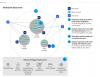
The most interesting bit of this report concerns two related themes, 'data mesh architecture' as a key technology and 'federated data governance' as a key practice. "Data mesh, as a technology, is the concept of a decentralized data architecture/infrastructure, including collecting, integrating, and analyzing data from disparate data systems. This deviates from strategies of centralized data repositories (warehouses, data lakes)." And "federated data governance is a practice and centers on consistency across enablement and access. It strikes a balance between centralized and decentralized data governance models by defining standards centrally while allowing individual domain owners to decide how to execute the standards." You can have one without the other (though it's complicated). Image: McKinsey.
Web: [Direct Link] [This Post][Share]
On Social Media as a Public Servant
Half an Hour,
2025/10/06
On LinkedIn today the Treasury Board of Canada Secretariat published a short slide deck entitled 'Navigating Social Media as a Public Servant'. It appears to be available only on LinkedIn so I've provided a version you can download here so all can access the document. I spend a lot of time on social media - indeed, it is not only a personal interest of mine, it is a core component of my research on online learning and new instructional media. As a result, as readers can see for themselves, I have a substantial online presence - not just social media (though I do participate on some platforms) but also through my blog, website, and newsletter. So this slide show is directly relevant to me both personally and professionally.
Web: [Direct Link] [This Post][Share]
There are many ways to read OLDaily; pick whatever works best for you:
- Read in your web browser on this web page, updated weekdays
- Receive a daily or weekly email newsletter by subscribing here
- Subscribe to the RSS feed using your favourite feed reader
- Follow @OLDaily@mastodon.social on Mastodon or elsewhere in the fediverse
- Follow @OLDaily on Bluesky
- Read OLDaily as a LinkedIn Newsletter
- Integrate the open API using the JSON feed
This newsletter is sent only at the request of subscribers. If you would like to unsubscribe, Click here.
Know a friend who might enjoy this newsletter? Feel free to forward OLDaily to your colleagues. If you received this issue from a friend and would like a free subscription of your own, you can join our mailing list. Click here to subscribe.
Copyright 2025 Stephen Downes Contact: stephen@downes.ca
This work is licensed under a Creative Commons License.