
Workday Acquires Sana To Transform Its Learning Platform And Much More
Josh Bersin,
2025/09/23
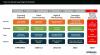
This is an interesting article be cause while it's ostensibly about some recent acquisitions by Workday it's actually an overview of how corporate learning has been changing. "As the corporate learning market shifts to AI, Workday can jump ahead. This is because the $400 billion corporate training market is moving quickly to an AI-Native dynamic content approach (witness OpenAI's launch of in-line learning in its chatbot)." It's a natural progression from the 'learning in the flow of work' we were all talking about five or ten years ago (for example cf all my own work on 'Learning and Performance Support System') to 'dynamic (AI supported) learning everywhere'. Via Daniel Christian.
Web: [Direct Link] [This Post][Share]
“If we want better AI, we have to become better people” – An Interview with Stephen Downes - AACE
Stefanie Panke,
AACE,
2025/09/23

Here I am interviewed by Stefanie Panke for the AACE Review. She summarizes: "Stephen Downes, author of OLDaily, is possibly the original social media influencer - long before this was a term people knew and a profession one could aspire to, and definitely long before TikTok dances... Recently, Stephen discussed the connection of generative AI and assessment, and coined the term 'AI-agnostic assessment'. In an era where simple prompts, browser features, plugins, and desktop apps are all capable of assisting or fully completing assessments, higher education needs to rethink what meaningful, fair, and authentic assessment looks like."
Web: [Direct Link] [This Post][Share]
The Risks of NPM
Jim Nielsen,
2025/09/23

In software ecosystems developers often depend on prebuilt modules and functions called packages, such as (in this case) the Node Package Manager (NPM). These are independently maintained and upgraded by developers around the world. The most common problem is version control - using packages that work well with each other. But this article describes another major problem: bad actors infiltrating packages with malware. The unsuspecting developer imports the package - and the malware - into the final product. GitHub and other agencies are tightening access control in attempt to make packages more secure, but I wonder whether the better approach might not be to dispense with them altogether. When building CList I eschewed prebuilt packages and asked the AI to create the functions from scratch. This may be a safer approach in the long run, because it would be a lot harder to infiltrate an entire AI engine than a single package. See also: the Register.
Web: [Direct Link] [This Post][Share]
AI Promotes Critical Thinking
Michelle Kassorla,
2025/09/23
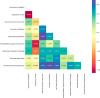
When Miguel Guhlin linked to this I though there was an article it came from, and though I found a LinkedIn post, it's just the bibliography. As the title suggests, what the 21 papers listed (all from between 2023 and 2025) show is that, far from causing a deterioration of critical thinking, AI can have the opposite effect, and actually promote it. Naturally, the first comment is that "many (or most) of the articles from this list are published in zero-quality journals." I can't really tell from my own experience which is true (my critical thinking roots run deep and aren't likely to be impacted by something so recent) but it seems reasonable to me that (a) AI doesn't degrade critical thinking, but also, that it makes it different (which from a certain perspective might seem like degradation).
Web: [Direct Link] [This Post][Share]
Keywords are not always the key: A metadata field analysis for natural language search on open data portals
Lisa-Yao Gan, Arunav Das, Johanna Walker, Elena Simperl,
arXiv,
2025/09/23
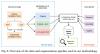
In the early days of learning resource metadata the idea was that users would conduct a faceted search for relevant results. This allowed users to filter or refine results by attributes, for example, date, author, category. The approach has its flaws, however. Often the metadata is incorrect, or if a restricted vocabulary is enforced, it isn't sufficiently expressive. Often, many of the metadata elements simply weren't used. This paper examines where a simple natural language 'description' field would enable a natural language search, and in particular, whether "dataset descriptions, especially those generated by large language models (could) play a critical role in enabling effective natural language querying for dataset search." The answer offered in this paper, not surprisingly, is that they could. From my own experience, I would suggest that there's a limitation, however - in my own dataset developed for OLDaily, my descriptions not only summarize articles, but offer context, opinions, associations and other information that helps me query my data (and might be useful for others as well), which AI-generated descriptions are unlikely to provide.
Web: [Direct Link] [This Post][Share]
There are many ways to read OLDaily; pick whatever works best for you:
- Read in your web browser on this web page, updated weekdays
- Receive a daily or weekly email newsletter by subscribing here
- Subscribe to the RSS feed using your favourite feed reader
- Follow @OLDaily@mastodon.social on Mastodon or elsewhere in the fediverse
- Follow @OLDaily on Bluesky
- Read OLDaily as a LinkedIn Newsletter
- Integrate the open API using the JSON feed
This newsletter is sent only at the request of subscribers. If you would like to unsubscribe, Click here.
Know a friend who might enjoy this newsletter? Feel free to forward OLDaily to your colleagues. If you received this issue from a friend and would like a free subscription of your own, you can join our mailing list. Click here to subscribe.
Copyright 2025 Stephen Downes Contact: stephen@downes.ca
This work is licensed under a Creative Commons License.