Introducing eCampusOntario.ai, The Central Hub for AI in Higher Education
Paol Wierzbicki,
eCampusOntario,
2025/09/16

As Clint Lalonde reports, eCampus Ontario has launched a new AI in Higher Education hub "a bilingual site designed to support Ontario's postsecondary educators, learners, and institutional leaders in navigating the rapidly evolving world of artificial intelligence." Here it is. Not everything is open to everybody; for example, the 'Disco' sandbox is open only to Ontario institutional staff. Other resources listed will already be familiar to readers, such as the Contact North AI-Powered Apps. I count 73 resources in all.
Web: [Direct Link] [This Post][Share]
AI Could Surpass Schools for Academic Learning in 5-10 Years
Jim Shimabukuro,
Educational Technology and Change Journal,
2025/09/16

I know a lot of readers will disagree with this, and the timeline feels aggressive (the future always arrives more slowly than pundits expect) but I think the overall premise is sound: "The concept of a tipping point in education - where AI surpasses traditional schools as the dominant learning medium - is increasingly plausible based on current trends, technological advancements, and expert analyses." That doesn't mean universities will disappear: people with privilege still need an environment where they can develop connections and common values. But even in universities, AI seems likely to play an increasing role in actual teaching and learning. "Regulatory hurdles, ethical concerns, and cultural resistance could delay it. As Jim Shimabukuro (for some reason assisted by Grok and not a good AI) says, "The genie is out, though - once parents see AI-educated kids outperforming peers, the shift could accelerate rapidly."
Web: [Direct Link] [This Post][Share]
3 Human Skills That Make You Irreplaceable in an AI World
Tom Vander Ark, Mason Pashia,
Getting Smart,
2025/09/16

If you believe this article (and my own self-assessment of my own skills) then I should be "irreplacable". The skills are: curation, curiosity, and connectivity. These (along with the definitions the authors provide) practically describe my whole career. But am I irreplaceable? I don't feel irreplaceable. I think that maybe these skills are necessary, but not sufficient. I need an engineering skillset, maybe?
Web: [Direct Link] [This Post][Share]
Ruth Millikan: Unicepts
Ruth Millikan,
The Brains Blog,
2025/09/16
Ruth Millikan writes about 'unicepts', Nick Shea comments, Ruth Millikan replies. Unicepts are, "in Mill's sense, 'real kinds'. They are not 'carved out' by us but found in the world... discovered and clarified through ordinary experience." A unicept is typically not defined and it is not universal, that is, unicepts are unique to the person. "A unicept is a particular; each unicept belongs to a different person. A concept comes with something like a definition or a paradigm that fixes what it represents. The referent of a unicept is whatever it has been collecting information about." It's an interesting idea, it makes sense to me, and it fits my own real world experience.
Web: [Direct Link] [This Post][Share]
How people are using ChatGPT
Aaron Chatterji, et al.,
OpenAI,
2025/09/16
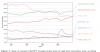
OpenAI has released a fascinating paper (63 page PDF) describing what people are doing when they use ChatGPT. It divides usage into three major components: asking, doing and expressing (the latter includes "greetings and chitchat: Casual conversation, small talk, or friendly interactions without a specific informational goal"). Also, "Early adopters were disproportionately male but the gender gap has narrowed dramatically, and we find higher growth rates in lower-income countries." The most use is to support writing, while other uses include practical guidance, technical help, and creative tasks such as generating an image. Via Miguel Guhlin. See also: SearchEngineLand, Ars Technica, the Register.
Web: [Direct Link] [This Post][Share]
Your AI Ethics Are a Luxury Belief
Carlo Iacono,
Hybrid Horizons,
2025/09/16

The notion of 'AI ethics' supports the existing order, says Carlo Iacono. "What makes the AI purity discourse particularly suspect is how neatly it maps onto existing privilege." I've made a similar point, but it has not been well received. Iacono offers a number of examples: the boundaries around copyright infringement "shift depending on where you stand." A "politics that actually cared about justice" would support the AI workforce "in Nairobi and Manila and Hyderabad." The benefits from productivity gains "flow disproportionately to novices and those with fewer resources... If we care about equity, we should care about this." AI needs governance, sure, "but governance doesn't trend on social media. Denunciation does." The notions of 'AI ethics' we bandy about protect privilege, and are not the product of an ethical society.
Web: [Direct Link] [This Post][Share]
There are many ways to read OLDaily; pick whatever works best for you:
- Read in your web browser on this web page, updated weekdays
- Receive a daily or weekly email newsletter by subscribing here
- Subscribe to the RSS feed using your favourite feed reader
- Follow @OLDaily@mastodon.social on Mastodon or elsewhere in the fediverse
- Follow @OLDaily on Bluesky
- Read OLDaily as a LinkedIn Newsletter
- Integrate the open API using the JSON feed
This newsletter is sent only at the request of subscribers. If you would like to unsubscribe, Click here.
Know a friend who might enjoy this newsletter? Feel free to forward OLDaily to your colleagues. If you received this issue from a friend and would like a free subscription of your own, you can join our mailing list. Click here to subscribe.
Copyright 2025 Stephen Downes Contact: stephen@downes.ca
This work is licensed under a Creative Commons License.