
When the Scoreboard Becomes the Game, It’s Time to Recalibrate Research Metrics
Maryam Sayab,
The Scholarly Kitchen,
2025/09/11

The mantra that "if you can';t measure it, you can't manage it" has fallen on hard times. What is valued is more than merely wht can be counted. At least, that's what academic and research institutions seem finally to be discovering. And as this article underlines, standards like the Journal Impact Factor (JIF) are beginning to be questioned. "There is another way forward; metrics can serve a more constructive role as navigational aids rather than finish lines when transparency, context, and inclusivity guide their use... valuing research for its substance, whether or not it fits the mold of citation-rich prestige." Hear hear.
Web: [Direct Link] [This Post][Share]
The Last Castle
Carlo Iacono,
Hybrid Horizons,
2025/09/11

Again, Carlo Iacono follows the argument to its logical conclusion. "The line we have been defending is the boundary between human value and human utility, and we have treated them as if they were the same. We have been racing to remain useful because our institutions can only recognise worth through productivity and pay." But what if the value of humans isn't measured in work and productivity? "A civilisation that automates most of its work must decide whether it will abandon people or invent a new grammar for dignity."
Web: [Direct Link] [This Post][Share]
AI is making reading books feel obsolete – and students have a lot to lose
Naomi S. Baron,
The Conversation,
2025/09/11

I would like to reframe this discussion, as follows: if we were from scratch trying to find the best way to explain a science, describe a history, or tell a story, would a volume filled with paragraph after paragraph of text be the best way to do it? The proliferation of alternatives - from plays to videos to in-person classes and labs - suggests otherwise. And if we assume these alternatives won't suddenly disappear, then we have to ask, what is it students are losing when they read fewer books? I know - the idea is that books allow people to work through complex ideas and lengthy sequences of thought - "in reading and analyzing and formulating our own interpretations." But so do many video games, discussion threads, and - yes - AI interactions. We're not just reading summaries of texts. So I think the author is being a bit disingenuous in depicting the alternative as the equivalent of CliffsNotes. And even with these alternatives, including AI, "judging for yourself what counts as relevant and making your own connections between ideas" remains relevant.
Web: [Direct Link] [This Post][Share]
Authoritarian EdTech
Eamon Costello, Stephen Gow,
Dialogues on Digital Society,
2025/09/11

I like it when the authors make the main point in the first sentence: "Careful and consentful models of digital education are being replaced by Authoritarian EdTech." There are two threads to this: ed tech is " increasingly centralised, less open and more powerful" and through generative AI, "it is less truthful, less trustworthy and more epistemologically nihilistic." As a result, "Authoritarian EdTech revolves around the oppressive foreclosure of choice, consent, debate and deliberation via constituent technologies that are not only all-powerful and all-seeing but that never seek to hide power and instead actively pursue ways to display might as both effect and cause of their authority." On the other had, write the authors, "Authoritarianism is never inevitable." See also Truthout from last August, which makes a similar point, and Global Focus, which addresses the same issue in business education.
Web: [Direct Link] [This Post][Share]
Navigating workers' data rights in the digital age
Halefom Abraha,
international Labour Organization,
2025/09/11
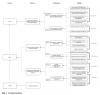
This paper (67 page PDF) provides an overview of issues related to data rights in the workplace and surveys practices and policies in Europe, the United States and Australia, with a chapter devoted to 'other' (Chine, Africa, Brazil). It makes a case for collective governance of workplace data rights based on a "need to address systemic power imbalances and collective risks in modern employment." In particular, the report points to 'workplace exemptions' in many instances of data privacy legislation. Obviously many of the same considerations apply to students and educational institutions. Via Andrew Jacobs.
Web: [Direct Link] [This Post][Share]
There are many ways to read OLDaily; pick whatever works best for you:
- Read in your web browser on this web page, updated weekdays
- Receive a daily or weekly email newsletter by subscribing here
- Subscribe to the RSS feed using your favourite feed reader
- Follow @OLDaily@mastodon.social on Mastodon or elsewhere in the fediverse
- Follow @OLDaily on Bluesky
- Integrate the open API using the JSON feed
This newsletter is sent only at the request of subscribers. If you would like to unsubscribe, Click here.
Know a friend who might enjoy this newsletter? Feel free to forward OLDaily to your colleagues. If you received this issue from a friend and would like a free subscription of your own, you can join our mailing list. Click here to subscribe.
Copyright 2025 Stephen Downes Contact: stephen@downes.ca
This work is licensed under a Creative Commons License.