
Perplexity launches Comet, an AI-powered web browser
Maxwell Zeff,
TechCrunch,
2025/07/14

The story: Perplexity is launching its first AI-powered web browser, Comet, marking the company's latest attempt to unseat Google Search." I assume the browser is just a warmed-over version of Chrome with an interface to Perplexity (related: Firfox allows me to run an AI of my choosing alongside web pages). Anyhow, access to Comet limited to a waitlist, unless you want to pay $200 a month (gag!) to use it. Word is OpenAI will also launch a web browser some time soon.
Web: [Direct Link] [This Post][Share]
AI Authorship Revisited – Communications of the ACM
Pamela Samuelson,
Communications of the ACM,
2025/07/14

My reaction on reading this was that it seems that copyright maximalists will never ever stop. This article reports (approvingly) on efforts to reconsider the initial rulings that AI-generated content cannot be copyrighted. "Numerous advocates for GenAI output copyrights argue that user prompts supply the necessary originality to support copyright in outputs generated in response to them." Presumably this would mean that the prompt might be copyrightable, but no, the suggestion is that the output ought also to be copyrightable (to be fair, the author agrees different prompts may produce the same output, and the same prompt may at different times produce different outputs). There are also arguments around the commercial value of the human work being displaced by AI (see related). Via Alan Levine.
Web: [Direct Link] [This Post][Share]
What Gets Measured, AI Will Automate
Christian Catalini, Jane Wu, Kevin Zhang,
Harvard Business Review,
2025/07/14

I hesitate to link to HBR because readers might face a paywall (I didn't, but I use Firefox) but this observation conveys, I think, the central problem for 'management' in the age of AI: "If you can shoehorn a phenomenon into numbers, AI will learn it and reproduce it back at scale - and the tech keeps slashing the cost of that conversion, so measurement gets cheaper, faster, and quietly woven into everything we touch. More things become countable, the circle resets, and the model comes back for seconds. That means that any job that can be measured can, in theory, be automated." What happens to management theory when the only jobs worth doing for a human can't be measured? It's like we always thought: KPIs are more suited to machines than humans. Via George Siemens.
Web: [Direct Link] [This Post][Share]
The Collaborative Library project presentation 31.06.25 for CC
Anja Harrison, Anthony Harrison,
Google Docs,
2025/07/14

This is a Google Slides presentation from the Collaborative Library project to a Creative Commons Open Education Platform meeting two weeks ago (falling on Canada Day, so I wasn't there). The idea here is that volunteers write "easy-to-understand summaries of research papers in various formats". I applaud the intent, though I really can't see this not being done by AI in the near future. As someone who has written thousands of short summaries of academic papers, I can say quite confidently that the human labour required to keep up with all the papers that are published would be enormous. And there's no real reason to have a human write the summary unless it's going to be infused with a good deal of context and opinion, the way my posts are. But that's something that works if an individual or small group does it, not the whole community at large.
Web: [Direct Link] [This Post][Share]
How AI Could Finally Make Continuous Assessment Work
Carlo Iacono,
Hybrid Horizons,
2025/07/14
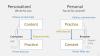
This is kind of a weak paper on a subject I have addressed numerous times (and obviously, that's why I'm linking to it). "Continuous assessment through AI isn't really about the technology at all. It's about a fundamental shift in how we think about learning and human potential. It's about moving from a model of judgment to one of support, from snapshots to stories, from standardisation to personalisation." I called the paper 'weak' because it's mostly a series of qualifications and hedging, rather than a real exploration of the idea. Image: my own, but clipped from a Doug Belshaw post that links it with some other concepts of mine (that's what Kagi gave me when I searched for it).
Web: [Direct Link] [This Post][Share]
A Meta-Analysis of Social Presence in Higher Education Online Environments
David Mykota,
International Journal of E-Learning and Distance Education,
2025/07/14

Most people in the edtech world will recognize the Community of Inquiry (CoI) framework from Garrison et al. that describes the relation between various types of presence on online learning and learning technology. This paper helpfully updates the discussion around the concept over the last few decades, and in particular, social presence, and even more specifically, whether the concept includes "community or group dynamics" over and above "the perception of participants as real individuals" (which is how I've always thought of it). The paper is interesting to me because the analysis of 53 studies between 1995 to 2022 suggests (inconclusively) that there is a relation between teaching modality and social presence, and this makes me ask whether MOOCs create less in the way of community or group dynamics. Do we want community and group dynamics in MOOCs?
Web: [Direct Link] [This Post][Share]
MORF ENA – A Tool for Making MOOC Discussion Forum Data More Accessible for Epistemic Network Analysis
Zhanlan Wei, et al.,
International Society of the Learning Sciences,
2025/07/14
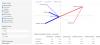
The tool essentially extracts types of statements from discussion transcripts, allowing researchers to understand trends without looking at specific posts (hence, preserving privacy). A set of nine codes was developed (covering things like gratitude, introductions, resource sharings, etc). "Each code was associated with multiple regular expressions (regex) patterns, then refined iteratively by human coders to account for variations and contextual usage across the data." This is how I defined 'topics' back when I assigned topics to OLDaily posts. I gave it up because refining the regex was a lot of work (I had a lot of topics) and rescanning the database took too long. Via Learning Engineering.
Web: [Direct Link] [This Post][Share]
There are many ways to read OLDaily; pick whatever works best for you:
- Read in your web browser on this web page, updated weekdays
- Receive a daily or weekly email newsletter by subscribing here
- Subscribe to the RSS feed using your favourite feed reader
- Follow @OLDaily@mastodon.social on Mastodon or elsewhere in the fediverse
- Follow @OLDaily on Twitter
- Integrate the open API using the JSON feed
This newsletter is sent only at the request of subscribers. If you would like to unsubscribe, Click here.
Know a friend who might enjoy this newsletter? Feel free to forward OLDaily to your colleagues. If you received this issue from a friend and would like a free subscription of your own, you can join our mailing list. Click here to subscribe.
Copyright 2025 Stephen Downes Contact: stephen@downes.ca
This work is licensed under a Creative Commons License.