
Behind the Curtain: A white-collar bloodbath
Jim VandeHei, Mike Allen,
Axios,
2025/05/30

This article emphasizes the job losses that may be on the way as a result of artificial intelligence and the profound destabilization of society that may result. "The balance of power of democracy is premised on the average person having leverage through creating economic value. If that's not present, I think things become kind of scary." Obviously the arrival of AI brings with it the possibility of an even greater economic inequality than we are experiencing today. And with that, challenges for the relevance of learning and development.
Web: [Direct Link] [This Post][Share]
Doctored Doom
Audrey Watters,
Second Breakfast,
2025/05/30

I am more or less in agreement with Audrey Watters here (worth noting because that does not always happen). "To address the challenges of AI and more broadly of authoritarianism, schools should not retreat into some mythical, elitist 'tradition' - a return to oral examinations and blue books feels like an inadequate and unimaginative response to this crisis," she writes. "To retain any institutions of higher education in this onslaught from techno-authoritarianism requires - now and hereafter - we redesign them, reorient them towards human knowledge and human flourishing, away from compliance and cowardice." What that means, though, is more difficult to describe exactly. Simply hiring more "teachers and researchers and librarians" doesn't seem to me like it will do the job; it's just the staffing equivalent of using blue books. A reorienting of the structure and purpose of educational institutions will have to follow, away from a focus on 'knowledge' and toward - dare I say it? - community and connection.
Web: [Direct Link] [This Post][Share]
Learning Styles, Preferences, or Strategies? An Explanation for the Resurgence of Styles Across Many Meta-analyses
John Hattie, Timothy O'Leary,
Educational Psychology Review,
2025/05/30
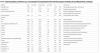
I liked this article a lot. It's a level-headed analysis of the learning styles theory and corresponding hypothesis (specifically: that adapting teaching strategies to learning styles will improve learning outcomes) looking at the evidence for it (there is none) and seeking to explain why people believe it anyways (there's a list of seven 'confounds' that offer plausible explanations). I think the article's greatest strength is that it gets to the heart of the matter: in a nutshell (and in my own words) the whole debate confounds 'teaching strategies' and 'learning strategies'. "Learning is most effective when students develop cognitive and metacognitive strategies tailored to task demands rather than teaching them according to their learning preferences," write the authors. "Educators can foster a more robust and flexible learning environment by emphasizing critical thinking, self-regulation, and meaningful engagement with content." This argument, to my mind, both explains the appeal of learning styles and replaces learning styles scepticism with something that actually accords with our actual learning experiences. But will it be popular with the pundits and learning styles sceptics? Probably not. "There is hardly a hint of commercialism."
Web: [Direct Link] [This Post][Share]
Talking AI and jobs with Natasha Zouves for News Nation
Simon Willison,
Simon Willison's Weblog,
2025/05/30

If you have an hour you can watch this interview with Simon Willison by Natasha Zouves and enjoy the treasure trove of thoughts from someone with a deep knowledge of programming and AI. If you have ten minutes you can read this AI-generated summary (created and vetted by Willison) that extracts key points and expands on them with quotes from the interview. The AI "did such a good job that I'm including it here on my blog," writes Willison. "I very rarely publish AI-produced text of this length, but in this case I think it's justified - especially since most of it is direct quotes from things I said (and have confirmed I said) during the episode."
Web: [Direct Link] [This Post][Share]
There are many ways to read OLDaily; pick whatever works best for you:
- Read in your web browser on this web page, updated weekdays
- Receive a daily or weekly email newsletter by subscribing here
- Subscribe to the RSS feed using your favourite feed reader
- Follow @OLDaily@mastodon.social on Mastodon or elsewhere in the fediverse
- Follow @OLDaily on Twitter
- Integrate the open API using the JSON feed
This newsletter is sent only at the request of subscribers. If you would like to unsubscribe, Click here.
Know a friend who might enjoy this newsletter? Feel free to forward OLDaily to your colleagues. If you received this issue from a friend and would like a free subscription of your own, you can join our mailing list. Click here to subscribe.
Copyright 2025 Stephen Downes Contact: stephen@downes.ca
This work is licensed under a Creative Commons License.