
Mitigating Bias and Inaccuracies in AI Responses
Geoff Cain,
Brainstorm in Progress,
2025/05/06

Let's replace 'AI responses' with 'media reports' and see whether we need to change this post at all. Bias detection? Check. Fact detection? Check. In fact, you could run through the full list and have a pretty good set of rules for critical media literacy. In fact, I wouldn't recommend any media - whether news, entertainment, or even fiction - without taking all these into account. Run through them with, say, Disney cartoons, and you get a pretty good rendition of How to Read Donald Duck. All this is to say: these are good principles, but if you think that humans are somehow inherently more trustworthy than AI, then you haven't been paying attention.
Web: [Direct Link] [This Post][Share]
Learning at the edge of networks
John Moravec,
Education Futures,
2025/05/06

Back in January a group of educators signed Manifesto 25, a loose set of statements capturing a lot of current sentiment, some in slogan form, and revolving around a general theme of educational change. This article builds on that, looking at the idea of learning as growing networks. "When we say knowledge grows at the boundaries of networks, we mean more than information exchange. We mean transformative new knowledge production: when something new and valuable emerges through the encounter between perspectives."
Web: [Direct Link] [This Post][Share]
Media release: We can't just turn off the internet for those under 16
NZ Council for Civil Liberties,
2025/05/06

This discussion captures a lot of my own feelings about banning social media for people under the age of 16. I mean, I get the desire to protect them from harm, but where were these same people when under-16s were being subjected to relentless advertising on radio and TV? Let's be clear about where the harm comes from. It's mostly not from under-16s talking to each other; it's from people using the under-16s social spaces for advertising, misinformation and propaganda. The only reason for the ban is that it's easier to control under-16s than it is to control market forces and predatory industries. Young people should have a space where they can express themselves, interact, form associations, and build their own understanding of the world. It is up to us - the adults in the room - to make it safe. Not to kill it.
Web: [Direct Link] [This Post][Share]
What makes for a good AI Literacy framework?
Doug Belshaw,
We Are Open Co-op,
2025/05/06

There has been a digital ton of stuff written about AI literacy in recent weeks and I have to confess I'm uncomfortable with most of it. To see what I mean, let's return to the base case: good old-fashioned literacy (GOFL). You know: reading and writing. Doug Belshaw's post here offers two points of comparison (I'm not singling him out, just using him as an example of a wider trend). First, he says, "imagine what (literacy) might look like for (adult) engineers and developers compared with children of primary school age." Well it would be the same thing, wouldn't it? And the child would simply be much less literate. Because the child and engineer are using the same language. Belshaw also says, "we included both safety and ethics because both are needed for using AI in a responsible and trustworthy way." Are safety and ethics part of GOFL? No - these are separate subjects. Including safety and literacy is just a way of sneaking (a particular set of) values into the definition of literacy.
Web: [Direct Link] [This Post][Share]
What's the carbon footprint of using ChatGPT?
Hannah Ritchie,
Sustainability by numbers,
2025/05/06
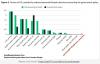
I've made this point a bunch of times, but as Simon Willison says, "here's a follow-up by someone with a whole lot more credibility than myself." Long story short: ChatGPT generates a much smaller carbon footprint than you may have been led to believe. I ran the numbers once and found that if you use ChatGPT it's about the same footprint as having a coffee. Or maybe turn off one of the lights in your house. Or as this article puts it: electricity consumption per person in the U.S. per day: 34,000 Watt-hours (Wh). One ChatGPT query: 3 Wh. "Unless you're an extreme power user, asking AI questions every day is still a rounding error on your total electricity footprint." And if your energy generation is generally carbon-neutral (as it is here where I live in Ontario, Canada) then using electricity produces almost no carbon footprint. See also: Andy Masley.
Web: [Direct Link] [This Post][Share]
There are many ways to read OLDaily; pick whatever works best for you:
- Read in your web browser on this web page, updated weekdays
- Receive a daily or weekly email newsletter by subscribing here
- Subscribe to the RSS feed using your favourite feed reader
- Follow @OLDaily@mastodon.social on Mastodon or elsewhere in the fediverse
- Follow @OLDaily on Twitter
- Integrate the open API using the JSON feed
This newsletter is sent only at the request of subscribers. If you would like to unsubscribe, Click here.
Know a friend who might enjoy this newsletter? Feel free to forward OLDaily to your colleagues. If you received this issue from a friend and would like a free subscription of your own, you can join our mailing list. Click here to subscribe.
Copyright 2025 Stephen Downes Contact: stephen@downes.ca
This work is licensed under a Creative Commons License.