In Wisconsin, A Rural Respite for Learning Has Become a Statewide Haven for Healing
Sam Chaltain,
2025/04/22

The problem with reporting on education as 'stories' is that a lot of information that would get in the way of the narrative is hidden from view. This article profiles the Norris School District in Wisconsin, founded by the grandson of "Wisconsin's richest man" and today described as embodying as "a complex system of interdependent principles whose elements and practices help empower the structure as a whole." It's the usual: student profiles, competency-based learning, community placements, etc. But look a little more closely. At this sentence, for example: "Many of its students are adjudicated youth who have been assigned to a nearby residential treatment center." They're prisoners! The school district is also 94% male students, but (surprisingly) 18% from low-income families, and has a graduation rate of 42%. There's an 8:1 student-teacher ratio, an average teacher salary of $200K, and the school receives revenue of $200K per student. None of this shows up in the article, a puff piece by Sam Chaltain (who should know better) that tells a very different story. What's happening in Wisconsin? We don't know, even after reading this piece. We should not see it as an example of the future of learning, though.
Web: [Direct Link] [This Post][Share]
Everything Wrong with MCP
Shrivu Shankar,
Shrivu's Substack,
2025/04/22
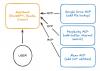
This article offers a short explanation of what the model context protocol (MCP) is exactly and then outlines a number of ways it can go wrong. I'm not going to disagree with any of these criticisms except to observe that they are all basically versions of "MCP as it currently stands is a big security hold". That is to be expected with you give an AI generally unconstrained access to your data and services. To make a long story short: MCP is obviously an idea still in development, and this article offers a rough description of the sort of infrastructure that will need to be in place before we can depend on it in production.
Web: [Direct Link] [This Post][Share]
The Genesis and Definition of Artificial General Intelligence: From Thinking Machines to Modern Concepts
Ethan Mollick,
Google Docs,
2025/04/22

What is Artificial General Intelligence (AGI)? From the perspective of the educator, this is an interesting question because it's what we aspire to for every student we touch (minus the 'artificial' part, of course). In computer science, "AGI embodies the original, grand vision that animated the field of Artificial Intelligence (AI) at its inception: the creation of machines endowed with the broad cognitive capabilities characteristic of human beings, capable of understanding, reasoning, learning, and adapting across a wide spectrum of tasks and environments." It's not just 'content knowledge' or anything remotely resembling that; if chatGPT has taught us anything, it's that we can give a computer access to everything every written and still have it defy common sense. Ethan Mollick offers the term Jagged Frontier "to describe the fact that AI has surprisingly uneven abilities. An AI may succeed at a task that would challenge a human expert but fail at something incredibly mundane." This article (currently a 27 page Google Doc) represents the best a set of writers at Google can do to describe the history and meaning of AGI. Is OpenAI's o3 an instance of AGI? I doubt it. But also, I don't we'll recognize when we've crossed that frontier until much later, just as we have to wait a decade or more to see how our students turned out.
Web: [Direct Link] [This Post][Share]
Election 2025: The Liberal Party Manifesto
Alex Usher,
HESA,
2025/04/22

It is of no real surprise to me that Alex Usher has read a completely different version of Mark Carney's book Value(s), even to the point of getting the title wrong. I've written a couple of posts about the book (part one, part two) and have some more parts planned, though there's no rush. Carney's thesis is not "about the importance of values", as Usher says, it is that "values determine value", which is totally different. And while consistency in a crisis is a good thing, it's not one of Carney's core values. And what becomes clear through reading Carney is that he never depicts things as binary good/bad. For all the good that carbon pricing (which in fact Carney barely talks about at all) produces, it's only one tool, and it's pretty easy to understand that if the concept has become toxic as a result of a misrepresentation as a 'carbon tax' then its utility changes. The value of carbon tax isn't determined by a simple calculation; it is derived from the complex of values we have as a society, for better or worse. (I won't discuss the Liberal party platform here because this isn't the place and because, without a corresponding Conservative platform, there's no real comparison to be made - if one ever appears you can check my other blogs for commentary, if you're interested).
Web: [Direct Link] [This Post][Share]
I'm never going to trust your news organization
Heather Bryant,
@HBCompass,
2025/04/22
This is from 2023 but shows up today in the News Alchemists newsletter.The lack of trust is not limited to news organizations, but to any organization, including schools and higher education. I like the article because it gets my own unease with the concept of trust. There's two threads to it, interwoven. First, "Trust is an inherently sentient act, only possible between sentient beings." And second, "I cannot trust that which I cannot hold accountable." They sort of converge. "The dynamic can never be equal between an individual and an organization. The more unequal the dynamic between two parties, the less likely accountability can happen." The broader implication, for those who say that trust is the foundation for society (and there are many) is that, if you want trust to work, accountability has to work both ways, which means at its core, society depends on equity.
Web: [Direct Link] [This Post][Share]
There are many ways to read OLDaily; pick whatever works best for you:
- Read in your web browser on this web page, updated weekdays
- Receive a daily or weekly email newsletter by subscribing here
- Subscribe to the RSS feed using your favourite feed reader
- Follow @OLDaily@mastodon.social on Mastodon or elsewhere in the fediverse
- Follow @OLDaily on Twitter
- Integrate the open API using the JSON feed
This newsletter is sent only at the request of subscribers. If you would like to unsubscribe, Click here.
Know a friend who might enjoy this newsletter? Feel free to forward OLDaily to your colleagues. If you received this issue from a friend and would like a free subscription of your own, you can join our mailing list. Click here to subscribe.
Copyright 2025 Stephen Downes Contact: stephen@downes.ca
This work is licensed under a Creative Commons License.