
The evolution of graph learning
Bryan Perozzi,
Google Research,
2025/04/18
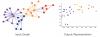
This is a topic we touched on a lot when we were defining connectivism back in the early 2000s. Connectivism was in part the thesis that the way individuals - and societies - learn is described by graph learning. Graph learning is explained mathematically with graph theory, with origins in Euler's Seven Bridges of Königsberg problem, and realized physically in any number of naturally occurring graphs, including the chirping of crickets, bird murmurations, metronomes on a plank, and social networks. Graph neural networks formed the basis for deep learning, which in short order became the AI models we know and love today. The next challenge, which is alluded to at the end of this article, is "ask how can we best integrate graph structured data with artificial intelligence (AI) to allow for the encoding of graphs for large language models (LLMs)?" Via Data Science Weekly.
Web: [Direct Link] [This Post][Share]
Decomposing Transactional Systems
Alex Miller,
transactional.blog,
2025/04/18
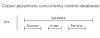
In the database world basic operations are abbreviated CRUD: Create, Read, Update, Delete. This article basically does the equivalent for transactions, identifying the four basic operations, which are: Execute, Order (as in a time sequence), Validate, and Persist. No acronym. This article explains each, provides some examples, and then looks at a number of transactional databases from this perspective: FoundationDB, Google's Spanner, TAPIR, Calvin, Consistent Unordered Replication Protocol (CURP), and TicToc. Fun question: "Draw any made up diagram of a possible ordering or interleaving of execute, order, validate, and persist. Now answer the question: how would I need to design a database such that it would decompose to this diagram?" Via Data Science Weekly.
Web: [Direct Link] [This Post][Share]
Innovation Without Borders: Galileo's Networked Approach to Better Higher Education System
Alex Usher,
HESA,
2025/04/18

You can just hear Alex Usher gushing as he interviews s Nicolas Badré, Chief Operating Officer of the Galileo Group, a private company that operates "70 prestigious schools across 20 countries and 120 campuses." Usher asks, "why would so many people choose to pay for education when they don't have to?" Badré responds by talking about employability, student experience, and a "values-based dimension" focusing on "innovation, entrepreneurship, and high standards." It's the same sort of answer we get from private hospitals in the U.S. My (more honest) response to such a question would be: marketing, networking and elitism. It's the creation of a two-tier system to confer power and prestige. It's people paying for a Hermès education (also available in France) and the way the handbag becomes a social cue. Plus: Usher also features prominently in a University Affairs article where he notes, correctly, that "It has become starkly apparent that many critics of EDI in the United States aren't just opposed to diversity initiatives — they're opposed to civil rights. There is no presumption of good faith in these debates." But it's the challenge of our age, isn't it: how can you maintain support for things like equity, diversity and inclusion when you undermine institutions, like public education?
Web: [Direct Link] [This Post][Share]
1.0 schools cannot teach 3.0, 4.0, 5.0 ... kids
John Moravec,
Education Futures,
2025/04/18

I'd probably word things a bit differently, but this post touches on a core issue for me: who do schools serve? John Moravec paraphrases George Carlin to make the point: "the aim of education was to produce workers 'just smart enough to run the machines,' but 'just dumb enough to passively accept these increasingly shittier jobs.'" This needs to change, says Moravec. "Instead of adapting students to fit outdated systems, we must adapt systems to support students' development as informed, imaginative, and ethical change-makers." It reminded me of Mark Carney's discussion of 'purpose based corporations' in Value(s). He talks about a corporations responsibility to the shareholder, and to broader social objectives - environment, health, finance - but never considers the well-being of employees as a primary corporate purpose. Employees - like students - are viewed as an expense, not the primary reason the thing exists.
Web: [Direct Link] [This Post][Share]
Reflections of China
David Truss,
Daily-Ink by David Truss,
2025/04/18

Dave Truss reflects on his two years in China and what he has seen more recently on social media. "While the middle class is different, the economic reality for a middle class in China is probably better than the debt-ridden middle class in the west... Add to this the most sophisticated electronics and manufacturing industry anywhere in the world and China is an international powerhouse that will shock most people who have illusions of China being a developing country." I have been to China only briefly, in 2017, and would go back if I could. My impression of Beijing was that it was the 'capital of the world'. Nothing has happened since to change my mind.
Web: [Direct Link] [This Post][Share]
There are many ways to read OLDaily; pick whatever works best for you:
- Read in your web browser on this web page, updated weekdays
- Receive a daily or weekly email newsletter by subscribing here
- Subscribe to the RSS feed using your favourite feed reader
- Follow @OLDaily@mastodon.social on Mastodon or elsewhere in the fediverse
- Follow @OLDaily on Twitter
- Integrate the open API using the JSON feed
This newsletter is sent only at the request of subscribers. If you would like to unsubscribe, Click here.
Know a friend who might enjoy this newsletter? Feel free to forward OLDaily to your colleagues. If you received this issue from a friend and would like a free subscription of your own, you can join our mailing list. Click here to subscribe.
Copyright 2025 Stephen Downes Contact: stephen@downes.ca
This work is licensed under a Creative Commons License.