Tending Tomorrow’s Soil: Investing In Learning Ecosystems
Gregg Behr,
Getting Smart,
2025/03/17

"Real-life learning ecosystems – networks that include classrooms, living rooms, libraries, museums, and more – may be the most promising approach for preparing learners for tomorrow," writes Gregg Behr. What's needed is "a collaborative ecosystem that sparks engaged, motivated learners by providing the tools, resources, and relationships that every young person deserves." I would say 'cooperative' rather than collaborative, and I would focus much more on public support for such an ecosystem (because private support would invariably commercialize it). Now for the other shoe to drop: "These ecosystems are not replacements for schools," writes Behr. But inevitably, they will be, as public education systems struggle with declining resources and increasingly complex societies.
Web: [Direct Link] [This Post][Share]
The new consumer decision-making process
Think With Google,
2025/03/17
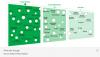
As much as educational institutions may not want to talk about it, they to a degree depend on sales, in the form of student registrations. This article reconsiders the traditional 'sales funnel' which runs from awareness to consideration to action (it's called a funnel because the number of people gets narrower and narrower through each state). This article proposes a '4s' version of the funnel: streaming, which refers to the new 'always on' internet people have; scrolling, which refers to their browsing behaviour; search, which refers to their consideration of alternatives; and shopping, which refers to the actual purchase.
Web: [Direct Link] [This Post][Share]
Nobody is Coming to Save Us, But...
Alex Usher,
HESA,
2025/03/17
"The age of American Science is over, and it's not coming back any time soon," writes Alex Usher. "The opportunity exists, therefore, for ambitious universities to scoop up a fair bit of top new talent." He's speaking to a Canadian context, but of course the opportunity exists worldwide. And in Canada, since governments won't find new researchers, he suggests, universities should consider recruiting foundations to fill in the gap. The problem with this is that foundations have an agenda, and in a lot of cases that agenda lines up with the sort of thinking that led the U.S. into the position it's in now. There's a reason why we want public funds to support public education; it keeps the country from going off the rails.
Web: [Direct Link] [This Post][Share]
Manus
2025/03/17
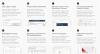
George Siemens links to a couple new language models from China in his latest newsletter. First is Manus, "a general AI agent that turns your thoughts into actions" by deploying AI agents to do tasks for you. "Here's an example of a 'big tech stock performance' I requested," writes Siemens (noting it's hard to track how accurate the output is). Alsoi from China, Baidu launched its own "4.5-worthy LLM", Ernie. "Biggest difference between Ernie 4.5 and GPT-4.5? Ernie is 1% of the cost."
Web: [Direct Link] [This Post][Share]
“Wait, not like that”: Free and open access in the age of generative AI
Molly White,
Citation Needed,
2025/03/17

Molly White writes on the conundrum facing people who publish open access or free context: its use by companies in ways never intended by the authors: their content packaged into an ebook and sold on Amazon, or their code used to create a billion-dollar software company; or their art packaged into an NFT. Now (if I may say so) I have always expected this sort of thing, which is why I have always used and defended the use of the 'non-commercial' clause. White just sloughs off this response; "(and thus, non-free)". She says, instead, that we "we need to reframe the conversation to 'wait, not only like that' or 'wait, not in ways that threaten open access itself'." Well, yeah. But that's exactly what commercial use does. That's why I argue that 'non-commercial' is more free than the so-called 'free' licenses without restrictions. Image: Wikipedia.
Web: [Direct Link] [This Post][Share]
There are many ways to read OLDaily; pick whatever works best for you:
- Read in your web browser on this web page, updated weekdays
- Receive a daily or weekly email newsletter by subscribing here
- Subscribe to the RSS feed using your favourite feed reader
- Follow @OLDaily@mastodon.social on Mastodon or elsewhere in the fediverse
- Follow @OLDaily on Twitter
- Integrate the open API using the JSON feed
This newsletter is sent only at the request of subscribers. If you would like to unsubscribe, Click here.
Know a friend who might enjoy this newsletter? Feel free to forward OLDaily to your colleagues. If you received this issue from a friend and would like a free subscription of your own, you can join our mailing list. Click here to subscribe.
Copyright 2025 Stephen Downes Contact: stephen@downes.ca
This work is licensed under a Creative Commons License.