

Stephen Downes

Knowledge, Learning, Community

Please select a newsletter and enter your email to subscribe.

Stephen Downes spent 25 years as an expert researcher at the National Research Council of Canada, specializing in new instructional media and personal learning technology. With degrees in Philosophy and a background in journalism and media, he is one of the originators of the first Massive Open Online Course, has published frequently about online and networked learning, and is the author of the widely read e-learning newsletter OLDaily. He is a popular keynote speaker and has presented at conferences around the world. [More]

Support OLDaily

OLDaily has been free and open to all readers since 2001. It is a valuable and widely-used resource for educators, researchers, and learners worldwide. Please consider a monthly contribution to sustain the time and resources required to publish it every day.


Here's what's in the latest edition of OLDaily

Industry to Educators: Teach Human Skills, Not Just AI
79441 image icon

The headline here is that "a year after 250 CEOs demanded mandatory AI education, industry leaders are zeroing in on the durable 'human' skills they can't hire for." That sounds good, but as always, I would warn against depending on industry leaders to define what should be taught. For one thing, it's often wrong. But more importantly, their advice is intended to benefit them, not the students. Consider this: "what we need is to figure out how to teach the human skills – how to teach future-proof skills that set an employee up for success no matter what domain they find themselves in." Why would this be important. Well, it could be because technology is changing so rapidly. But from where I sit, it's just as likely that employers want to hire human cogs they can quickly 'retrain' and slot into positions the employees never expected to be doing when they were hired - a lot like the way Facebook transferred software engineers into data-labeling peons.

Today: Total: Mike Kentz, How We Frame Machines, 2026/06/23 [Direct Link]


This Week in Student Success
79440 image icon

I'm not sure 'disjuncture' is the best word for the contradictions being described by Glenda Morgan in this article on the differences between what teachers think they are delivering and what students think they are receiving. But the point is still valid. For example, "When asked whether they were incorporating real-world projects into their courses, between 58% and 73% of faculty said they were, depending on whether workforce readiness was a high priority for them. Yet only 26% of students reported completing a real-world project in a course." Considering the difference in employment between those who did, and did not, receive workplace experience, you can see ho important this is.

Today: Total: Glenda Morgan, On Student Success, 2026/06/23 [Direct Link]
3 Fresh Ideas for Structuring Professional Development
79439 image icon

If you wanted to make a keynote feel more like indoctrination than an opportunity to stretch the mind, I can't thing of a better method. The '3 fresh strategies' come strain from that playbook: first, facilitated pre- and post-keynote sessions, to frame it; second, a curated Q&A session to screen participant interaction; and third, mandatory poster sessions. Now I admin, I might have been a bit jaded, after reading the sixteen Principles of Learning authored by presenters Jenn White and Josh Kurzweil. I mean, maybe this approach is good for children (though I doubt it). But speaking for myself, I would find such a tightly regimented professional development event to be a form of torture.

Today: Total: Jennifer Gonzalez, Cult of Pedagogy, 2026/06/23 [Direct Link]
Multi-Agentic EdTech: The Promise and the Costs
79438 image icon

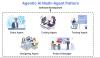
Michael Feldstein offers a useful summary of what 'multi-agentic AI' might look like in education: "Imagine a team of learning designers, each of which has particular skills and is assigned to perform a particular task on the way to designing a course. Imagine also that they have workflow and communications tools so that one designer can know when there's work waiting from another designer." He also touches on the cost of the multi-agentic workflow, especially across institutional boundaries, as there's no real way to moderate it - costs are shifting from flat-rate to per-token, where users are charged for content both input and output, the scale of both of which are determined by the individual agents.

Today: Total: Michael Feldstein, e-Literate, 2026/06/22 [Direct Link]
There are too many JavaScript schema libraries, so support only one
79437 image icon

This is rather technical, but is an example of building compatibility in the 'interfaces' between different application domains. "Standard Schema does not standardize error formatting, metadata, defaults, JSON Schema generation, or schema introspection. If you need those, you still have library-specific work to do.... There are too many JavaScript schema libraries. The fix isn't fewer libraries. It's an interface they can all agree on."

Today: Total: Aaron Harper, Inngest Blog, 2026/06/22 [Direct Link]
Transforming AI models into useful model organisms
79436 image icon

I have talked in the past about the similarity between neural networks and human brains (as recently as a few days ago) and while there is overlap, they are not the same, and this article is careful to draw the distinction. At the same time, there is a lot of overlap, and we can learn from that. "By moving away from seeing AI models as finished computational models of the brain and instead leveraging them as model organisms that we can perturb and evolve, we move closer to cognitive neuroscience that doesn't just describe the brain but truly understands its mechanics."

Today: Total: Mariya Toneva, The Transmitter, 2026/06/22 [Direct Link]

Stephen Downes Stephen Downes, Casselman, Canada
stephen@downes.ca

Copyright 2026
Last Updated: Jun 22, 2026 8:37 p.m.

Canadian Flag Creative Commons License.