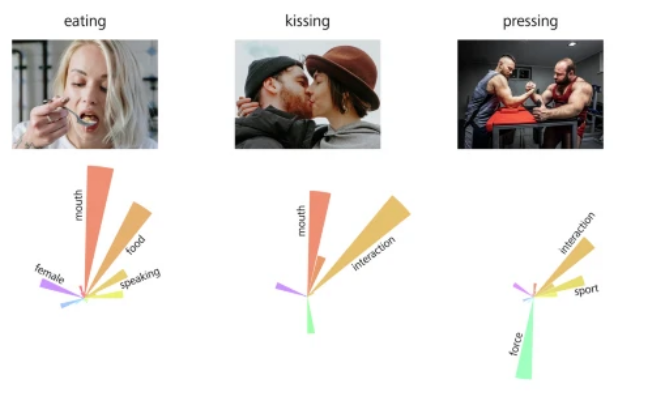
I confess, what drew me to this paper was its use of recognition and similarity. Long-time readers know these are central to my own understanding of cognition. In this case, the study asked, how do we recognize types of actions, and had subjects associate actions by similarity. "This approach revealed 28 meaningful dimensions (e.g. interaction, sport and craft) which capture information concerning human actions as well as a broad range of related domains (e.g. living and non-living things)." What's important here aren't the specific categories, but the importance of the multidimensional space underlying them. "Dimensions captured different types of information from broadly different domains, including human actions, living and non-living things, environment, substance, and force, at varying levels of abstraction." Via IDW.
Today: Total: [] [Share]