
Stephen Downes

Knowledge, Learning, Community

Please select a newsletter and enter your email to subscribe.

Stephen Downes spent 25 years as an expert researcher at the National Research Council of Canada, specializing in new instructional media and personal learning technology. With degrees in Philosophy and a background in journalism and media, he is one of the originators of the first Massive Open Online Course, has published frequently about online and networked learning, and is the author of the widely read e-learning newsletter OLDaily. He is a popular keynote speaker and has presented at conferences around the world. [More]

Support OLDaily

OLDaily has been free and open to all readers since 2001. It is a valuable and widely-used resource for educators, researchers, and learners worldwide. Please consider a monthly contribution to sustain the time and resources required to publish it every day.


Here's what's in the latest edition of OLDaily

PACT: Anonymous Credentials for the Web
79453 image icon

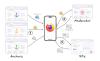
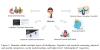
Websites have good reasons to block bots, spam, and the rest, clearly. And so they have been asking readers to prove that they are human using methods that have become more and more intrusive. And, equally obviously, readers have good reasons for not wanting to be identified by websites; if nothing else, once they know who you are, a deluge of advertising usually follows. So, what, then? Apple and Google both tried, but with solutions that locked the reader into the corporate ecosystem. Cloudflare does things like rate limiting and tests 'of your humanity' (try not to act like a robot for a moment). Here, Mozilla returns to the Privacy Pass protocol, originally developed in 2018. But they need a trusted starting point, which in this scheme is called an 'Anchor'. Anchors are endorsed by other entities (let's just call it a federation, though you won't see that word in this article). In turn, they vouch for browser sessions to moderators, who manage things like access and rate flow. The token you receive from the moderator contains no information about who you are. The system is called Private Access Control Tokens (PACT).

Today: Total: Dennis Jackson, Mozilla, 2026/07/01 [Direct Link]
Why we’re asking readers to register
79452 image icon

I was all in ten years ago when Rest of World came out. It would finally be an authentic source of international voices. And that's how it presented itself. Only later, when it was revealed to have been founded by Sophie Schmidt, daughter of former Google CEO, Eric Schmidt, and Wendy Schmidt, did I realize what sort of trajectory we were really being taken along. Viewed through this new context (not 'lens') story selection became more suspect and motivation less clear. And now we've reached the inevitable point where Amercan commercialism trumps, if you will, the rest of world: the subscriptions are being required now, and it's only a matter of time before payment will be required. Then an exit.

Today: Total: Rest of World, 2026/06/30 [Direct Link]
Critique of Agent Model
79451 image icon

"It has become essential," write the authors, "to clarify where automation ends and agency begins." This paper (44 page PDF) identifies five essential characteristics of agency: "goal, identity, decision-making, self-regulation, and learning." The authors distinguish between "agentic systems, which complete tasks through externally orchestrated tools and workflows, and agentive systems, whose capabilities arise from internal organization." They then introduce a "GIC (Goal-Identity-Configurator) architecture, which provides concrete proposals for each of the five aspects of artificial agency and resultant capabilities within a single adaptive system. The importance of learning in this context is clear: "a more complete notion of agency... treats learning as continuous and endogenous, taking two complementary forms: learning from real interaction, where the agent updates its parameters θ based on deployment experience, and learning from simulated experience, where the agent generates hypothetical trajectories through its world model f and trains on them without real-world interaction." Experience and Prediction: takes me back to my undergrad days reading Hans Reichenbach.

Today: Total: Eric Xing, Mingkai Deng, Jinyu Hou, arXiv.org, 2026/06/26 [Direct Link]
Open Weights + Open Content = Free, Private, AI-Powered Learning
79450 image icon

David Wiley introduces a new prototype. It " combines (1) an OpenStax textbook, (2) a knowledge-graph representation of the book's contents, and (3) an open weights LLM that runs locally inside your web browser." What's nice is that "the locally-running LLM means you can chat forever without having to pay per-token costs, and the knowledge graph means you can browse a visual map of the book that is interlinked with the content itself." I haven't tried it (logistics are an issue while bikepacking in Iceland) but it's a concept I'm definitely doing to incorporate into my own work.

Today: Total: David Wiley, improving learning, 2026/06/26 [Direct Link]
How we’ll fight the platform war against Big AI
79449 image icon

The only reason why there's even such a thing as a 'platform war' against AI is that the companies pushing AI are already, for the most part, platforms. Microsoft. Google. X/Twitter. The reason there's even a need for a war has nothing to do with AI in particular, it's because we've for the most part caved to the big platforms already. Anyhow. Anil Dash offers a few suggestions. First, get in front of it by using "open tools or interfaces that aren't controlled by the Big AI companies" to access AI services. Keep hold of the ability to "seamlessly switch between different AI providers on the fly." Where you can, use Non-commercial LLMs. And on a less useful note, he recommends getting angry.

Today: Total: Anil Dash, 2026/06/25 [Direct Link]
Does this help someone learn?
79448 image icon

When someone says the question should be, "does this help someone learn?" my response is usually to ask, "what do you mean by that?" Part of that is the philosopher in me, but the rest of it is a concern they're focused on teaching to specific outcomes or teaching to the test, neither of which really has the interests of the learner in mind. David Hopkins doesn't exactly take that path, but he is very concerned to make us aware that learning isn't always fun and that design should not increase cognitive effort. Standard instructivist stuff. It's as though learning is a search problem: "They find what they need, understand it and move forward with confidence." I appreciate the desire to get the message across. But that's not 'learning' in any meaningful sense.

Today: Total: David Hopkins, David Hopkins / Education & Leadership, 2026/06/25 [Direct Link]

Stephen Downes Stephen Downes, Casselman, Canada
stephen@downes.ca

Copyright 2026
Last Updated: Jun 29, 2026 10:37 a.m.

Canadian Flag Creative Commons License.