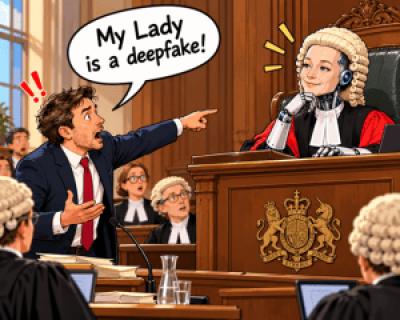
This article discusses the justice system in particular, but the same argument can be made with any evaluative systems whatsoever, including career and academic evaluation. The argument is that the AI has a complete understanding of the law and does not let things like the time of day colour its judgements. AIs today are far less prone to hallucinate, and despite the concerns that they are biased, even the slightest tst will show that humans are far more biased. Still, it doesn't feel right to be judged by a machine, and that's what this article misses. Why doesn't it feel right (and why isn't this just yet another example of human bias disregarding the facts)? There is to be sure a nuance that informs human judgement that systems dealing only in theories and abstractions overlooks. In another post today I referenced the million variables that lie behind why people make the decisions that they do. We humans can sense these variations, even if we can't name them or provide them by way of an explanation. Having 86 billion neurons (and the connections between them) makes that possible. AIs are still toys in comparison. Understanding this is important to understanding cognition, both human and machine.
Today: Total: [] [Share]