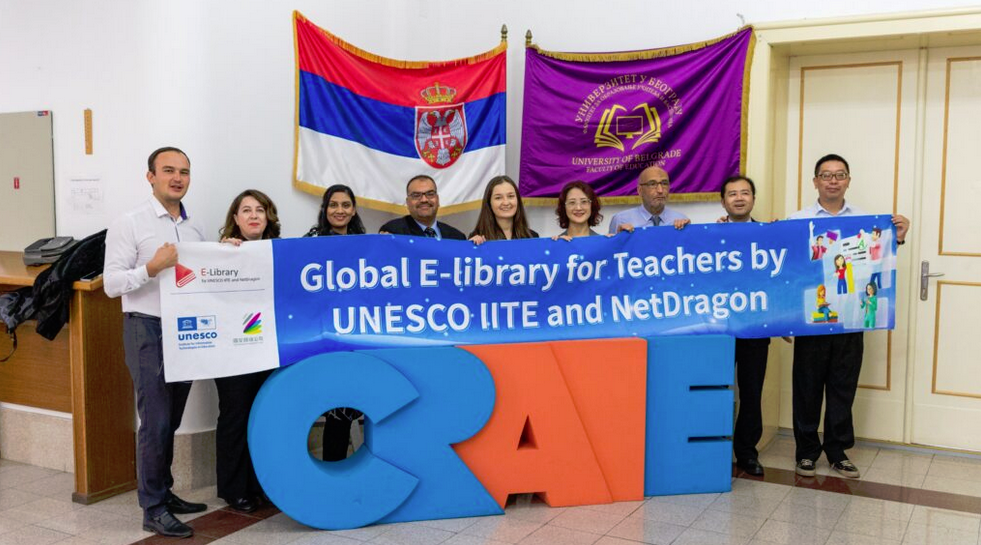
This paper is a critical reflection of UNESCO's policy role in the governance of AI in education (AIED). It's a jigsaw puzzle of a paper, consisting less of a logical flow and more as a set of pieces that fit together to form a perspective. Two pieces are UNESCO's own view of its own role in AIED: on the one hand, as a champion of human rights and justice, and on the other hand, anticipating and sometimes facilitating disruptive technologies. Four pieces are different ways of viewing international organizations (IO): "global governance theory, Foucauldian governmentality, AI ethics critiques, and critical education policy." Three additional pieces are functions regarding AIED: "observatory, capacity development, and normative frameworks." Then there are pieces describing what UNESCO does: "production of policy guidance, teacher support tools and mapping exercises focused on the incorporation of AI into national curricula." The picture that emerges is a "structural decoupling between UNESCO's rhetorical commitments and its policy implementation in the governance of AIED." UNESCO should be supporting development and human rights, but may instead see AIED as an opportunity to enhance its governance function. Image: UNESCO IITE.
Today: Total: [] [Share]