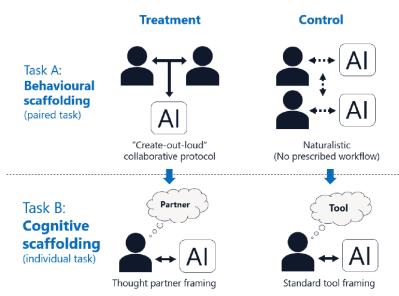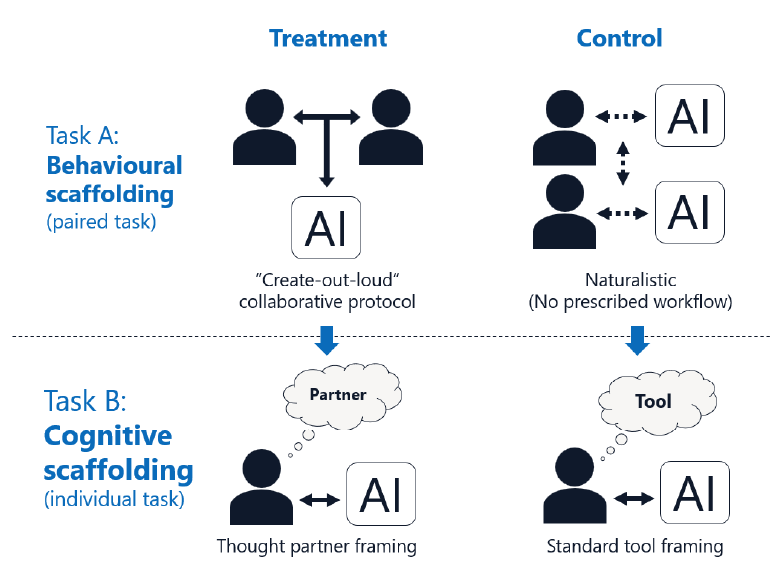
This paper from Microsoft proposes that people get better results from AI if they think of it as a conversational partner rather than a simple tool like a search engine. It compares two educational approaches designed to support this approach: behavioural scaffolding, which "refers to explicit protocols that structure how humans interact with AI systems", and cognitive scaffolding, which "refers to interventions that reshape users' mental models of AI." The results? "Behavioral scaffolding was associated with lower output quality, consistent with coordination costs exceeding collaboration benefits." Meanwhile, "Cognitive scaffolding may shift mental models but the evidence for genuine training-induced change is not strong enough to confirm it." Overall, "The implication is not that collaboration with AI is harmful, but that mandating a specific synchronous protocol under the infrastructure conditions of this study was associated with worse outcomes than allowing flexible use." Despote the ambiguity of the results readers can learn a lot from this paper. See also the interactive data explorer from the paper. Via AI Mindset, which interprets the results far more positively than I did.
Today: Total: [] [Share]