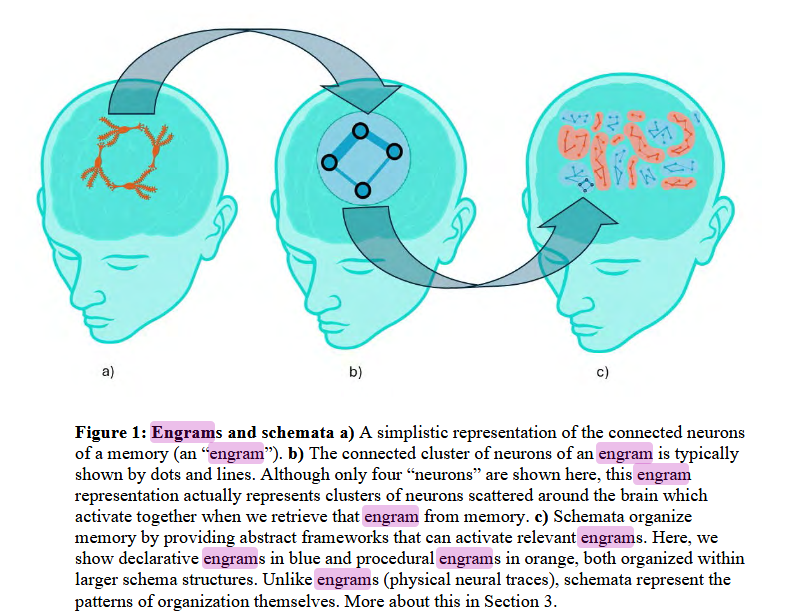
This book chapter preprint (50 page PDF) makes the argument that the explanation for declining IQ scores in developed nations since the 1970s can be explained by "the growing prevalence of cognitive offloading and pedagogical trends that minimize direct knowledge acquisition." I should be clear at the outset that I disagree with most of what's in this paper, even if we ignore its obvious circularity (IQ tests reflect specific practiced skills; less practice in these specific skills by definition results in lower IQ scores). The paper is mostly about why these specific skills are necessary, and the article essentially reduces to the need to have internalized specific "engrams, schemas, and manifolds that neuroscience now recognizes as central to understanding and enhancing learning". I would argue that neuroscience recognizes no such thing: even if engrams, schemas, and manifolds constitute a significant part of cognition (which I doubt) these would develop in any case, no matter how we were taught, and the question of which specific engrams, schemas, and manifolds best suit the needs of learners is a question of social science, philosophy and politics, not neuroscience. There's a lot more to disagree with on a paragraph-by-paragraph level; readers should not be convinced by this mish-mash of conflicting theories and research. Via Brian Mulligan.
Today: Total: [] [Share]