If you didn't get yesterday's newsletter you can find it here
Can you guess today’s Wikipedia article in seven clues?
Diff,
2026/10/14

As reported here, "WikiWhiz is a free daily guessing game built on top of English Wikipedia and other sister projects. If you've played Wordle, the rhythm will feel familiar: one puzzle a day, same for everyone, and a result you can share with friends. The difference is the answer. Instead of a five-letter word, it is a Wikipedia article, and the clues come from the knowledge our communities have spent more than two decades building." Good fun on a slow news Thursday.
Web: [Direct Link] [This Post][Share]
Designing Websites for People and AI Agents with WebMCP
Angie Jones,
O'Reilly,
2026/10/14

If AI agents visit your website you might be interested in this: "WebMCP (not to be confused with MCP) gives web developers a standard way to publish structured tools to access the capabilities of their website enabling agents to call those functions with structured inputs." This article describes them, shows how to build them, and explains how to put them into action.
Web: [Direct Link] [This Post][Share]
The Probably Fake Russian Troll Exodus
Pixel Envy,
2026/10/14
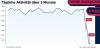
A pretty good joke made the rounds this week suggesting that a large number of online pundits disappeared following Ukrainian strike on Russian data centres like Yandex. It's funny because it feels true, but it's also probably based more on myth than fact. The data seem compelling (see this chart, in German) but "the unknown or possibly non-existent data base as well as the inaccurate scaling and values "from the future" show that this is not a meaningful, fact-based graphic created according to statistical methods."
Web: [Direct Link] [This Post][Share]
Building the I2IDL Glossary Of Digital Learning as Infrastructure
Shelly Blake-Plock,
Institute for Infrastructure and Interoperable Data in Learning,
2026/10/14

EThis article describes the evolution of the Glossary of Digital Learning into a linked data resources that can be accessed by algorithms and data models. "Each concept now has a stable identity, source provenance, machine-readable JSON-LD and Turtle representations, and a place within a queryable semantic model." I get the intent of this - we want the model to depend on a reliable data set to inform its understanding of basic terms and concepts. What concerns me (and it is a theoretical concern only; I have no particular issues with this glossary) is how we come to define and formalize these terms and concepts. Do we leave it to expert bodies to define them a priori? Do we employ a mechanism that bases the definitions in actual usage? Is a semantical representation the best way to do this, or does it create sharp edges where fuzziness would be preferred?
Web: [Direct Link] [This Post][Share]
What makes our minds different and where does it come from?
Mathew Ingram,
The Torment Nexus,
2026/10/14

This article is worthwhile mostly for the links to various arguments and accounts around consciousness (be sure to follow them) and especially for its link to the different models of consciousness page on Scholarpedia, which is a daunting list of the alternatives to consider when pondering this question. Here's my take: the only way there could be a distinctly human consciousness would be if, because of physical limitations, it lacks something that a full-fledged consciousness would possess.
Web: [Direct Link] [This Post][Share]
There are many ways to read OLDaily; pick whatever works best for you:
- Read in your web browser on this web page, updated weekdays
- Receive a daily or weekly email newsletter by subscribing here
- Subscribe to the RSS feed using your favourite feed reader
- Follow @OLDaily@mastodon.social on Mastodon or elsewhere in the fediverse
- Follow @OLDaily on Bluesky
- Read OLDaily as a LinkedIn Newsletter
- Integrate the open API using the JSON feed
This newsletter is sent only at the request of subscribers. If you would like to unsubscribe, Click here.
Know a friend who might enjoy this newsletter? Feel free to forward OLDaily to your colleagues. If you received this issue from a friend and would like a free subscription of your own, you can join our mailing list. Click here to subscribe.
Copyright 2026 Stephen Downes Contact: stephen@downes.ca
This work is licensed under a Creative Commons License.