Fediponics
Fediponics,
2026/10/06
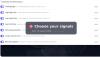
This looks like a nice service: "Fediponics scores every new signup, catches bots before they post, and shares threat signals across instances. Keep your community safe without spending hours reviewing signups by hand." I haven't tried it, since I don't run an instance, but it comes well recommended. "The scanning and scoring engine behind Fediponics is published as Fediponics Core. Self-host it free on a single instance, read the code that scores your signups, or send a pull request — the hosted product on this page is built on that same core." There was a GitHub but it seems to be gone now (not a good sign).
Web: [Direct Link] [This Post][Share]
NextGraph
NextGraph,
2026/10/06

This is an interesting project that deserves more investigation. "Based on CRDTs, NextGraph brings about the convergence between P2P and Semantic Web, towards a secure and privacy-preserving cloud... Features a social network, shared documents, productivity tools, an app store, and more! You can use NextGraph for free : resilient, secure, private and encrypted. You own your data and software! Developers can build new web3.0 local-first apps with our open source framework, based on open standards, with CRDTs, E2EE, Linked Data, JSON, Markdown." It's more in the realm of blockchain than social networks, but does represent an overlap between them. Have a look at the documentation here.
Web: [Direct Link] [This Post][Share]
Reintroducing Spaces
Daniel Holmgren,
Daniel's Leaflets,
2026/10/06
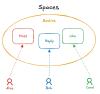
Interestong article on ATmosphere's new 'spaces' proposal (planned launch for November). The idea of a space is that it's like a group of, say, Bluesky users that share a common place where they share posts or other content. It's a way of managing ATmosphere content, like BlueSky posts, that you want to limit access to. This post describes some of the thinking and mechanics behind it. See also the proposal on OpenSocial, and as well as this discussion at the atmosphere Discourse group.
Web: [Direct Link] [This Post][Share]
Dear Software Makers
Jim Nielsen,
Jim Nielsen's Blog,
2026/10/06
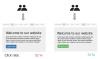
I think this post raises a good point. YouTube is releasing a new feature for creators allowing them to create different versions of their videos to see which one performs best (which in YouTube's world means gains the most and longest views, the essential conditions for monetization). This is known in the business as 'an A/B test'. But this, writes Jim Nielsen, raises questions: how do viewers know they're in an A/B test? Which versions do the comments refer to? If I share it, will other people see the same video I did? Marques Brownlee, writes Nielsen, has released a video essay asking YouTube not to do this. "There's this sort of unspoken rule of community on YouTube, that like we're all having this same experience together." Nielsen echoes Brownlee's concerns. And I have to say, I am sympathetic with the argument.
Web: [Direct Link] [This Post][Share]
Vibe-Coding a Self-Hosted LMS with Courses
Miguel Guhlin,
Another Think Coming,
2026/10/06
Miguel Guhlin began by vibe-coding a learning management system his school could host on its own servers. Not a bad project. Then he asked, "What else would make this useful?" Turns out, he says, quite a bit. SapiqoLMS now goes beyond importing courses. This article lists a number of things hes done, including organizing learning around your people, giving learners something to do, and giving achievement a lasting record. Short post, most useful for stretching your imagination a bit. "The roadmap still calls for stronger recovery, accessible navigation, assignments, rubrics, and institutional pilots."
Web: [Direct Link] [This Post][Share]
The Aging Brain Isn't Declining – It's Adapting, Study Finds
David Nield,
ScienceAlert,
2026/10/06

This article summarizes a paper on how the brain ages. "Prevailing theories of cognitive aging depict late life as a period of compensatory decline," write the authors. "We propose instead that aging represents a continuation of development: a genetically conserved, adaptive reorganization of memory systems that parallels the brain's earlier-life transitions." The paper is paywalled but has been covered by other publications, including APS (here), See also the Continuity Theory of Aging. Of course as I reach the age papers like this are talking about the subject is of more interest to me, though there isn't a lot I can do about whatever the actual progression turns out to be, other of course than to continue using and challenging my brain as much as possible.
Web: [Direct Link] [This Post][Share]
Testing a Knowledge Library for AI Agents
Joon Suh Choi, Kumar Garg,
Renaissance Philanthropy,
2026/10/06

"We are piloting a knowledge library for AI agents in the field of learning engineering," write the authors. "You can connect to your agent so that it uses the index directly here. A simple chat agent that uses the index as a reference. A browsable web app is here." I haven't tried it out but I'm keeping it here for reference; this is something that a personal learning environment (PLE) of the future might want to plug into.
Web: [Direct Link] [This Post][Share]
Partitives, groups, and wholes
David Nicolas, Jonathan D Payton,
The Philosophical Quarterly,
2026/10/06
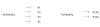
This article dives into the weeds but raises an important issue always worth keeping in mind. "There's an attractive view in social ontology on which a group is identical to its members," begins the paper, but "whether something counts as 'one of' a plurality turns on how that plurality is carved up." We say a wall may be composed of bricks, but how those bricks are organized matters. We may say a group is composed of people, but how those people participate matters. Even identical properties render differently depending on how individuals are counted: compare "Two of the players are Québécois" with "Two of the teams are Québécois."
Web: [Direct Link] [This Post][Share]
There are many ways to read OLDaily; pick whatever works best for you:
- Read in your web browser on this web page, updated weekdays
- Receive a daily or weekly email newsletter by subscribing here
- Subscribe to the RSS feed using your favourite feed reader
- Follow @OLDaily@mastodon.social on Mastodon or elsewhere in the fediverse
- Follow @OLDaily on Bluesky
- Read OLDaily as a LinkedIn Newsletter
- Integrate the open API using the JSON feed
This newsletter is sent only at the request of subscribers. If you would like to unsubscribe, Click here.
Know a friend who might enjoy this newsletter? Feel free to forward OLDaily to your colleagues. If you received this issue from a friend and would like a free subscription of your own, you can join our mailing list. Click here to subscribe.
Copyright 2026 Stephen Downes Contact: stephen@downes.ca
This work is licensed under a Creative Commons License.