Seven Theses Against Viewpoint Diversity
Lisa Siraganian,
Academe Magazine,
2026/09/02

My own view on 'viewpoint diversity' is that, while I hold that diversity is a good thing, I don't believe that the proponents of viewpoint diversity actually want diversity; they rather want more support for one particular type of viewpoint. Otherwise, we'd see them advocating for more Marxists in business schools and for progressives to be appointed to corporate boards. My opinion here aligns with thesis number seven in this set of arguments offered by Lisa Siraganian.
Web: [Direct Link] [This Post][Share]
Consent and the Formation of Preferences
Richard Pettigrew,
Blog of the APA,
2026/09/02
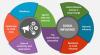
Arguably, consent is based at least in part on our preferences. But in some cases those preferences are not really our own. We're not talking about coercion here, but cases whether the preference really appears to be genuine, and yet is created through some indirect mechanism, such as the manipulation of information, or forcing you to pay attention to something. This article discusses the sorts of preference-creation mechanisms that can inform legitimate consent and those which don't. The author finds the difference in "the room these mechanisms leave you for the free exercise of agency." But it's a fine line, and in many ways fuzzy. Image: kleidkunst.de
Web: [Direct Link] [This Post][Share]
Counteracting host reactions to synthetic reprogramming in animal forms of artificial life
Ithai Rabinowitch, Leonardo Bich, Andrea Roli, Elio Tuci,
PhilSci Archive,
2026/09/02
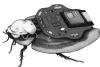
You might want to read this (7 page PDF) twice: "Recent advances in synthetic biology enable the reconfiguration of neural circuits within live animals, making it possible to reprogram their behaviours, and create animal forms of artificial life. While fulfilling human design goals, such systems actively preserve their autonomy, self-maintenance and self-regulation, which could create a conflict disrupting the functioning and persistence of either host organism or the synthetic module incorporated in the host." In other words, if we rewire a living beetle, what happens if the beetle reasserts its own autonomous behaviour? Note that we're not asking whether we should rewire living neural networks - we're already doing that - but rather, what happens when we do. When you think about it, societies and educators face the same sort of problem with their students - what happens when the student's we've taught begin to assert their own independence (possibly subverting the system that educated them in the first place)?
Web: [Direct Link] [This Post][Share]
How to Build Your Own Data Dashboard: No Coding Required
Vicki Davis,
Cool Cat Teacher Blog,
2026/09/02

I may as well offer this glimpse into a whole community of practitioners, promoters and technologies directed toward the U.S. school system. From my perspective it's sort of funny to see that this is where some of the original edubloggers like Vicki Davis (Cool Cat Teacher) and John Spencer ended up. There's a lot of product placement and commercialism wrapped up in all of this, from the podcast sponsor (Experience AI, a free program co-founded by the Raspberry Pi Foundation and Google DeepMind) to the podcast guest A.J. Juliani's ajjuliani.com 'AI-Ready School Leaders cohorts'. None of this is to say there's no value here - the discussion of 'how to build a data dashboard without writing code' is something teachers can actually use. And there are arguments about how AI can be used in the classroom to help students learn: "Last year, when I taught my students spreadsheets, I also taught them to use AI to help them build pivot tables and interpret data, and I was shocked at how quickly they learned and advanced more deeply into data analytics than I could ever get them before." Anyhow, like I say, there's a whole world here, worth watching and, once in a while, linking to.
Web: [Direct Link] [This Post][Share]
There are many ways to read OLDaily; pick whatever works best for you:
- Read in your web browser on this web page, updated weekdays
- Receive a daily or weekly email newsletter by subscribing here
- Subscribe to the RSS feed using your favourite feed reader
- Follow @OLDaily@mastodon.social on Mastodon or elsewhere in the fediverse
- Follow @OLDaily on Bluesky
- Read OLDaily as a LinkedIn Newsletter
- Integrate the open API using the JSON feed
This newsletter is sent only at the request of subscribers. If you would like to unsubscribe, Click here.
Know a friend who might enjoy this newsletter? Feel free to forward OLDaily to your colleagues. If you received this issue from a friend and would like a free subscription of your own, you can join our mailing list. Click here to subscribe.
Copyright 2026 Stephen Downes Contact: stephen@downes.ca
This work is licensed under a Creative Commons License.