
How your brain and body work together to shape experience
Debra Herrick,
Futurity,
2026/09/01

I honestly think the view expressed here represents a confusion about how the brain and body interact. Here's the argument offered by Asa Young: "The brain is not simply receiving messages from the body... The heartbeat, breath, and gastric rhythm are regular, predictable signals around which groups of neurons can organize, determining when they become more or less receptive to information." I don't deny any of that. But consider this analogy: "The findings also complicate the familiar image of a brain in a vat," says Young. "This science-fiction brain, kept alive but severed from its body, might still generate neural activity. Yet it would be cut off from the recurring bodily signals that help give experience its visceral character and anchor it to a living self." But the 'brain in a vat' thought experiment postulates a brain complete with input signals exactly like those from the various senses, including bodily sensations, as well as physical parameters, such as blood flow. There isn't some magic non-physical mechanisms through which the body interacts with the brain. And if it's physical, it can be emulated.
Web: [Direct Link] [This Post][Share]
Education’s Conference Problem
Mark Baxter,
Eduwonk,
2026/09/01

My main objection to this article is that it uses the word 'convening' as a noun, which hurts my ears. Beyond that, the criticism of conferences is reasonably sound. "The power dynamic with funders often leads to programming that focuses on showcase rather than struggle and performative agreements rather than engaging to understand the hard nuances of our work." Also, "the format, as it usually is now, pretends it is about content and problem-solving (w)hen, in fact, it is built around hallway conversations and drinks at the bar." I don't think turning conferences into some sort of school addresses the issue. Let's recognize them for what they are, 'continued socialization into a discipline'. This is a pretty complex function, and is a lot more than just 'learning stuff', 'solving problems' or 'achieving outcomes'.
Web: [Direct Link] [This Post][Share]
Is open, distance, and digital education (ODDE) good for the environment? A systematic review of carbon footprint studies
Olaf Zawacki-Richter, Berrin Cafa,
Online Learning,
2026/09/01

You'd think at first glance that Open, Distance, and Digital Education (ODDE) is good for the environment. After all, it means we don't have to build learning institutions and travel to them, not to mention the savings in pulp and paper production. That's not really what this review (26 page PDF) finds, though. "ODDE relies heavily on digital devices and infrastructure. Each year, billions of electronic devices are manufactured. The production of these devices and their batteries relies on dozens of nonrenewable resources, including scarce metals and rare earth elements... studies also provided insights into certain rebound effects, where energy savings in one area are offset by increased use in another." The main result, though, is that nobody has enough data to actually say one way or another.
Web: [Direct Link] [This Post][Share]
“Enshittification” Isn’t Real
Ruby Justice Thelot,
a16z,
2026/09/01

This is the first real pushback to Cory Doctorow's "enshittification" narrative I've seen. The argument, in a nutshell, is that platforms change because they're meeting the needs of a wider, more global, demographic, and the data says that user satisfaction has actually increased. Both arguments can be criticized. There are many reasons for change in platforms; user demographics is just one. The problems happen when change is motivated by increased monetization; this is what motivates increased focus on things like advertising and surveillance. And also, are people more satisfied? Author Ruby Thelot draws from American Customer Satisfaction Index (ACSI) data to argue that they are. There's no link, but that's probably because if you actually look ACSI up and read what they say, you read things like "correlation between corporate profit and customer satisfaction is turning increasingly negative" and "customer complaints are at record levels" with "now looming pent-up customer defection".
Web: [Direct Link] [This Post][Share]
Higher Ed Needs to Prove Students Are Learning
Doug Lederman,
Inside Higher Ed,
2026/09/01

In this open access article, Doug Lederman argues that "that colleges and universities collectively are unable—or have declined—to measure and prove whether and how much their students learn." This is presented as a Big Problem. "It's hard to persuade people that your primary 'product' is worth paying for when you can't prove they're actually getting it." This argument, though, presumes that 'learning' is the primary 'product' and that it can be measured. I don't think either is true. The objective of higher education, from my perspective, might better be characterized as 'socialization into a discipline'. Sure, maybe there are facts and theorems to be learned. But it's mostly about making connections, internalizing the values, and gaining practical experience. That's what makes online learning such a challenge, and why it's so hard to measure the value.
Web: [Direct Link] [This Post][Share]
Wander
Susam Pal,
Codeberg.org,
2026/09/01
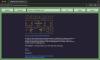
This is a really cool decentralized version of the web. "Each Wander console loads personal websites and pages recommended by the Wander community. Further, each Wander console can link to other Wander consoles, forming a lightweight, decentralised network for browsing the small web of personal websites.... The most interesting aspect of the Wander console is that everything happens on the client-side, on the user's web browser. As a website owner, you do not need to set up any server-side components. The only thing you need to do is place the above two files somewhere on your web server." Via Alan Levine.
Web: [Direct Link] [This Post][Share]
Firefox 155 Adds Two New Changes for Faster Web Browsing
Sourav Rudra,
It's FOSS,
2026/09/01

You might not believe it, but I browse the web without seeing advertisements, because I use Firefox. "This is the best time to switch to Firefox. uBlock Origin's full version has been broken on Chrome since Google disabled Manifest V2 back in July 2025, and yesterday Google kicked it out from the Chrome Web Store entirely." Via Doug Belshaw, who suggests Zen Browser as well.
Web: [Direct Link] [This Post][Share]
There are many ways to read OLDaily; pick whatever works best for you:
- Read in your web browser on this web page, updated weekdays
- Receive a daily or weekly email newsletter by subscribing here
- Subscribe to the RSS feed using your favourite feed reader
- Follow @OLDaily@mastodon.social on Mastodon or elsewhere in the fediverse
- Follow @OLDaily on Bluesky
- Read OLDaily as a LinkedIn Newsletter
- Integrate the open API using the JSON feed
This newsletter is sent only at the request of subscribers. If you would like to unsubscribe, Click here.
Know a friend who might enjoy this newsletter? Feel free to forward OLDaily to your colleagues. If you received this issue from a friend and would like a free subscription of your own, you can join our mailing list. Click here to subscribe.
Copyright 2026 Stephen Downes Contact: stephen@downes.ca
This work is licensed under a Creative Commons License.