
SenteLabsAI/OpenExecutive
GitHub,
2026/08/27
Several sources are reporting that "A CEO fired his development team to cut costs and replace them with AI. The developers fired back - by building an AI that replaces CEOs." The AI-powered virtual executive team - "a single coherent executive persona backed by 8 specialist Claude agents" - released by Sente Labs is called OpenExecutive. While readers may well imagine what OpenExecutive could do for the edtech industry and university administration, I'm wondering what it could do for my own moribund educational services sole proprietorship. Maybe I just need the inspiration and guidance of 'a senior advisor with Harvard MBA-level knowledge customized for my specific business.' Code on GitHub.
Web: [Direct Link] [This Post][Share]
Meta Just Paid Nearly $17 Billion To Make Sure It Gets To Write The Kid Safety Rules For Every Other Social Media Platform
Mike Masnick,
TechDirt,
2026/08/27
"By now," writes Mike Masnick, "you've almost certainly heard the news that Meta has settled with 52 state and local Attorneys General who had sued the company in some form or another over child safety on Meta's platforms." Most coverage has focused on the money the company has agreed to pay and the restrictions it entails. But I prefer Masnick's interpretation: "Meta just cut a deal to put itself in charge of how social media works going forward. As Justin Maurer wrote on Bluesky, this is Meta taking a 'please regulate me Daddy' approach to the government, and getting exactly what it really has been asking for." Part of the settlement even requires them to try to convince other social media platforms to follow the same rules. I don't disagree with regulation, but I think regulations should be evidence-based, independently written, and avoid regulatory capture.
Web: [Direct Link] [This Post][Share]
A New Framework for How the Brain Compresses Our Noisy World
Conor Feehly,
Quanta Magazine,
2026/08/27

I mentioned an article on emotions the other day, and Fredrik Graver asks "why the author doesn't reference more recent thinking on how emotions work," citing this article. It references the work of Lisa Feldman Barrett and Earl Miller who suggest that emotions play a role in categorization of sensory phenomena, where "A category is an event in which different things are treated as similar or equivalent in a particular situation." Barrett, for example, focuses on "the concept of allostasis: how an organism predictively regulates its energy use. In her view, emotion categories - fear, happiness, anger - resemble predictive 'action plans' that the nervous system generates to activate behaviors that have served us well before." I think this is plausible so long as we understand categorization as more like pattern recognition and not at all the same as attaching a word or concept to an experience. "Barrett and Miller are asking the field to move beyond a model in which categories are stored like documents in the brain's filing cabinet. From the way the brain is structured to compress sensory information, to how it predicts and prepares the body to respond, categorization is 'baked' in, the authors wrote."
Web: [Direct Link] [This Post][Share]
NYTimes: How Big Tech Captured American Schools
Natasha Singer,
Reddit,
2026/08/27

This is a reprint of a paywalled NY Times article arguing that "industry-sponsored teacher training is just one technique that Big Tech companies use to shape schools and promote their worldviews to students... a handful of giants have used their money, their might and their mammoth platforms to influence nearly every step of the education supply chain." There's an archive version in case the Reddit post disappears. Certainly it is true that tech corporations do a lot of their marketing through schools. But I think it's misleading to suggest this tactic is limited to "a handful of giants". At one point the article observes, "Many parents would likely object if, say, Exxon Mobil wrote their children's environmental science curriculum. Or if Purdue Pharma trained their children's biology teachers." But that's exactly what happens in both environment programs and in medicine. And almost everywhere else, from foreign policy to book fairs to culinary arts. In the new world of the engineered apprenticeship, this influence becomes harder to detect and at the same time more pervasive.
Web: [Direct Link] [This Post][Share]
The turbulent AI era is here. The choices we make now are critical.
Bill Gates,
Gates Notes,
2026/08/27
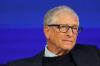
Bill Gates has come out with his own 6,000 word missive on AI, just a few days after Mark Zuckerberg's. It is, in my opinion, pretty light. It outlines some potential harms, including especially worker displacement. It's true that corporations have no plan for this; indeed, higher unemployment lowers wages, which corporations love to see. Gates also outlines some benefits, and makes a few recommentations: a new social architecture to manage the transition, some specific jobs reserved for humans, and a tax on AI - a robot tax, say, or a token tax. The spin is that he wants to slow down AI, but that's just an offhand comment near the beginning of the article. I personally think it misses the point - people don't want jobs per se, they want a secure and meaningful life. Right now, for most people, jobs are the only way to accomplish this. But for most people, it's not a great solution. We need something better.
Web: [Direct Link] [This Post][Share]
Carnap's Formal Philosophy of Science
Hans Halvorson,
Springer-Nature,
2026/08/27
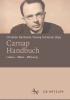
I have a lot of respect for Rudolf Carnap, not because I agree with what he argues - I don't - but because of the way he carried out the program systematically to its logical conclusion. As a result, we have a crystal clear format through which we can investigate the real issues behind those contained in the words (as Wittgenstein might say). This is a short (5 page PDF) overview. "For Carnap, the creation of symbolic logic makes it possible to formally model the language of science - where 'language' here is meant to include both grammar and logic. The goal of Syntax is not to carry out this program in detail with respect to specific sciences, but to provide a template for this kind of theorizing, and to explain the philosophical upshot of looking at science from this perspective." If you really want to study Carnap, this whole book is open access (528 page PDF) and is about 50-50 German-English.
Web: [Direct Link] [This Post][Share]
There are many ways to read OLDaily; pick whatever works best for you:
- Read in your web browser on this web page, updated weekdays
- Receive a daily or weekly email newsletter by subscribing here
- Subscribe to the RSS feed using your favourite feed reader
- Follow @OLDaily@mastodon.social on Mastodon or elsewhere in the fediverse
- Follow @OLDaily on Bluesky
- Read OLDaily as a LinkedIn Newsletter
- Integrate the open API using the JSON feed
This newsletter is sent only at the request of subscribers. If you would like to unsubscribe, Click here.
Know a friend who might enjoy this newsletter? Feel free to forward OLDaily to your colleagues. If you received this issue from a friend and would like a free subscription of your own, you can join our mailing list. Click here to subscribe.
Copyright 2026 Stephen Downes Contact: stephen@downes.ca
This work is licensed under a Creative Commons License.