
Making universities a part time world
Tom Worthington,
Higher Education Whisperer,
2026/08/07
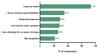
Tom Worthington points to Kelly Linden's report Is the problem us? Helping part-time students succeed in a full-time world (90 page PDF) which asserts (probably correctly) that "part-time students on average have lower rates of success and retention, and are more likely to belong to an equity group than full-time students." While Linden makes a number of progressive recommendations making exceptions for part-time students, Worthington argues this misses the point. "Programs should be designed for this mode of learning. This is not difficult or expensive to do, and ultimately simpler than designing for full time face to face students, then have to make special arrangements when it turns out most students are not." It's hard to imagine universities moving away from the full-time residential (or commuter) student model, but if they want to be more central and responsive to the needs of the community, they should be thinking this way.
Web: [Direct Link] [This Post][Share]
'Very hard on your mental health': Canadian workers speak out over software that tracks screen time
Kevin Maimann,
CBC,
2026/08/07

I think that the main lesson to be learned here is that when companies and organizations say that surveillance won't be used for something, don't believe them. "Her managers currently use ControliQ... Introduced about two years ago, the tool is increasingly used to 'shame and belittle' workers by displaying and comparing their 'productivity' metrics at meetings, the employee said. At a certain point, the power in the work-employee relationship needs to be rebalanced, I think. "I don't know if the company actually understands how almost degrading and humiliating it is to know that you have to have a babysitter when you're in your 50s, and you've been doing your job for 30 years, and you've been doing it well."
Web: [Direct Link] [This Post][Share]
Responsible AI in Academic Research
Michael J. Zyphur,
Instats,
2026/08/07
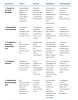
By 'responsible' the report (64 page PDF) means "AI use that is ethical, valid, reproducible, and transparent." The phrase is widely defined in principle, but "still lacks an operational definition". That is what this report is intended to address. It offers a "five-dimension competency framework" where each dimension is a precondition for the next. For example, "An institution that has not made the human-in-the-loop call (Dimension 1) cannot define responsible use in practice (Dimension 2)." The dimensions are scored from absent through nascent and established to leading. It's worth noting: "Responsible AI use is a research-integrity question, not an academic-integrity question." Also, "AI literacy at the PhD level is not a tooling-skills problem; it is a judgment problem."
Web: [Direct Link] [This Post][Share]
A Visual Guide to Quantization
Maarten Grootendorst,
Exploring Language Models,
2026/08/07
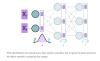
When I say 'AI is just math' it really sounds like I'm just waving my hands. This article adds all the detail you could want to that statement, and for extra measure is lavishly illustrated, making the math jump off the page. It takes you all the way from simple quantification of input data through to ternary values and BitLinear layers. I know AI has its sceptics, but at a certain level scepticism dissolves into questioning whether math actually works (which it does, but as always, whether any math applies to the world or our perceptions of it is always an empirical question). This and two others today via Data Science Weekly 663.
Web: [Direct Link] [This Post][Share]
Retire the Abstractions
Hazy Research,
2026/08/07

This article discusses abstractions for machine learning specifically, but the argument generalizes. Most of computer science consists of abstractions. At the base level is the machine language that is the direct interface with the hardware. But because this is so complex, more abstract languages are built on top of it (most notably the computer language 'C'). But even this is pretty complex, so above C even more abstractions are built: languages like Python or Perl, which are based on C compilers. But with each abstraction, there is a trade-off: clarity versus efficiency. But if AI, not humans, are writing the code, we don't need the abstractions. "What do we keep? The intent, the invariants, the tests, and the hard-earned domain knowledge that currently lives inside ThunderKittens's abstractions and keeps them correct on hardware."
Web: [Direct Link] [This Post][Share]
How Do I Build a Model?
Chris Brown,
2026/08/07

This guide won't actually get you from knowing nothing to creating actual models, but it will point you to the right sort of reading you need to do to gt you all the way there. The 'models' it talks about aren't AI models (not exactly, at least) but rather flow diagrams, causal or statistical models. The models might be diagnostic, or they might be used to address design challenges. It's definitely a good overview of the topic, written in a non-technical and accessible manner.
Web: [Direct Link] [This Post][Share]
There are many ways to read OLDaily; pick whatever works best for you:
- Read in your web browser on this web page, updated weekdays
- Receive a daily or weekly email newsletter by subscribing here
- Subscribe to the RSS feed using your favourite feed reader
- Follow @OLDaily@mastodon.social on Mastodon or elsewhere in the fediverse
- Follow @OLDaily on Bluesky
- Read OLDaily as a LinkedIn Newsletter
- Integrate the open API using the JSON feed
This newsletter is sent only at the request of subscribers. If you would like to unsubscribe, Click here.
Know a friend who might enjoy this newsletter? Feel free to forward OLDaily to your colleagues. If you received this issue from a friend and would like a free subscription of your own, you can join our mailing list. Click here to subscribe.
Copyright 2026 Stephen Downes Contact: stephen@downes.ca
This work is licensed under a Creative Commons License.