Critical Perspectives on AI, Digitalisation, and Human-Centred Learning
David C. L. Lim, Mohd Tajudin Md Ninggal,
Springer,
2026/08/05
This open access book (116 page PDF) is a collection of essays that asks of digital education "what kinds of futures are being imagined and enacted for education, whose interests these futures serve, what assumptions underpin the current drive towards digitalisation, and what remains unexamined or quietly displaced in its wake?" The focus is less on the stated (Utopian) intentions and more on what is actually being put into practice. "A central concern running through the volume is the place of the human in digitally mediated education," write the editors. But this is a moving target; "the chapters attend to the ways in which human agency, judgement, and relationships are being reshaped under conditions of digitalisation." The volume considers tensions such as those between scale and care, efficiency and responsibility, and access and meaningful participation. A deeper current is what Melinda dela Peña Bandalaria calls "the erosion of shared frameworks through which universities justify their actions, define value, and make their commitments intelligible." Some characterize this as "chasing technology", some focus on emerging social values, and some characterize it as a recharacterization of our own humanity.
Web: [Direct Link] [This Post][Share]
Choosing What’s Next: National Priorities for Open Education
Nicole Allen,
Open Education Association,
2026/08/05

The Open Education Association is a relatively new organization (b. 2025) that evolved out of the U.S.-based Open Education Conference. It is now soliciting contributions to a national (ie., U.S.) consultation on policy. "The process will focus on identifying challenges facing higher education today where openness is part of the solution but is not yet a large enough part of the conversation." They seem to be looking for examples that support "connecting our national priorities to those of leaders and policymakers." An odd wording. Anyhow, there's a webinar next week and consultations will continue through the fall. The site sadly has no RSS but there is a newsletter. If you want to join the Association, you'll have to pay.
Web: [Direct Link] [This Post][Share]
Preprints Without Curation Are Increasingly Cited by Journals
Chiaki Miura, Ichiro Sakata,
arXiv,
2026/08/05
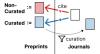
Peter Suber cites this article (11 page PDF) saying "Preprints are increasingly treated as legitimate, autonomous objects of citation independent of their later publication status... I'm fine with this, and so are the authors of this study." So am I. As Suber writes, "I'm from the humanities, where it's common to cite unpublished letters and manuscripts, countless fiction and nonfiction genres never subject to peer review, and even an occasional 'personal communication to the author'. Cite your best sources, or your actual sources, and let readers judge their relevance and credibility." Indeed, we might think of citation of a preprint (the way I'm doing here) as a form of unofficial, distributed and decentralized peer review.
Web: [Direct Link] [This Post][Share]
How To Give Everyday People A Say In AI Governance
Hélène Landemore,
NOEMA,
2026/08/05

I think this article taps into a genuine problem identified in two important essays - AI 2027 and Europe 2031 - but falls far short of a solution. The problem is this: "A small number of people make decisions for everyone else, without their input. Neither essay asks what ordinary people actually want from this technology or proposes a way of finding out." Quite so. Indeed, I dare say most people wouldn't see much difference between a society ruled by AI and a society ruled by wealthy out-of-touch elites. But asking AI companies themselves to "help bring democratically written global and local constitutions on AI into being, because right now no government is moving fast enough, or has the will or standing, to do it alone." The reason is that AI is only one of many issues that would benefit from the people having a genuine say in the outcome. The real question here is: could AI help society become more democratic? But I don't really see people addressing this.
Web: [Direct Link] [This Post][Share]
Not all collaboration benefits from competition: Collaboration modes in a computational thinking game
Ching-Huei Chen,Kun Huang,
British Journal of Educational Technology,
2026/08/05
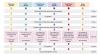
We probably know this intuitively, but this limited study shows "competition undermined the collaborative turn-taking mode while enhancing cooperative and paired gaming modes, highlighting the need to carefully match collaboration structures with competitive elements in designing game-based learning." Competition does have its benefits - where would we be without sports? - but not everything needs to be defined through success in competition.
Web: [Direct Link] [This Post][Share]
Return-to-office mandates are killing workplace trust
Gleb Tsipursky,
The Hill,
2026/08/05

I feel pretty strongly about this. After being more than productive during the Covid shutdown, office workers were forced to return to the office (at their own time and expense) in the name of... well, not productivity. Where I worked it was clear that productivity was not the issue. We were told stories about 'culture' and 'collaboration' - in an office where I would work a full day without seeing anyone else on my team (except, of course, online). "Leaders say they want culture, mentorship, innovation and accountability. But workers increasingly hear 'surveillance,' 'attrition' and a quiet test of 'loyalty.'" I think the same is true of online learning. Admittedly, this is a harder case to make, since a lot of what passed for online learning during the pandemic was just classroom instruction over Zoom (and therefore, equally unbearable). But I think that a lot of the motivation for in-person learning has to do with control, and not student growth, learning or development.
Web: [Direct Link] [This Post][Share]
There are many ways to read OLDaily; pick whatever works best for you:
- Read in your web browser on this web page, updated weekdays
- Receive a daily or weekly email newsletter by subscribing here
- Subscribe to the RSS feed using your favourite feed reader
- Follow @OLDaily@mastodon.social on Mastodon or elsewhere in the fediverse
- Follow @OLDaily on Bluesky
- Read OLDaily as a LinkedIn Newsletter
- Integrate the open API using the JSON feed
This newsletter is sent only at the request of subscribers. If you would like to unsubscribe, Click here.
Know a friend who might enjoy this newsletter? Feel free to forward OLDaily to your colleagues. If you received this issue from a friend and would like a free subscription of your own, you can join our mailing list. Click here to subscribe.
Copyright 2026 Stephen Downes Contact: stephen@downes.ca
This work is licensed under a Creative Commons License.