A profile is not a relationship. These standards must support human flourishing. Here's how
Kelly Ilich,
AARE,
2026/08/04

This article addresses an ongoing review of the the Australian Professional Standards for Teachers but at the same time uses the exercise to differentiate between what teachers and AI can do. Obviously everything suffers from overreach here, but the exercise is still worth a look. For example, how do we depict Standard 1, "know students and how they learn"? Kelly Ilich responds, "Being modelled by a system is different from being known by a trusted adult," which is true, but how often does the adult simply fall back on a common stereotype? And how limited are modern AI models, really? Similarly, for Standard 2, "know the content and how to teach it." it makes sense to "emphasise the teacher as a designer, interpreter and responsible steward of knowledge," but what happens when doing these properly requires skills well beyond the ken of the average instructor? Yes, with Ilich, I think the test should be to ask "what must teachers now be and do so that children flourish in a world shaped by it?" but my focus is on society, not only teachers.
Web: [Direct Link] [This Post][Share]
Meso and macro-level impacts from implementing open badges and microcredentials - A scoping review
Abbigail Harris, Richard E. West, Tyler Westerberg,
Journal of Open, Distance, and Digital Education,
2026/08/04
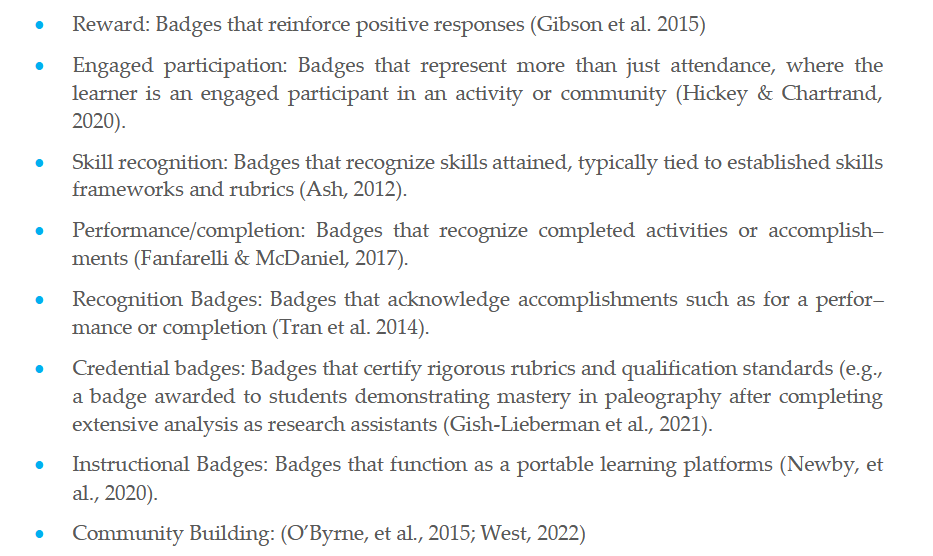
This is a good paper (25 page PDF) focusing on the meso and macro effects of digital badges, drawn from a study of 83 studies. I liked the literature review in particular, which is a good overall framing of how digital badges support new learning opportunities and recognize mastery of skills. Readers might like the badge taxonomy provided (illustrated). It's worth comparing this set of factors with the findings described in the fifth section, as there's a pretty clear mapping there. Most work on digital badges is qualitative or mixed methods; the mapping I would think opens an avenue for more quantitative work.
Web: [Direct Link] [This Post][Share]
Impact in Journalism
Jazmín Acuña, Flora Pereira,
Pulitzer Center,
2026/08/04
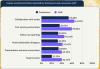
By impact "we mean qualitative changes journalism may contribute to, such as increased awareness, narrative reframing, accountability, community organizing, behavioral shifts and policy reform," writes Jazmín Acuña in this summary. Impact journalism is a process by which impact is planned for, taken into account while writing and publishing, and followed up on through audience engagement. The full report (28 page PDF) details (after lengthy introductory material; findings and trends begin on page 15) impact journalism as a trend that is under-institutionalized and needs to be developed, especially after publication. I can think of analogies in education, which we might call "impact education", or "impact pedagogy", which follows the same principles. Via News Alchemists.
Web: [Direct Link] [This Post][Share]
Deskilling, AI and the questions we should be asking
Treca Bourne,
Chief Learning Officer,
2026/08/04

This is yet another article warning that the use of AI will lead to deskilling. We've discussed this before and I won't cover it again here. What I want to note is the set of sources used by the author: Fortune, the American Enterprise Institute, and the Atlantic. Now while I'm pretty open to a diverse range of sources I have to say that this should not be your evidence set for a conclusion on anything. Seriously, if you're going to write about AI and learning, get out of the narrow world of Amercian commercial media and read and reference much more widely. That is all.
Web: [Direct Link] [This Post][Share]
The possibility economy
John Moravec,
Education Futures,
2026/08/04
Read the first two sections of this post but ignore the rest. The first section points to limitations of AI use in "the old economic model" and suggests a new approach based on the question "What do you want to bring into the world?" The second section defines this new approach as 'the possibility economy', "a social and economic system in which value arises from expanding the range of actions that people and communities can imagine, evaluate, and realize." The old language of, say, innovation, priorizes outcome. The new language "involves using technology, knowledge, and coöperation to develop new purposes, services, institutions, and forms of action." In my old-school language I think of this as an economy (and pedagogy) of affordances. As I said, you can stop here; the remainder of the article just runs the concept through a number of topics in an uninspired and automatic way.
Web: [Direct Link] [This Post][Share]
Hearing and Learning
Ann,
All Things Pedagogical,
2026/08/04
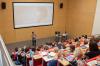
Nobody cares how I learn and listen, but bear with me. One of the things I learned while learning French was how little of what I 'hear' I actually hear. When I am listening to someone speak, although all the sound goes into my ears, what I'm actually doing is 'hearing' only a few words (or word fragments) in each sentence and filling in the rest cognitively. It's natural in English, but of course in French I didn't have the vocabulary or skill to fill in the words I'm not actually hearing. So my focus has to be that much more intense, and the environment a lot more quiet, for me to comprehend what is being said. It makes me wonder how other people listen, and whether they 'hear' by hearing or some other process. "Hearing," as Ann says, "is not the same as listening." Anyhow, that's why when I give presentations I'm careful to add enough text to the slides to help people get past limitations in hearing. "Keeping the barriers to hearing, and the different ways that listening can be supported is one way to get to the possibility of learning in accessible pedagogy."
Web: [Direct Link] [This Post][Share]
There are many ways to read OLDaily; pick whatever works best for you:
- Read in your web browser on this web page, updated weekdays
- Receive a daily or weekly email newsletter by subscribing here
- Subscribe to the RSS feed using your favourite feed reader
- Follow @OLDaily@mastodon.social on Mastodon or elsewhere in the fediverse
- Follow @OLDaily on Bluesky
- Read OLDaily as a LinkedIn Newsletter
- Integrate the open API using the JSON feed
This newsletter is sent only at the request of subscribers. If you would like to unsubscribe, Click here.
Know a friend who might enjoy this newsletter? Feel free to forward OLDaily to your colleagues. If you received this issue from a friend and would like a free subscription of your own, you can join our mailing list. Click here to subscribe.
Copyright 2026 Stephen Downes Contact: stephen@downes.ca
This work is licensed under a Creative Commons License.