
Iceland 2026
Stephen Downes,
Flickr,
2026/07/24

This is a set of 364 photos from my four week cycling trip to Iceland, the land of ice and fire (and wind and cold and rain and hills). I hope you enjoy them.
Web: [Direct Link] [This Post][Share]
Attribution in the Age of AI
Dee Harris,
Creative Commons,
2026/07/24
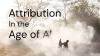
This part of the ongoing effort by Creative Commons to redefine what it calls "the social contract of sharing." There is no such social contract; sharing doesn't involve any sort of quid pro quo, except perhaps from a commercial perspective. But more interesting than this ongoing media campaign is the idea of provenance itself, which Creative Commons is labeling 'attribution'. We never fully report provenance; the author does not cite his first grade English teacher, though without learning the language he could never have completed his book. The ideas, the turns of phrase, the cultural influences: these are all typically unremarked. Indeed, it's a social and political question that determines what should count as a citation and what should not (there's an explicit parallel in the logic of explanation, where we search for 'causes' in a complex soup of interactions). Why does Wikipedia cite newspapers and journal articles and not, say, my blog? Why is the person who publishes an article considered the discoverer of a phenomenon, or the coiner of a term, even when the actual act of discovery or coinage took place elsewhere? Is Creative Commons protecting creators with this focus on attribution, or is it entrenching privilege?
Web: [Direct Link] [This Post][Share]
Predictive analytics: Are we watching the dashboard and ignoring the driver?
Colin Beer,
Col's Weblog,
2026/07/24

Colin Beer criticizes learning analytics. "While the GPS-style data may tell you that a student is slowing down or taking longer routes, genuine educational insight requires talking to the driver, understanding the changing landscape, and sometimes redesigning the road itself, not just tagging them 'at risk' because their current speed deviates from last year's average." All this is true, as is the bulk of the argument as a whole, but it strikes me as an argument saying "don't make predictions on limited data," which makes sense too, but doesn't really get at the question of whether predictions would be useful at all.
Web: [Direct Link] [This Post][Share]
Changes in brain state influence the readiness to form memories
Andrea Burgalossi,
IDW,
2026/07/24
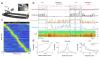
I don't want to link to any of these in particular, but there's a theme here which is hard to pin down in words, but is unmistakable. I commented a few days ago: "the value proposition for the poor is 'skills'. The value proposition for the rich is network and connections." That's why, eg., The Chronicle says legacy admissions are so hard to eliminate. "Universities do not build wealth solely by diversifying their endowments or managing academic budgets. A university builds a portfolio of people." Exactly. But it makes universities "a city for sale and doomed to perish if it finds a buyer!" We see the pattern elsewhere. "The dominant mechanism for distributing professional opportunity is no longer slow reputation, it is algorithmic visibility." Related: "windows of increased plasticity" "a happy society is more than just a collection of happy individuals," and this: "Every era's turnaround began the same way: some unmeasurable number of people, each acting alone, declined to sell — and then made the single most subversive move available to a member of a collapsing civilization. They found the people who could not be bought." Reform isn't a political process; it's a social one.
Web: [Direct Link] [This Post][Share]
The Engagement Staircase: A Strategic Guide for Catalyzing a Network of Changemakers for Systemic Change
Mark Cabaj,
Network Weaver,
2026/07/24
Network Weaver came out with such a good guide to how to think like a network a few weeks ago, then delivers exactly the opposite of that thinking with this item today. And so we're back to the same old tired story involving influencers and followers, dragging everyone along into the same objective, working together toward a single (leader-defined) goal, and collaboration. You can download the primer here. Instead of thinking like a network, the author is thinking like a system - "a relatively bounded configuration of actors, institutions, rules, practices, resources, and decision-making arrangements that interact to produce recurring outcomes." So many things a network is not, so many points of command and control, and of failure. A society isn't a system, and solving social problems through systems analysis is to use the wrong tool for the job.
Web: [Direct Link] [This Post][Share]
Yet Analytics Announces Federate xAPI, Bringing Low-Code xAPI Instrumentation to HLA Simulations
Shelly Blake-Plock,
Yet Analytics,
2026/07/24

This looks useful: "Federate xAPI is a low-code HLA federate that can be added directly to an existing Runtime Infrastructure (RTI) to begin transforming simulation activity into xAPI statements... Federate xAPI, a new open source software solution that enables High Level Architecture (HLA) simulations to emit Experience API (xAPI) data with minimal integration effort." Something to add to my CList functionality when I get back to it.
Web: [Direct Link] [This Post][Share]
AI Can Build Your Course, but Can it Design the Learning?
Philippa Hardman,
Dr Phil's Newsletter,
2026/07/24
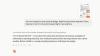
This is definitely an interesting article, though I have issues with it. Here's the scenario: four AI models were given the assignment to create an e-learning course on reporting misconduct at some organization. The article analyzes the results. By and large, the courses are OK. But then comes the criticism: the scenario in question wasn't a knowledge problem, it was a compliance problem, and an e-learning course probably wasn't the right solution at all. I can't dispute that, but if you ask an AI to produce a course, then criticize it because it does that, the criticism seems at best a bit unfair. Here's how Philippa Hardman diagnoses this: "There is an enormous public corpus of finished e-learning... There is almost no public record of the thinking that produced any of it... The conversation where a designer says "this is a willingness problem, not a knowledge problem, so a module won't move it" happens in a room, with no minutes." Well - yeah. But I would also say this: in many organizations (including the one where I used to work) some manager says "we need a course" and nobody pushes back. That's the norm; what Hardman is describing, even if ideal, is the exception. In industries where the norm follows good practice, AI works pretty well. But education is not one of those industries.
Web: [Direct Link] [This Post][Share]
Protecting our FLOSS commons from LLMs
Bastian Greshake Tzovaras, Otto Richter, William Zijl,
Codeberg News,
2026/07/24

Codeberg is a software repository site, a lot like GitHub but without the Microsoft business model. It made news this week by taking measures against AI-generated code, aka 'vide coding'. I'm not really a fan of the 'deny AI' response, but this document is reasonable and well argued, targeted against the abuses AI creates. For example: "At Codeberg, we are happy to provide free and open access to code. Just run git clone and enjoy. Unfortunately, these crawlers instead try to read every single page from Codeberg, no matter if it makes sense... These needless accesses create expensive database queries that diminish the service quality for all of us." Also, they're not trying to hunt down every instance of AI use, and will likely discourage but tolerate "side projects and experiments with little resource usage" and "specific tools and custom scripts that would be unlikely to find a community anyway, even if they were not LLM-generated."
Web: [Direct Link] [This Post][Share]
There are many ways to read OLDaily; pick whatever works best for you:
- Read in your web browser on this web page, updated weekdays
- Receive a daily or weekly email newsletter by subscribing here
- Subscribe to the RSS feed using your favourite feed reader
- Follow @OLDaily@mastodon.social on Mastodon or elsewhere in the fediverse
- Follow @OLDaily on Bluesky
- Read OLDaily as a LinkedIn Newsletter
- Integrate the open API using the JSON feed
This newsletter is sent only at the request of subscribers. If you would like to unsubscribe, Click here.
Know a friend who might enjoy this newsletter? Feel free to forward OLDaily to your colleagues. If you received this issue from a friend and would like a free subscription of your own, you can join our mailing list. Click here to subscribe.
Copyright 2026 Stephen Downes Contact: stephen@downes.ca
This work is licensed under a Creative Commons License.