
What Are We Buying When We Buy an AI Tutor?
Nick Potkalitsky,
Educating AI,
2026/07/20

The argument here is that when AIs are used as tutoring systems, what matters is the instructional method, not the delivery to. " When a new medium appears to improve achievement, the actual cause may be the tutoring sequence, feedback loop, practice schedule," etc. We've seen this finding throughout the history of edtech. The real question, though, is whether new technology affords new methods that weren't feasible before? We see that a lot too through the history of edtech.
Web: [Direct Link] [This Post][Share]
Building AI that teaches: What nine years at Coursera taught me about scaling learning systems
Rohan Benkar,
EdScoop,
2026/07/20

Nice article from Rohan Benkar, who spent nine years building learning systems at Coursera, and who argues that educational AIs are very different from regular chatbots. An educational AI is more that just an answer machine, and errors can have a long-lasting impact. "Most platforms today personalize within individual components, but the real opportunity lies in architectures that treat learning as a continuous feedback system," writes Benkar. And failures in infrastructure - like, say, lab support - are also learning failures.
Web: [Direct Link] [This Post][Share]
Does Practicing on an AI Actually Work?
Mike Kentz,
How We Frame Machines,
2026/07/20

This article describes a number of studies on the effectiveness of what the author calls 'friction bots' - chatbots that emulate difficult people (for example, the person who agrees with everything but won't execute the plan). Overall: "role-playing has been proven time and time again to be good for learning. Rehearsal is good for the brain, too. lLM’s are really good at mimicking human beings. Human-human “simulations” are great! We shouldn’t abandon them. But what LLM’s may introduce is a way to scale the practice."
Web: [Direct Link] [This Post][Share]
A Coherent Program-Level Response to Generative AI
Derek Bruff,
Agile Learning,
2026/07/20

This post outlines a set of "a robust and coherent set of changes" introduced by the University of Chicago Law School in response to AI. In sum: device-free classes and in person or oral exams. That doesn't seem very robust to me. How does this prepare a future lawyer where working with AI will be the core skill? Or where - maybe - voluntary AI-based meditation will eliminate the need for most civil and many criminal cases.
Web: [Direct Link] [This Post][Share]
This Week in Student Success
Glenda Morgan,
On Student Success,
2026/07/20
Glenda Morgan writes, "Universities spend enormous amounts of time trying to understand what employers want. Perhaps the more urgent question is whether students understand what universities actually offer. If students are less convinced of the value of higher education than employers themselves, we don't have an employability problem; we have a confidence problem." But messaging isn't the issue. Relevance is.
Web: [Direct Link] [This Post][Share]
Affordability Is Not Just Inflation: It's Time For A Historic Shift In Wages
Josh Bersin,
JOSH BERSIN,
2026/07/20

This might not seem like an edtech story but it is. Josh Bersin observes, "productivity is going up and CEOs and shareholders are hoarding the benefits and not passing them on to employees." This (and not, say, AI) is the largest issue facing education, at least in the West. It doesn't matter if education makes you more productive if you see none of the benefits (just like: it doesn't matter if education is necessary for democracy if you don't get to vote).
Web: [Direct Link] [This Post][Share]
"Not employee surveillance," Microsoft defends Teams' new location tracking feature, now rolling out
Mayank Parmar,
Windows Latest,
2026/07/20
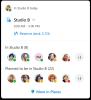
I'm so glad I'm not working in an office environment any more, what with Return-To-Office and MS teams features that enforce that. "If the organization chooses Inform mode, Teams workplace check-in will be enabled for everyone without their permission." 'Inform mode'. Lovely. Like a parody. But it's not. People should own their own software; software should not own people.
Web: [Direct Link] [This Post][Share]
There are many ways to read OLDaily; pick whatever works best for you:
- Read in your web browser on this web page, updated weekdays
- Receive a daily or weekly email newsletter by subscribing here
- Subscribe to the RSS feed using your favourite feed reader
- Follow @OLDaily@mastodon.social on Mastodon or elsewhere in the fediverse
- Follow @OLDaily on Bluesky
- Read OLDaily as a LinkedIn Newsletter
- Integrate the open API using the JSON feed
This newsletter is sent only at the request of subscribers. If you would like to unsubscribe, Click here.
Know a friend who might enjoy this newsletter? Feel free to forward OLDaily to your colleagues. If you received this issue from a friend and would like a free subscription of your own, you can join our mailing list. Click here to subscribe.
Copyright 2026 Stephen Downes Contact: stephen@downes.ca
This work is licensed under a Creative Commons License.