Evidence from Formal Logical Reasoning Reveals that the Language of Thought is not Natural Language
Hope Kean, et al.,
2026/07/16
I don't trust fMRI analyses of human cognitive functions at all, so I'm not citing this paper as evidence of anything. But the question it asks is worth asking: do we need language in order to reason logically? On the surface it would seem we do: logic just is a symbol manipulation system (with semantics doing the work of connecting it to trust and meaning). But as Hume more, babies and animals can think logically. This paper concludes that language is not necessary, but again, I'd want better evidence.
Web: [Direct Link] [This Post][Share]
Open Science 2.0: Building Understanding in an AI-Mediated World
Ashutosh Ghildiyal, Maria Machado, Gareth Dyke,
The Scholarly Kitchen,
2026/07/16
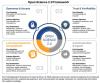
The authors advance a new version of open science (aka 2.0) based on a transition from 'access' to 'understanding'. But what do we mean by understanding? We might answer in traditional cognitivist terms - ontologies, explanations, predictions, principles. This article references verifiability, expertise and impact. I'm not really sure these count as 'understanding' either, at least in the normal sense we understand me them.
Web: [Direct Link] [This Post][Share]
The Gyms on the Corners
Neeraj Mehta,
SSIR,
2026/07/16

This article uses the example of resistance in the Minneapolis–Saint Paul metropolitan area to make its point, but the message is relevant even without the political overtime. It describes the way large centralized organizations get all the press, money and credit for organizing in contrast with the important roles played by networks of small decentralized community groups that operate without funding and in relative obscurity. "Centralized organizations are easier to identify, easier to contact, and easier to evaluate using conventional metrics." We see the same dynamic play out in education where the large organizations take the credit and get the funding but where the real work is being done in quiet local communities without fanfare, often by people with the most precarious employment.
Web: [Direct Link] [This Post][Share]
There are many ways to read OLDaily; pick whatever works best for you:
- Read in your web browser on this web page, updated weekdays
- Receive a daily or weekly email newsletter by subscribing here
- Subscribe to the RSS feed using your favourite feed reader
- Follow @OLDaily@mastodon.social on Mastodon or elsewhere in the fediverse
- Follow @OLDaily on Bluesky
- Read OLDaily as a LinkedIn Newsletter
- Integrate the open API using the JSON feed
This newsletter is sent only at the request of subscribers. If you would like to unsubscribe, Click here.
Know a friend who might enjoy this newsletter? Feel free to forward OLDaily to your colleagues. If you received this issue from a friend and would like a free subscription of your own, you can join our mailing list. Click here to subscribe.
Copyright 2026 Stephen Downes Contact: stephen@downes.ca
This work is licensed under a Creative Commons License.