
Guidelines for Designing AI Technologies to Support Adult Learning
Jennifer Redding, et al.,
ACM,
2026/07/10
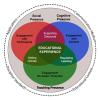
This is a comprehensive paper offering 19 'guidelines' for instructional AI systems. I think it may be a popular approach because the overall result is that 'AI should not change anything', exemplified by this sentiment that "instructors... frequently highlighted the alignment of AI tools with their personal instructional approach because using AI tools with contrasting approaches can be a challenge." The tools studied were all 'personal tutoring' tools, and though the authors worked in the Community of Inquiry (CoI) framework the outcome is still by-the-book 'personalized' instruction.
Web: [Direct Link] [This Post][Share]
A visual introduction to information theory
Henry Pinkard, Laura Waller,
arXiv,
2026/07/10
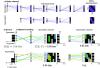
I learned this stuff in grad school when I was studying Fred Dretske's Knowlegedge And The Flow Of Information and recognizedIt immediately when I later encountered M.G. Moore's theory of transactional distance. It's the foundation of instructivist learning theories. This 'introduction' goes into a lot of detail, but will reward a careful reading. I didn't think information theory is the foundation of knowledge, but it's still useful to know.
Web: [Direct Link] [This Post][Share]
Game Design + Pedagogy + Leadership = Experiential Leadership
Clark Aldrich,
2026/07/10
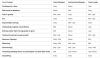
Not a bad post drawing similarities between game design, instruction and leadership, all leading toward a concept Clark Aldrich calls 'experiential leadership' (because everyone knows new leadership theories are where the big money is). The best bit is the chart comparing aspects and timelines of the three; it's worth a critical look.
Web: [Direct Link] [This Post][Share]
Thinking Like a Network 2.0
Curtis Ogden,
Network Weaver,
2026/07/10

I've argued at length over the years in favor of network organization of, well, everything. It's important to understand what this entails. This article offers a good list (quoted): adaptability instead of control; contribution before credentials; giving first, not taking; resilience and redundancy instead of rock stardom; diversity and divergence rather than the usual suspects and forced agreement; intricacy and flow, not bottlenecks and hoarding; self-organization and emergence rather than permission and the pursuit of perfection; shift focus from core to the periphery; from working in isolation to working with others and/or out loud; from “Who’s the Leader?” to “We’re the Leaders!" I know, it's a long list, and your internal sense of value resists mightily giving up power, control and wealth. But ask - who made you value these things? How well are they serving you?
Web: [Direct Link] [This Post][Share]
Before you build AI agents, build your company brain first
Amar Dhaliwal,
valueIQ's Newsletter, valueIQ,
2026/07/10

Almost the only resource LinkedIn is showing me these days (as, I think, it tries to make mobile web browsing useless) is some or another claim that your AI model needs structured data (such as semantic graphs or ontologies) in order to work. This article isn't one of the LinkedIn articles (it's an email subscription) but it carries similar advice. I disagree. Yes, you should provide your AI with a lot of context. But the context doesn't need to be structured like computer code.
Web: [Direct Link] [This Post][Share]
There are many ways to read OLDaily; pick whatever works best for you:
- Read in your web browser on this web page, updated weekdays
- Receive a daily or weekly email newsletter by subscribing here
- Subscribe to the RSS feed using your favourite feed reader
- Follow @OLDaily@mastodon.social on Mastodon or elsewhere in the fediverse
- Follow @OLDaily on Bluesky
- Read OLDaily as a LinkedIn Newsletter
- Integrate the open API using the JSON feed
This newsletter is sent only at the request of subscribers. If you would like to unsubscribe, Click here.
Know a friend who might enjoy this newsletter? Feel free to forward OLDaily to your colleagues. If you received this issue from a friend and would like a free subscription of your own, you can join our mailing list. Click here to subscribe.
Copyright 2026 Stephen Downes Contact: stephen@downes.ca
This work is licensed under a Creative Commons License.