Karpathy Found the Pattern. Educators Have Been Teaching It for Years. | Ian O'Byrne
Ian O'Byrne,
2026/04/30
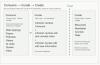
I like the work Ian O'Byrne have been doing recently designing (and redesigning) his own personal learning system. He has the first three of the four stage "aggregate remix repurpose feed-forward" model I've described in the past (he calls it "consume curate create"). It's a common enough pattern, certainly nothing I invented, and he references Andrej Karpathy's of an LLM wiki in the same context. I plan to do something similar with the 30,000 or so links I have amassed over the years. But I'm cautious about any integration of AI. As O'Byrne says, "I care a lot about keeping my voice." In most things, I say the thing AI can't say, because I see the world differently from the majority.
Web: [Direct Link] [This Post][Share]
More scoops, less aggregation and analysis: How Casey Newton is revamping his newsletter to compete with AI
Laura Hazard Owen,
Nieman Lab,
2026/04/30

I am also grappling with this new reality. "Original reporting, news analysis, and a roundup of links. Those have been the three pillars of journalist Casey Newton's technology newsletter, Platformer, since it launched in 2017. But, Newton wrote Monday, two of them - link roundups and news analysis - may no longer work so well for his audience in a time of AI automation." With a fundraising campaign stalled at 15% of what I calculate I need to continue running this newsletter, I am learning to reconcile myself with the idea that people don't need it any more, and that it's time to - like Newton - rethink what I'm doing in the online space. But on the other hand, I don't want to lose out on the value producing the newsletter brings to me.
Web: [Direct Link] [This Post][Share]
Measuring What We Value, or Valuing What We Measure? Interrogating Educational Measurement Practices in the Global South
NORRAG,
2026/04/30

There's a discussion taking place on Learning Engineering revisiting a topic that comes up here from time to time: Anne Fensie writes, "we were only able to find an embarrassing small number of studies (159 from an initial pool of about 12,000 records) that actually reported on learning activities and objectively measured learning, with either quantitative or qualitative measures." My first question, of course, is "what are you even measuring?" and then "does anybody actually care about this particular measure?" In this article from NORRAG the authors "global education measurement systems as politically shaped frameworks that prioritize standardized, often Western and increasingly AI-driven metrics, narrowing what counts as learning and obscuring relational, contextual, and transformative dimensions. It calls for reimagining measurement as a community-led, context-sensitive practice."
Web: [Direct Link] [This Post][Share]
Deescalating the AI Learning Debate
Nick Potkalitsky,
Educating AI,
2026/04/30
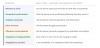
I like the way this discussion is framed and it is one of few real efforts to grasp the many different views people have on what we mean by 'learning' (let alone 'education', which is another matter entirely). Nick Potkalitsky sets up a series of 'if-statements', 'if learning is this..', 'if learning is that...', etc. My only criticism of this approach is maybe that he stops too soon - we could continue with new perspectives on learning for some time. Still - the point is made. He then points to three researchers - Philippa Hardman, Terry Underwood, and Leon Furze - working on different aspects of learning (Potkalitsky calls these 'stages' or 'levels', developing a "a complex, multi-phased and multi-dimensional learning process." That might be a little too inclusive for my tastes - not every account of 'learning' references something real of correct. Still, any attempt to comprehend the complexity is welcome.
Web: [Direct Link] [This Post][Share]
Why are the Artemis II photos on Flickr?
Anil Dash,
2026/04/30

I've been aching for a reason to post an Artemis photo here in this newsletter and Anil Dash gives me that excuse as he explains - at length - why NASA photos have ended up on Flickr. Long story short - after being acquired by SmugMug they created the Flickr Foundation to preserve public photos for the next 100 years. I use Flickr a lot - I have (at the moment) 45067 photos from around the world, free and open for any non-commercial use. At some point I'll just commit them to the public domain, with the hope that at least a few of them endure through time, a record of these crazy days.
Web: [Direct Link] [This Post][Share]
Young People’s Ability to Assess Reliability of Information is Decreasing
Elisa Nadire Caeli,
Dataetisk Tænkehandletank,
2026/04/30

Governments and to some extent schools have resisted teaching critical thinking and media literacy for many years. There are actually campaigns against teaching them in some places. But now we face a dilemma: with the increasing proliferation of AI-generated content filling search engines (the way fake vendors fill Amazon search results) critical thinking and media literacy are becoming essential skills. It's not clear how a population without these skills will cope. "In Denmark, there is a strongly defined subject area – technology comprehension - which, in its current form, among other things, aims to strengthen students' ability to understand, create, and act meaningfully in a society where digital technologies and digital artifacts are increasingly serving as catalysts for change." We need this everywhere.
Web: [Direct Link] [This Post][Share]
POSIWID
Gordon Brander,
Squishy,
2026/04/30

The Purpose Of a System Is What It Does (POSIWID). Or as Stafford Beer says, "This is a basic dictum. It stands for a bald fact, which makes a better starting point in seeking understanding than the familiar attributions of good intention, prejudices about expectations, moral judgment, or sheer ignorance of circumstances." There has been a lot of talk about systems here in recent days, but to my mind, the greates weakness of such talk is teleological. We talk about systems as designed (which they often are) with a purpose that expresses the intent of the designer. And sure, humans design systems. But nature doesn't. Gordon Brander writes, "It seems that these purposes have arisen from within the system, rather than being imposed from without. They are statistical attractors that dependently arise from the structure of feedback networks in the ecosystem. Biologists call this kind of emergent-from-within goal-seeking teleonomy, to distinguish it from imposed-from-without Aristotelian teleology."
Web: [Direct Link] [This Post][Share]
Memory Game Is
Alan Levine,
CogDogBlog,
2026/04/30

There's a thing called the physical symbol system hypothesis (PSSH) which asserts that our mental contents (such as memories) are encoded and stored verbatim, and that the act of remembering is essentially a playback of this recording. It's a popular folk theory, but as everyone here (Alan Levine, Audrey Watters, Andrew Hickey) agrees, that's not how memory works. We don't 'store' memories, but it's not magic either: experiences cause a wave of neural activations, which in turn alter the strengths of connections between them. Remembering (something distinct) is the having of an experience based (more or less) exclusively on neural activations based on those connection weights; it's not (as everyone here attests) a playback, not a 'story' (that's the PSSH kicking in again), but but a reconstruction or recreation. You can't just say "the brain is not a computer" - that's meaningless in this context - but by the same token, the brain does not in any meaningful way resemble the device in ypur desktop or in your phone.
Web: [Direct Link] [This Post][Share]
There are many ways to read OLDaily; pick whatever works best for you:
- Read in your web browser on this web page, updated weekdays
- Receive a daily or weekly email newsletter by subscribing here
- Subscribe to the RSS feed using your favourite feed reader
- Follow @OLDaily@mastodon.social on Mastodon or elsewhere in the fediverse
- Follow @OLDaily on Bluesky
- Read OLDaily as a LinkedIn Newsletter
- Integrate the open API using the JSON feed
This newsletter is sent only at the request of subscribers. If you would like to unsubscribe, Click here.
Know a friend who might enjoy this newsletter? Feel free to forward OLDaily to your colleagues. If you received this issue from a friend and would like a free subscription of your own, you can join our mailing list. Click here to subscribe.
Copyright 2026 Stephen Downes Contact: stephen@downes.ca
This work is licensed under a Creative Commons License.