
Your Favourite Commenter Might Not Be Writing Their Own Comments
Sam Illingworth,
Slow AI,
2026/04/17

I don't really get many comments, and I've always wondered about that. Part of it definitely involves commenting on other people's work so they start reading yours and commenting back. That creates an opportunity for people to use AI to support social network optimization (SNO): "Investigation of 4,929 Substack comments reveals real people using AI agents to comment on their behalf. Data on the 1:1 engagement signal, live Turing tests, canary traps, and what automated engagement means for online writing communities." It's not just on Substack. "On LinkedIn, ghost commenting is an industry. The practice scales. Commenting builds algorithmic visibility without providing a traceable email." So comments, I guess, are a bit like money. Great wealth is prima facie evidence of cheating. (p.s. fair warning; I'm pretty sure this article is in large part authored by AI, but of course I can't prove it - but I did learn the definition of 'canary trap' as a result of it, so there's that).
Web: [Direct Link] [This Post][Share]
Blank.Page
René Galindo, Mohamed Boudra,
Blank.Page,
2026/04/17

Another item just for myself. Blank.page is a simple text editor. What makes this somewhat distinct is a voice microphone based input that actually appears to work fairly well. Here's the source on GitHub (had to search for it; it's three months old and might not be fully up to date). There's also a newsletter (with no content yet).
Web: [Direct Link] [This Post][Share]
Free online vector editor & procedural design tool
Graphite,
2026/04/17

This is mostly a reminder for myself. Graphite is an open source vector graphics creation and editing tool. You can run it locally in a browser with no login or registration; it exports SVG, PNG, and JPG files. "Starting life as a vector editor, Graphite is evolving into a general-purpose, all-in-one graphics toolbox that is built more like a game engine than a conventional creative app. The editor's tools wrap its node graph core, exposing user-friendly workflows for vector, raster, animation, and beyond." Here's the source on GitHub. There's also a newsletter.
Web: [Direct Link] [This Post][Share]
Can We Teach Critical Thinking
Althea Need Kaminske,
The Learning Scientists,
2026/04/17

It's always nice to see a reference to my old friend Tim van Gelder (I spent three months on a fellowship with him in Australia in 2001). Here the reference is to Teaching Critical Thinking: Some Lessons From Cognitive Science. In this undated article (a repost from some time in the past) author Althea Need Kaminske summarizes the paper but also slants it to a degree, I think. For example, I don't think that when van Gelder says 'critical thinking requires practice' he is saying "instruction on critical thinking needs to done explicitly and deliberately." I also don't think he is saying critical thinking skills in one domain cannot be transferred to another domain, only that "students also must practice the art of transferring the skills from one situation to another." Critical thinking can be taught, and the skills by their very nature are general and widely applicable, but (says van Gelder) instructors have to do more than teach theory and hope students acquire the skills. Learning critical thinking requires practice.
Web: [Direct Link] [This Post][Share]
The "Cognitive Offloading" Paradox
Philippa Hardman,
Dr Phil's Newsletter,
2026/04/17
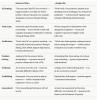
According to Philippa Hardman, over the last year "the field was starting to move beyond 'AI is bad for learning' toward a harder question: when is it bad, and when might it actually help?" That's the purpose of this study (30 page PDF), she reports. "Cognitive offloading emerges as enabler rather than inhibitor of transformation, with threshold effects indicating that substantial delegation liberates mental resources for higher-order reflection." So, sure, cognitive offloading happens. But the mental space that's freed up allows people to focus on higher order problems. This leads Hartman to suggest six principles describing how we should and shouldn't encourage learners to us AI, including a recommendation to frame AI as a partner, not a tool.
Web: [Direct Link] [This Post][Share]
Scaffolding Human-AI Collaboration: A Field Experiment on Behavioral Protocols and Cognitive Reframing
Alex Farach, Alexia Cambon, Lev Tankelevitch, Connie Hsueh, Rebecca Janssen,
arXiv.org,
2026/04/17

This paper from Microsoft proposes that people get better results from AI if they think of it as a conversational partner rather than a simple tool like a search engine. It compares two educational approaches designed to support this approach: behavioural scaffolding, which "refers to explicit protocols that structure how humans interact with AI systems", and cognitive scaffolding, which "refers to interventions that reshape users' mental models of AI." The results? "Behavioral scaffolding was associated with lower output quality, consistent with coordination costs exceeding collaboration benefits." Meanwhile, "Cognitive scaffolding may shift mental models but the evidence for genuine training-induced change is not strong enough to confirm it." Overall, "The implication is not that collaboration with AI is harmful, but that mandating a specific synchronous protocol under the infrastructure conditions of this study was associated with worse outcomes than allowing flexible use." Despote the ambiguity of the results readers can learn a lot from this paper. See also the interactive data explorer from the paper. Via AI Mindset, which interprets the results far more positively than I did.
Web: [Direct Link] [This Post][Share]
There are many ways to read OLDaily; pick whatever works best for you:
- Read in your web browser on this web page, updated weekdays
- Receive a daily or weekly email newsletter by subscribing here
- Subscribe to the RSS feed using your favourite feed reader
- Follow @OLDaily@mastodon.social on Mastodon or elsewhere in the fediverse
- Follow @OLDaily on Bluesky
- Read OLDaily as a LinkedIn Newsletter
- Integrate the open API using the JSON feed
This newsletter is sent only at the request of subscribers. If you would like to unsubscribe, Click here.
Know a friend who might enjoy this newsletter? Feel free to forward OLDaily to your colleagues. If you received this issue from a friend and would like a free subscription of your own, you can join our mailing list. Click here to subscribe.
Copyright 2026 Stephen Downes Contact: stephen@downes.ca
This work is licensed under a Creative Commons License.