Biases in Scientific Inquiry
Jamie Shaw, Manuela Fernández Pinto, Torsten Wilholt,
PhilSci-Archive,
2026/04/16
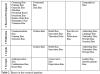
We read a lot about bias in AI or even bias in education. "According to common usage, 'bias' is always a deviation that systematically tends toward a certain direction." Fair enough. But what is it exactly that bias is a deviation from? The best we can manage is something like "a pattern considered to be correct and desirable in some way." But that opens the door to a pressing need to consider more deeply something commonly perceived to be a problem. That's what this paper (22 page MS-Word) does. It offers a five-category taxonomy (mechanism, effect, content, stage, feature) that is "a taxonomy of bias individuation practices." This is extended to complete a much larger categorization of types of bias. These are then applied to a five-stage 'research pipeline' to identify where they occur. I think it's a start, but a taxonomy is no more than a way of describing a landscape, and should not be mistaken as an understanding of that landscape.
Web: [Direct Link] [This Post][Share]
Youth don't have a voice problem; they have a strategy problem
Max Genin,
World Education Blog,
2026/04/16

Youth are not being heard, according to this article. "Of the youth and student organizations surveyed, 57% submitted feedback on education policy. Only 35% saw that feedback reflected in final decisions. Fewer than one in six were ever asked to monitor implementation." This article argues that it's their own fault. "The problem is that youth, by and large, are trying to change institutions using tools those institutions have no structural reason to respond to. The strategy is the gap." What they should be doing, argues Max Genin, is to learn international law and cite it as a demand for compliance when they meet with institutions. "What needs to change first is not government willingness," he writes. "It is the technical fluency of youth organizations themselves, their ability to walk into a room knowing the treaty, the budget cycle, and how decisions actually get made." Ridiculous.
Web: [Direct Link] [This Post][Share]
Stealing Your Webinar as a Service: Enpoopification Poster Child
Alan Levine,
CogDogBlog,
2026/04/16
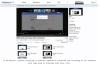
Alan Levine shares his experience with a "sleazy outfit" called WebinarTV that surreptitiously records what it calls public webinars and puts them up on its website. As Levine explains, "Just because you set up registration, it does not protect your webinar. You actually have to do extra work of approving registrations or verifying attendees, adding special links/passcodes to 'protect' your events from being taken by WebinarTV. You have to create barriers of access for event participation." How are they doing this? "Most people will assume that they are somehow registering bots to attend events and record, like notetaking ones. This is not what's happening, IMHO," says Levine. This would mean they're accessing the recordings somehow directly from Zoom. But Zoom says WebinarTV "accesses meetings using links that have been shared publicly, then records the sessions using browser extension or 'other tools.'" See also this report from CyberAlberta.
Web: [Direct Link] [This Post][Share]
Reinventing the Wheel, Again
Glenda Morgan,
On Student Success,
2026/04/16
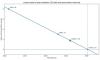
In a LinkedIn article, Dan Meyer proclaimed the 'death' of Khanmigo. Not death in the sense of going away, but in the sense thjat nobody is using it. "For a lot of students, it was a non-event," Khan told Matt Barnum last week in Chalkbeat, referring to Khanmigo's release three years ago. "They just didn't use it much" This article examines that proposition. Why does the software go unused? "The recurring blind spot (is) EdTech's promises of frictionless scale. EdTech repeatedly promises low-cost, scalable transformation - but often repackages old models without solving engagement or economics." The argument here is that in order to scale a technology company needs "sustained marketing investment, institutional credibility, student support infrastructure, and retention strategies that go well beyond content delivery." All true - but as Glenda Morgan notes, the real issue is that these companies repackage the old model over and over again. See also this discussion in Learning Engineering.
Web: [Direct Link] [This Post][Share]
Yale needs major reforms to rebuild public trust, faculty committee says
Asher Boiskin, Aria Lynn-Skov, Leo Nyberg,
Yale Daily News,
2026/04/16

This article points to a report (58 page PDF) addressing a variety of issues facing "Wealthy selective private universities such as Yale" such as "cost, admissions, political homogeneity, self censorship, (and) grade inflation." According to the report, "universities exist to preserve, create, and share knowledge." It recommends a return to this foundational principle and suggest it forms the basis for all the recommendations in the report, but that relationship is hard to see. Indeed, from where I sit, there's noting in this foundational principle that recommends a path of being wealthy, selective or private, but that is essentially what Yale seeks to preserve. Don't get me wrong: the discussion is good, up to the point of the recommendations (which go off the rails and on their own tangent starting at recommendation 10 ('recenter the classroom')). Jeff Jarvis is unsparing in his criticism, saying it "prostrates itself before the cancel-culture trope," which it does, but the greater fault is that it never questions the fundamental elitism on which Yale is founded, and which lies at the heart of the mistrust it faces today.
Web: [Direct Link] [This Post][Share]
There are many ways to read OLDaily; pick whatever works best for you:
- Read in your web browser on this web page, updated weekdays
- Receive a daily or weekly email newsletter by subscribing here
- Subscribe to the RSS feed using your favourite feed reader
- Follow @OLDaily@mastodon.social on Mastodon or elsewhere in the fediverse
- Follow @OLDaily on Bluesky
- Read OLDaily as a LinkedIn Newsletter
- Integrate the open API using the JSON feed
This newsletter is sent only at the request of subscribers. If you would like to unsubscribe, Click here.
Know a friend who might enjoy this newsletter? Feel free to forward OLDaily to your colleagues. If you received this issue from a friend and would like a free subscription of your own, you can join our mailing list. Click here to subscribe.
Copyright 2026 Stephen Downes Contact: stephen@downes.ca
This work is licensed under a Creative Commons License.