
Support OLDaily
2026/04/03

OLDaily has been free and open to all readers for almost 25 years. No paywalls, no ads, no sponsored content. Keeping it that way takes time and resources. Please consider a monthly contribution. Every donation helps keep OLDaily independent and free for everyone.
Funding for OLDaily is part of my retirement plan - see my Retirement FAQ for more details. To continue publishing OLDaily I have a target of 100 base-level subscriptions per month (or equivalent funding from any source). I'm currently at 7% of this target. To add to that support, visit this page
Web: [Direct Link] [This Post][Share]
The Admin Console Arms Race: Visibility With(out) Architecture
Nick Potkalitsky,
Educating AI,
2026/04/03

This article looks at what four AI edtech companies are doing. "Every AI edtech company pitching districts right now has the same slide in their deck: a sleek admin console showing usage analytics, content moderation controls, and real-time visibility into what students and teachers are doing with AI." The products are SchoolAI's Mission Control, MagicSchool, Brisk Teaching, and Kira. They are "all pitching districts on oversight and control," writes Nick Potkalitsky. "But the more important question isn't who can see what. It's what kind of tool you're actually looking at." There are two overareching strategies: hybrid integration working alongside already-adopted high quality instructional materials (HQIM), or displacement, "where curriculum generation capabilities improve to the point where the case for separate HQIM investment weakens."
Web: [Direct Link] [This Post][Share]
Building Resilience through DigitalSmarts
MediaSmarts,
2026/04/03
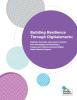
According to the blurb, "this report (82 page PDF) shares findings from MediaSmarts' four-year intervention research project... which developed and evaluated the Resilience through DigitalSmarts program. Delivered in shelters and transitional homes across Canada, the program provides trauma- and violence-informed digital media literacy training." This sort of reading is important for everyone because, as they say on the internet, YMMV. My own online experience is trouble-free. I have never had to worry about Technology-facilitated violence and abuse (TFVA). But "the impacts of TFVA also vary depending on social circumstances, including gender, age, race, sexuality, class, ability, and location. Women and girls are disproportionately impacted by all forms of intimate partner violence, including TFVA." Before I talk about what we can do online (and I do talk about such things, a lot) I need to have an understanding of how other, less privileged, people experience the online environment, and how organizations like MediaSmarts help them manage. To do anything else would be irresponsible.
Web: [Direct Link] [This Post][Share]
Avoiding the attractiveness of Generative AI in essay writing: A combined view from a student and a tutor – Teaching Matters
Daisy Bao, Rosemary Banister,
Teaching Matters,
2026/04/03
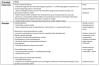
This article touches on both analytical reading and its application in essay writing. I wouldn't say that it's wrong exactly - a lot of it overlaps with my own way of doing things, though I tend to use far fewer tables - but some of the things are a bit misleading. For example, the authors write, "I think lectures are the perfect place to start for essay writing." That really depends on the lecture, and also, if you want to be at all original, it's necessary to depart from the frame everyone else is using. I would re-emphasize the value of what they call 'close reading' but the method (such as it is) differs in some important respects from my own. Would I depend on AI to do any of this work for me? Not unless the AI were deeply trained on what I'm looking for and what I value in a piece of writing.
Web: [Direct Link] [This Post][Share]
Decolonizing Your Reading List: A Practical Starting Guide
Ciera Smith,
iddblog,
2026/04/03
Ciera Smith writes, "Decolonizing a reading list isn't necessarily about removing works by seminal figures in a discipline. Rather it's a highly intellectual exercise requiring consideration of whose knowledge is privileged and whose voice is excluded. It's also a matter of considering how power is constructed within a discipline." It's not just a matter of achieving geographical diversity but also a matter of trying to find alternative perspectives - not just from the points of view of different epistemic traditions but also of finding people who are simply objects of research but who are contributing to its output. That doesn't mean just agreeing with or endorsing everything everyone has to say, it means being open enough to listen to it and take it seriously. This article focuses on how we manage our reading lists for others, but I think the first responsibility is to be open to these voices ourselves. That's not the easiest thing; there's a lot tradition in media and scholarship of gravitation toward the most well-articulated and funded sources. 'Press-release' journalism and 'book-centered' academia. Via Apostolos K.
Web: [Direct Link] [This Post][Share]
The open web isn't dying. We're killing it
Julien Genestoux,
Ouvre Boite,
2026/04/03
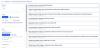
Julien Genestoux responds to Anil Dash's article, Endgame for the Open Web, and makes a point well worth making. "I think it is too easy to tell the story as if the open web was simply attacked from the outside. It also obscures the fact that we actually traded the web away." I think the history of RSS is a good example of this. We're told 'Google killed RSS' when they shut down Google Reader. But RSS never went anywhere; people just started using convenient alternatives like Twitter and Facebook. "Why did so many organizations (or even politicians) that loudly celebrated the open web still direct their communities toward closed channels as soon as growth, analytics, or convenience were on the table? Why did we keep outsourcing identity, distribution, and monetization to companies whose incentives were obviously misaligned with ours?" Image: screenshot of my LocalRSS app. Via Grant Potter.
Web: [Direct Link] [This Post][Share]
EmDash Playground
EmDash,
2026/04/03

A lot of smart thinking went into this application that touts itself as what WordPress would look like if it were built with today's tools. It's "a full-stack TypeScript CMS built on Astro and Cloudflare. EmDash takes the ideas that made WordPress dominant -- extensibility, admin UX, a plugin ecosystem -- and rebuilds them on serverless, type-safe foundations." It's worth noting that "EmDash depends on Dynamic Workers to run secure sandboxed plugins. Dynamic Workers are currently only available on paid accounts." I think that's a model we'll see more of in the future - a free and open framework, with mechanisms for using AI tools that you have to pay for (it's also how I'm building CList, though honestly EmDash is an order of magnitude more sophisticated - there's a lot to learn from it here). Code on GitHub. Via Grant Potter.
Web: [Direct Link] [This Post][Share]
There are many ways to read OLDaily; pick whatever works best for you:
- Read in your web browser on this web page, updated weekdays
- Receive a daily or weekly email newsletter by subscribing here
- Subscribe to the RSS feed using your favourite feed reader
- Follow @OLDaily@mastodon.social on Mastodon or elsewhere in the fediverse
- Follow @OLDaily on Bluesky
- Read OLDaily as a LinkedIn Newsletter
- Integrate the open API using the JSON feed
This newsletter is sent only at the request of subscribers. If you would like to unsubscribe, Click here.
Know a friend who might enjoy this newsletter? Feel free to forward OLDaily to your colleagues. If you received this issue from a friend and would like a free subscription of your own, you can join our mailing list. Click here to subscribe.
Copyright 2026 Stephen Downes Contact: stephen@downes.ca
This work is licensed under a Creative Commons License.