
What The AI Consciousness Question Conceals
Barton Friedland,
NOEMA,
2026/03/26

We've seen the argument a few times now that computation and embodiment are fundamentally different, and that AI is one, and humans are the other, and that therefore AI cannot be conscious. I linked to The Abstraction Fallacy making this point a few days ago, and Barton Friedland links to Anil Seth's The Mythology of Conscious AI making much the same case back in January. I've covered both here. My response is to collapse the distinction; computation is embodiment (that's why, for me, a 'connection' exists only when one entity can change the state of another). Here, Friedland takes a different approach, combining the two layers via the mechanism of 'augmentation'. "In the human-AI arrangement, value lies not inside the machine, not inside the skull, but in the configuration between them." It's an interesting idea. Writes Friedland: If cognition is distributed, enacted and extended, then the relevant unit of analysis is not the individual brain (biological or artificial), but rather the configuration in which intelligence operates."
Web: [Direct Link] [This Post][Share]
Coalition Publica launches new website for advancing open access
Coalition Publica Communications,
Public Knowledge Project,
2026/03/26
By 'diamond open access' we mean open access publishing that has neither subscription fees for readers nor publication fees for authors. Usually the publications are supported by an academic institution, foundation, or government office. This article announces "A new website for the Canadian diamond open access community" for Coalition Publica (CP), the partnership between Érudit and the Public Knowledge Project (PKP). There's no icon but you can find their RSS feed here.
Web: [Direct Link] [This Post][Share]
Top LLM PyPl package compromised to steal user details
Sead Fadilpašić,
TechRadar,
2026/03/26
As reported here and widely elsewhere, "A hugely popular Python package called LiteLLM was compromised and used to deploy an infostealer malware to hundreds of thousands of devices." The malware grabbed API keys.env credentials, personal information, and much more. The danger is magnified because the package is frequently used by Claude Code, so people might not be aware their projects contain it. This points to the related question of how we store keys and credentials generally if we're working in a distributed that may involve AI agents and remote applications. To address this, Bitwarden has developed and offered as open source a software development kit (SDK) for "credential access with designated human oversight and robust end-to-end encryption, helping ensure passwords are never exposed or used without explicit authorization." Here's my own work (in collaboration with Claude) in this area - it's not quite as strong as what Bitwarden is proposing, but it's pretty strong.
Web: [Direct Link] [This Post][Share]
What's Up With That?
Marshall Kirkpatrick,
2026/03/26

I haven't tried this, because browser extension are blocked in the office, but I will when I'm home, and it's definitely worth a look. The idea idea is that the extension looks at the article you're reading, compares it to what else it can find on the same topic, and runs it through an analysis telling you what it adds that's new, what sort of wider analysis might be recommended, adjacent topics worth pursuing, etc. Here's an intro video. It's all relevant to me, of course, because I do the same thing to a limited extent here in my newsletter. As with everyone else in the world, I'm asking myself what people get from me that they can't get from a robot. I'm guessing it's my kindly demeanour and wry sense of humour. Via Intelligent Machines.
Web: [Direct Link] [This Post][Share]
Gen Xfest and the Better Suit Industrial Complex
Jim Groom,
bavatuesdays,
2026/03/26
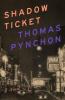
"Nothing against the suit, Hicks... a just-folks image that may've worked fine once... but the more we expect to be face-to-face with the well-to-do, you get it? ... The work changes, sure. But more importantly, who the work is for changes... What I was seeing on the floor wasn't just innovation (though AI can still blow your mind pretty quickly). It was an industry repositioning. The scrappy, independent hosting outfits are being written out of the geopolitical narrative." This - from my perspective - is the history of leaning technology. We've always been pushed toward the suits - sell to the institutions, sell to government, sell to corporations. When our real clients all along should have been those lease able to pay - the learners themselves.
Web: [Direct Link] [This Post][Share]
The Grant Application Is Dead. What Comes Next?
Tom Watson,
Tomcw.xyz,
2026/03/26

"Come down the rabbit hole with me," invites Tom Watson, as he describes "how federated protocols, local agents, and organisational self-sovereignty could replace the broken funding model." There's a lot to like about this approach, and ideally, our future looks something like this. But wait, there's more. Why limit the model to grant applications for organizations? The existing system of earning degrees and submitting job applications is just as broken. With the right infrastructure support (which I would expect to become a future role for government) this becomes a model that replaces job applications generally. More from Tom Watson on open recommendations. More, from me.
Web: [Direct Link] [This Post][Share]
In a 'Test', Google Is Automatically Rewriting News Headlines in Its Search Results
Nick Heer,
Pixel Envy,
2026/03/26

Altering a title sounds really bad. And there's a reason why I keep the title of the article the same when I write a commentary on it - I want to be sure I'm not distorting the intent of the author by altering their title. So this Verge report seems concerning: "Google is beginning to replace news headlines in its search results with ones that are AI-generated." But a search engine's responsibility is a bit different from mine. As reported here, "For content that could impact someone's health, finances, or legal situations, Google seems far more concerned with making sure titles are accurate and helpful rather than keyword-optimized." That's actually a useful service, especially in a world where titles are so often used to mislead.
Web: [Direct Link] [This Post][Share]
Why We Should Be Reading Paul Churchland Right Now
Matthew J. Brown,
the hanged man,
2026/03/26
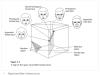
I am at least partially influenced by the fact that I did read Paul Churchland when I was younger, and came to much this sort of belief: "It is very common to see confident assertions that LLMs mimic language use but do not really understand or use it the way that we do, that LLMs do not really reason or think, that they cannot know or understand things. On examination, these claims are often grounded in a folk-psychological understanding about how we think, know, or use language, or, at best, in ideas from philosophy or cognitive psychology that are profoundly disengaged from any understanding of the underlying mechanisms of the brain."
Web: [Direct Link] [This Post][Share]
There are many ways to read OLDaily; pick whatever works best for you:
- Read in your web browser on this web page, updated weekdays
- Receive a daily or weekly email newsletter by subscribing here
- Subscribe to the RSS feed using your favourite feed reader
- Follow @OLDaily@mastodon.social on Mastodon or elsewhere in the fediverse
- Follow @OLDaily on Bluesky
- Read OLDaily as a LinkedIn Newsletter
- Integrate the open API using the JSON feed
This newsletter is sent only at the request of subscribers. If you would like to unsubscribe, Click here.
Know a friend who might enjoy this newsletter? Feel free to forward OLDaily to your colleagues. If you received this issue from a friend and would like a free subscription of your own, you can join our mailing list. Click here to subscribe.
Copyright 2026 Stephen Downes Contact: stephen@downes.ca
This work is licensed under a Creative Commons License.