FR#157 - Social Software Distribution
Laurens Hof,
connectedplaces.online,
2026/03/13

Larens Hof makes an interesting observation. Decentralized social networks are now being used to share and exchange bits of software the way existing social networks have been used to share comments and media. "Over the past two weeks, three unrelated projects have each, independently, started rebuilding parts of the software distribution pipeline on open protocols. AltStore PAL, a third-party app marketplace for iOS, has integrated ActivityPub into its app discovery system. Tangled, a code collaboration platform built on the AT Protocol, announced a €3.8 million seed round. And npmx, a new browser for the npm package registry, launched its alpha with social features built on ATProto." I'm not sure exactly what 'decentralized software authoring meets AI' looks like, but it will be interesting, like a mess of Moltbooks, maybe. Update: The Batch asks, "Should there be a Stack Overflow for AI coding agents to share their learnings with each other?"
Web: [Direct Link] [This Post][Share]
The Death of Spotify: Part II
Joel Gouveia,
The Artist Economy,
2026/03/13

Laura Hilliger links to this article about the future of music streaming. The article is full of hits and misses, but there's a sound point in there. It's this: for most people, most music is commoditized, like tap water. It's cheap, accessible, and easy. Nobody cares that Spotify pays artists a tiny return. But Spotify is missing the (present and) future of media marketing: the superfan that is searching for a premium experience. The Fiji water experience. They will pay more for something special. "1,000 passionate fans is a business model. If you don't have those people yet, the tap water is important to find them. But if you already have that core, you can almost ignore the algorithm entirely." I wonder how that will play out in the field of learning and development. Is 1,000-fan mentorship a thing of the future?
Web: [Direct Link] [This Post][Share]
SOLA - Saylor Online Learning Assistant: AI-powered learning coach Moodle plugin
Tom Caswell,
GitHub,
2026/03/13

"SOLA, Saylor Academy's open-source AI learning assistant, is now publicly available on GitHub," reports Tom Caswell. "SOLA (Saylor Online Learning Assistant) is a Moodle plugin I've been building over the past 3 weeks. The goal is to give every student a personal study coach, not just another chatbot. It lives right inside the course experience and includes things like adaptive quizzes, voice practice, pronunciation coaching, personalized study plans, and conversation starters that instructors can customize." The thing to take home here is that he's been building it for three weeks. Not, say, three years.
Web: [Direct Link] [This Post][Share]
This is Our Opportunity to Create A Learner-Centered Path for AI Integration in Education
Devin Vodicka,
Learner-Centered Collaborative,
2026/03/13

This article is a bit over the top, but it makes an important point: "AI-generated content predominantly promotes teacher-centered classrooms with limited opportunities for student choice, goal-setting, and meaningful dialogue." That makes sense. After all, that's what it was trained on. Devin Vodicka continues, we need to "limit what the AI model references when creating something like a lesson plan, so it doesn't default on many decades' worth of school-centered design principles." To be clear, I think we need to limit what it does rather than what it was trained on. So instead of asking for 'a lesson plan', ask it to 'learn about and then instruct in a working context'. That takes us past the point Vodicka is making here; he is arguing that "we must design and input the pedagogical foundations that guide it," but that's probably assuming we need to do more than we actually have to.
Web: [Direct Link] [This Post][Share]
What 2,800 AI Conversations Taught Me About My Users
Claudia Ng,
2026/03/13

What I like about topic modeling is that while you don't get theories or generalizations or neat simple taxonomies, you get information you can use. Claudia Ng writes, "I find that surveys and live interviews have a performative problem: people sometimes tell you what they think you want to hear. NPS scores compress everything into a single number and lose the nuances. What people actually type when they're trying to get something done is neither; it's messy but it's exactly what you need to shape a roadmap." One plan I have for the future is to do a topic model of my newsletter posts over the last 25 years. Should be interesting.
Web: [Direct Link] [This Post][Share]
Claude the Instructor
Robin Moffatt,
Claude the Instructor,
2026/03/13

More on the use of Claude as a teaching tool. In this case Robin Moffatt uses Claude to learn about dbt (data build tool), "an open-source tool that lets data engineers write the transformation layer of a data pipeline as modular SQL" (if you can even find a human to teach that to you, congrats). Moffatt learns a few lessons along the way (lessons I've also learned, so I can confirm their veracity): begin by having Claude learn the topic as well as possible and to write a CLAUDE.md file for itself, so that each time it refreshes it remembers what it's doing and why; and to remind Claude to not make assumptions or guess about things, in an effort to minimize hallucinations and slop (this is really important, in my experience).
Web: [Direct Link] [This Post][Share]
What's My JND?
2026/03/13
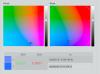
This is a fun game with an interesting point. The idea of the game is to "find your Just Noticeable Difference in colour perception. How small a colour difference can you actually see?" If you're curious, my JND is 0.0054. Surely you can beat that. The math behind the game and behind the the implementation that will land in csskit that's behind all of this is found in this longish paper. It's the driest of subjects made interesting and palatable. Via Data Science Weekly.
Web: [Direct Link] [This Post][Share]
There are many ways to read OLDaily; pick whatever works best for you:
- Read in your web browser on this web page, updated weekdays
- Receive a daily or weekly email newsletter by subscribing here
- Subscribe to the RSS feed using your favourite feed reader
- Follow @OLDaily@mastodon.social on Mastodon or elsewhere in the fediverse
- Follow @OLDaily on Bluesky
- Read OLDaily as a LinkedIn Newsletter
- Integrate the open API using the JSON feed
This newsletter is sent only at the request of subscribers. If you would like to unsubscribe, Click here.
Know a friend who might enjoy this newsletter? Feel free to forward OLDaily to your colleagues. If you received this issue from a friend and would like a free subscription of your own, you can join our mailing list. Click here to subscribe.
Copyright 2026 Stephen Downes Contact: stephen@downes.ca
This work is licensed under a Creative Commons License.