
On Brian Cantwell Smith and the Promise of AI
Melanie Mitchell,
AI: A Guide for Thinking Humans,
2026/02/10

Interesting article talking about honoring the late philosopher Brian Cantwell Smith from the University of Toronto. There's some good stuff here, including the difference between 'judgement' and 'reckoning', and a discussion of how we come to know about objects. This is the part that interests me most. In On the Origin of Objects, Smith had "outlined a picture of the world in which objects, properties, and other ontological furniture of the world were recognized as the results of registrational practices, rather than being the pregiven structure of the world." The question is, does this happen before the 100-millisecond level - the time it takes to recognize your mother - or after? I'm in the 'before' camp. Writing about AI (but, I think, generalizable to humans), Smith says object recognition requires participation in and commitment to the world. "To register an object as an object, that is, not only must there be right and wrong for it, but that difference must matter." Hence the emphasis on how essential a sense of self is to an intelligent agent.
Web: [Direct Link] [This Post][Share]
How It Works - Holos
Holos,
2026/02/10
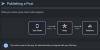
Holos, writes Laurens Hof, "continues to be one of the most interesting projects on the fediverse from a technological perspective. The goal of Holos is to run an ActivityPub server on your phone. Because mobile devices are traditionally not particularly suitable for this (changing IP address, not always online), Holos adds a Relay service that mitigates these issues." This post from Holos explains how it's all supposed to work. The major weakness seems to be that "it creates a new form of dependency, where the Relay operator manages your identity." But there are (in my view) plenty of distributed service models that could eliminate this dependency. Here's the Mastodon site for Holos.
Web: [Direct Link] [This Post][Share]
Building Community
Stephen Downes,
Half an Hour,
2026/02/10

This is a shortish post I wrote in response to Alan Levine's post On "Building" Community I Got Bubkis. To be clear, I think he has been doing a masterful job of community building over at OE Global. But no, the hordes aren't beating a path to the OEG website. Because that's not the sort of community we can build without a lot of marketing. Here's how I see it: the old definition of community is based on proximity. So, online, 'building community' usually means pulling everybody into the same place. But the new definition (according to me) of community is based on similarity. So online, 'building community' means connecting people to each other when they have similar interests. The real measure (if it can be measured at all) is the propagation of the ideas, not the concentration of (a mass of) people. (The bicycle illustration is intended to represent the common interest people similar to each other may have, even if they're in different online places)/
Web: [Direct Link] [This Post][Share]
The $165 Billion Question: What The Economist Got Right (and Terribly Wrong) About Education Technology
Nik Bear Brown,
Computational Skepticism,
2026/02/10

A few weeks ago the Economist came out with Ed tech is profitable. It is also mostly useless (paywalled, natch, but this link points to the archive version). In this response Nik Bear Brown offers a definitive rebuttal, going so far as to say the Economist misrepresented the Stanford survey article behind the report (also behind a paywall). "The Economist cherry-picked a single sentence from a nuanced 40-page meta-analysis and inverted its conclusion." So what should the Economist have reported instead? "The best adaptive systems - intelligent tutors, AI-powered feedback, targeted practice platforms - are the most cost-effective intervention in education... But here's the tragedy: these high-quality systems represent maybe 5-10% of current ed tech spending. The other 90% goes to: Generic devices (Chromebooks, iPads) that enable distraction, low-quality 'drill and kill' software, platforms optimized for engagement metrics, not learning transfer, (and) administrative overhead and IT support."
Web: [Direct Link] [This Post][Share]
Discord Alternatives, Ranked
Michael Taggart,
Taggart Tech,
2026/02/10

This is a ranking of modern community-building tools. Think of them as alternatives to things like Slack or Microsoft Teams. What makes them 'modern' (in my view) is that individual users can sign on to multiple communities (or 'teams', or 'channels') and interact in multiple ways: through chat in real-time (sometimes by audio or video), synchronous topic-based boards, or through file and media sharing. The problem, as always, is that each tool is a silo; you're not using Signal to converse with someone using Zulip, for example. I'll be honest, I'm not a fan of any of today's community-building tools, but that's more a reflection of how hard it is to get this sector right than it is a reflection on any of the tools. There's an opening, I think, for a tool that combines the functionality of Mastodon or Bluesky with the ability to organize provided by these tools, with an interface that keeps it simple. Anyhow, the tools evaluated here are Discord, Signal, Matrix, Rocket.Chat, Zulip, Mattermost, Discourse, and Stoat. See also this discussion on the article. Here's a similar comparison from Proton. Via Alan Levine.
Web: [Direct Link] [This Post][Share]
There are many ways to read OLDaily; pick whatever works best for you:
- Read in your web browser on this web page, updated weekdays
- Receive a daily or weekly email newsletter by subscribing here
- Subscribe to the RSS feed using your favourite feed reader
- Follow @OLDaily@mastodon.social on Mastodon or elsewhere in the fediverse
- Follow @OLDaily on Bluesky
- Read OLDaily as a LinkedIn Newsletter
- Integrate the open API using the JSON feed
This newsletter is sent only at the request of subscribers. If you would like to unsubscribe, Click here.
Know a friend who might enjoy this newsletter? Feel free to forward OLDaily to your colleagues. If you received this issue from a friend and would like a free subscription of your own, you can join our mailing list. Click here to subscribe.
Copyright 2026 Stephen Downes Contact: stephen@downes.ca
This work is licensed under a Creative Commons License.