
A Codeless Ecosystem, or hacking beyond vibe coding
Anil Dash,
2026/01/28

After a career spent playing with code and creating (unsuccessful) applications, I've been pondering the same question Anil Dash ponders here: "the ability to orchestrate coding bots, making it possible for ordinary creators to command dozens of AI bots to build software without ever having to directly touch code." The implication here is that nobody will write software any more (except for a few people working in the very depths of the system, tweaking new hardware interfaces in Assembler, and optimizing C compilers). If you want a new application, you don't build it or buy it, you just describe what you want, and that's what you end up with. What happens to 'edtech' if the educational application the student gets is whatever they want it to be? Now we're not there yet - not even really that close. But I can see it out there, on the long horizon.
Web: [Direct Link] [This Post][Share]
When two years of academic work vanished with a single click
Marcel Bucher,
Nature,
2026/01/28

"After turning off ChatGPT's 'data consent' option, Marcel Bucher lost the work behind grant applications, teaching materials and publication drafts... At that moment, all of my chats were permanently deleted and the project folders were emptied — two years of carefully structured academic work disappeared. No warning appeared. There was no undo option. Just a blank page." Once again, I plead with you: back up your data. Always. On a different machine. "I assumed basic protective measures would be in place, including a warning about irreversible deletion, a recovery option, albeit time-limited, and backups or redundancy," writes Bucher. Never assume. Just back up your data.
Web: [Direct Link] [This Post][Share]
Death by Broetry – The Ed Techie
Martin Weller,
The Ed Techie,
2026/01/28

Martin Weller reacts to a certain type of LinkedIn post he calls 'Broetry': "Both of these examples (and to reiterate they are examples just from today and I didn't have to look hard) demonstrate the classic AI Broetry structure: Lots of white space, those short sentences and a yearning (and failing) to appear meaningful not seen outside of teenage poetry. I hate it. I really, really hate it. I want you to understand that I am not exaggerating when I say it makes me physically nauseous." I don't think they're done by AI - it seems to me they predate it. But I saw yet another one just a few minutes ago and I agree with Weller's assessment. I want to please with the authors to write in proper paragraphs... but I desist, because to engage with them is to reward them.
Web: [Direct Link] [This Post][Share]
How and why I've migrated from from Google to Proton
Doug Belshaw,
Open Thinkering,
2026/01/28
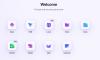
I haven't made the switch from Google to Proton but I'm considering it. So long as I was employed at NRC I had to keep one foot in the Microsoft ecosystem (and especially Outlook). When I retire I can manage my own ecosystem, so I'm looking at Proton. As always, it's a question of trade-offs. Anyhow, in this article Doug Belshaw describes his reasons for switching (and in this follow-up, talks about adapting Proton email to his needs). Proton includes a VPN, Drive, Sheets, wallet, email, and more.
Web: [Direct Link] [This Post][Share]
Abundance vs. Scarcity: Who Controls the Internet After AI?
Paul Keller,
Tech Policy Press,
2026/01/28

In citing this item, Alan Levine quotes this bit: "The internet is now under unprecedented pressure from the AI companies that have been unleashed by the very openness and scale the internet enabled. There is a real risk that the information ecosystems that have formed around the open web over the past two decades will be devoured by the generative AI systems they have helped bring into being." My focus is on the false dilemma that is offered as a consequence: in one scenario, "levy- or tax-based redistribution tied to the commercial deployment of AI services, combined with sustained investment in public AI infrastructure", and in the other scenario, "turn information into a tradable input once again... moving content behind paywalls, restricting crawling and enforcing licensing conditions through private technical infrastructure." Both of these are essentially commercial solutions, and I guess they are the only options if all you can imagine is a commercial internet. But surely we can be more imaginative than that. See also.
Web: [Direct Link] [This Post][Share]
Five Opportunities Online Learning Had in 2025 but Failed to Seize in the Age of AI
TeachOnline |,
2026/01/28

Regular readers will recognize the writing style in this one, I think. The article describes "five things that could reasonably have been developed, marketed and become popular some time in 2025," but didn't. AI doesn't yet find us the best thing to learn from, doesn't really know what we have, summarizes but doesn't explain, struggles to create groups, and still doesn't let us do all our learning from one place.
Web: [Direct Link] [This Post][Share]
There are many ways to read OLDaily; pick whatever works best for you:
- Read in your web browser on this web page, updated weekdays
- Receive a daily or weekly email newsletter by subscribing here
- Subscribe to the RSS feed using your favourite feed reader
- Follow @OLDaily@mastodon.social on Mastodon or elsewhere in the fediverse
- Follow @OLDaily on Bluesky
- Read OLDaily as a LinkedIn Newsletter
- Integrate the open API using the JSON feed
This newsletter is sent only at the request of subscribers. If you would like to unsubscribe, Click here.
Know a friend who might enjoy this newsletter? Feel free to forward OLDaily to your colleagues. If you received this issue from a friend and would like a free subscription of your own, you can join our mailing list. Click here to subscribe.
Copyright 2026 Stephen Downes Contact: stephen@downes.ca
This work is licensed under a Creative Commons License.