
Journalism lost its culture of sharing
Scott Klein, Ben Welsh,
Source,
2026/01/27

I think the same trends reported here are happening in education. Here are the three major factors: first, economic, "that many organizations either lost technical staff or, in the worst cases, went entirely extinct"; second, innovation, "problems that incentivized innovation have been solved. Good software, often free, is available"; and third, an inward shift, "news companies grew their technical teams and better integrated them into the organization, making it less necessary for staffers to find community among colleagues elsewhere." All true, I think, for education as well, though I might add that as institutions (and the staff in them) retrench, other sharing among individuals outside institutions is growing in different ways. Via Ben Werdmuller.
Web: [Direct Link] [This Post][Share]
It's time to Lead with youth!
Anja Flottmeier, Priyadarshani Joshi, Laura Stipanovic,
World Education Blog,
2026/01/27
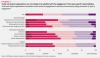
"Youth and students need to be trusted to play a leading role in education decision-making." I've always thought this to be obvious, but it's the first sentence in this just-released UNESCO report (63 page PDF). "Too often, youth participation remains symbolic, with no clear structures to ensure accountability or influence. We need institutionalized and mandated pathways for meaningful youth participation in policymaking and decision-making processes, grounded in clear principles and sustained over time." They're speaking at the institutional level (it is, after all, UNESCO) but I think this applies even at the individual level, where people are making their own decisions about their own education. Even more to the point, though, as the report states, involving youth needs to mean more than consultation; the options offered by youth need to actually be implemented.
Web: [Direct Link] [This Post][Share]
Second channel resilience: Preserving educational coördination in low-connectivity environments
John Moravec,
Education Futures,
2026/01/27

Interesting exploration of the potential use of a of LoRa or Meshtastic mesh network to support online learning in Sierra Leone. It offers (in my view) lessons for all of us on resilience insystem design, which we might need in the not-too-distant future. "Systems should treat interruption and delay as baseline conditions rather than as exceptional failures. Many platforms designed for stable connectivity respond poorly to partial synchronization, producing inconsistent records and eroding trust. LoRa mesh communication encourages a more resilient approach." It would be ideal to support online learning and other communications networks that can withstand power outages, network disruption, and other sources of interference.
Web: [Direct Link] [This Post][Share]
Medier for alle
2026/01/27

This resource was shared in a meeting today; it's in Danish but of course browsers translate web pages these days. It provides a way for educators to find and reuse open educational resources in that country, organized by city, subject, topic and more. "Everything you need from knowledge, texts and media – is open. For the Internet contains more than 4 billion media outlets that people around the world have allowed you to download and use freely for your work." More stuff from the same meeting: 2025 CC Open Education Community Activities; also, Dan McGuire, et al., Sopala: An Innovative Model for K-12 Education; also, Open Education Week 2026; also, Free-to-use editorial videos for journalists, from the Open Journalism Network.
Web: [Direct Link] [This Post][Share]
Once and for all - What Clawdbot Actually Is and Why It's Not Claude Code
Nir Diamant,
DiamantAI,
2026/01/27

This article describes the differences between Claude Code, which is a coding assistant, and Clawdbot, which is an executive assistant. "Clawdbot connects to dozens of services by default: Gmail, Google Calendar, Todoist, GitHub, Spotify, even smart home devices. When it needs capabilities it doesn't have built in, it can request them, and with proper guidance from you, it can expand those capabilities itself." What makes it really different? "Claude Code resets memory after each session. That's by design.... Clawdbot's superpower is persistent memory. Every conversation you have with it, every preference you state, every decision you make gets stored in a markdown file that evolves over time." Note that between the time this article was published and the time I'm writing this post Clawdbot appears to have changed its name to Moltbot. More: video on Clawdbot by Matt Wolfe.
Web: [Direct Link] [This Post][Share]
Article Series: AI-Assisted Development: Real World Patterns, Pitfalls, and Production Readiness
Arthur Casals,
InfoQ,
2026/01/27
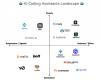
This article introduces a series that examines "what happens after the proof of concept and how AI becomes part of the software delivery pipeline." The experience is important. "A consistent message emerges: sustainable AI development depends on the same fundamentals that underpin good software engineering, clear abstractions, observability, version control, and iterative validation. The difference now is that part of the system learns while it runs, which raises the bar for context design, evaluation pipelines, and human accountability." You can read the full series in a 60 page PDF download.
Web: [Direct Link] [This Post][Share]
The Impact of AI on Work in Higher Education
EDUCAUSE,
2026/01/27

What strikes me most about this report is that while it talks a lot about attitudes and practices, it doesn't describe at all what it is like to work with AI, which it seems to me would be the main impact. And a lot of us are experiencing it, and mostly off the books. "The majority of work-related AI tool use is voluntary. As previously described in this research report, nearly all respondents (94%) indicated that they have used AI tools for work-related tasks in the past six months." What seems to me to be the most important impact isn't strategies, risks and use cases (all of which reflect the 'before times'). It's how it changes how we work. Related: the Rergister, AI adoption at work flatlined in Q4.
Web: [Direct Link] [This Post][Share]
MyNotes: You Don't Have to Keep Up with AI
Miguel Guhlin,
Another Think Coming,
2026/01/27
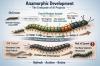
I've been migrating my many cloud projects into a single virtual private server (VPS) in an effort to reduce costs. Just for fun, I've been using ChatGPT to, um, assist. It has often been useful but has also led me astray a number of times. It's all recorded in hours and hours of video here (don't watch it; it's excruciating). I mention this because while working for such an extended time with the AI I had exactly the same experience as documented in Mike Kentz' blog entry The AI Will Wait. He writes, "The AI will wait. It has no preferences. It experiences nothing resembling impatience. The urgency we feel is entirely generated by us." But also, because the AI forgets as you fill its context window, "AI work often becomes anamorphic: each sprint adds segments fast, but without a maintenance molt, older instars get left behind and disappear." I find I have to summarize the good bits and regenerate the chat window on a regular basis. That way, the AI isn't led astray by its own errors.
Web: [Direct Link] [This Post][Share]
There are many ways to read OLDaily; pick whatever works best for you:
- Read in your web browser on this web page, updated weekdays
- Receive a daily or weekly email newsletter by subscribing here
- Subscribe to the RSS feed using your favourite feed reader
- Follow @OLDaily@mastodon.social on Mastodon or elsewhere in the fediverse
- Follow @OLDaily on Bluesky
- Read OLDaily as a LinkedIn Newsletter
- Integrate the open API using the JSON feed
This newsletter is sent only at the request of subscribers. If you would like to unsubscribe, Click here.
Know a friend who might enjoy this newsletter? Feel free to forward OLDaily to your colleagues. If you received this issue from a friend and would like a free subscription of your own, you can join our mailing list. Click here to subscribe.
Copyright 2026 Stephen Downes Contact: stephen@downes.ca
This work is licensed under a Creative Commons License.