Spot the Difference
Audrey Watters,
Second Breakfast,
2026/01/16

I mostly like this post because of the beautiful photo of a loon at the top, which I would show here, but it's owned by (and presumably licensed from) Getty Images, so nobody's really pure, I guess. I'll use one of my own photos to illustrate this post, which anybody can copy. Anyhow, Audrey Watters argues that far from leaving schools unchanged, "these technologies have changed education. They have reshaped how we think about thinking." And that's not wrong. "They have shaped the expectations of what students and teachers believe they can do -- not just the 'everyone should learn to code' stuff and the twisting of the purpose of education to be solely about job training and 'career and future readiness,' but about how students understand their own abilities, how they see (or don't see) their own agency, how they control (or don't control) their own inquiry, curiosity, attention." I think, if you look at the world a certain way, that's all you see. But when I look at the world, I see people who do look to more than just jobs and career readiness. I see agency, creativity, community, and society. Maybe we can't expect schools to help everyone aspire this - but we should.
Web: [Direct Link] [This Post][Share]
Curatorial Silence and Its Impact on Pedagogy
Ann,
All Things Pedagogical,
2026/01/16
This blog post makes the important point that we should keep speaking even when things get difficult. "Curating outward silence does a certain kind of teaching and learning work, and sadly it is work that the big S systems want more of... the systems have a way of taking advantage of that curated hush zone vacuum to fill it with distraction and falsehoods." It almost doesn't matter what you talk about. It doesn't have to be the big issues or topics of the day. What matters is that we keep on talking to each other, just to remind ourselves that we exist, and that the interactions matter more than the message. (Take-home exercise: is this the same as, or different from, 'belonging'?)
Web: [Direct Link] [This Post][Share]
Digest #183: The Importance of Belonging for Student Success
Carolina Kuepper-Tetzel,
The Learning Scientists,
2026/01/16
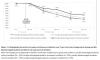
I have mixed feelings about the whole concept of belonging. I speak here from the perspective of always feeling like the outsider (probably not actually an outsider, but I digress...). And it's that sort of feeling that motivated my work on 'groups versus networks', which argues that building 'belonging' in groups can create real harms. And I question in what sense "the feeling of belonging has been identified as an important factor in education." Is it 'those who belong do the best'? Or do the feelings - of being safe, of being valued - influence learning outcomes? Is is true that (as one of these papers says) "the need to belong is a basic human motivator?" Or is it just a theoretical construct with no real empirical support outside the theory? Maybe 'belonging' is just shorthand for 'socially advantaged'.
Web: [Direct Link] [This Post][Share]
Anthropic Economic Index: new building blocks for understanding AI use
Anthropic,
2026/01/16
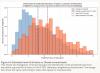
Anthropic (which makes the Claude AI system) has released a substantive report (55 page PDF) and some supporting blog posts (one, two) reporting on trends in AI usage across disciplines and in different places. Though the focus is the new set of 'economic primitives' suggested in the report (chapter 2) there's a lot for educators to consider. The new primitives are: task complexity, human and AI skills, use cases (ie., work, learning, home), AI autonomy, and task success. The data shows relations among them. For example, AI is used more for tasks where the expected level of education is higher, but it's rate of success on these tasks declines. The use of Claude for augmentation is more important than the use of Claude to replace humans altogether. There is a "very high correlation between human and AI education... this highlights the importance of skills and suggests that how humans prompt the AI determines how effective it can be." All of that said - the data in this report is complex and the relationships are often subtle, and I would resist articles that try to boil it all down to one or two simple relationships.
Web: [Direct Link] [This Post][Share]
There are many ways to read OLDaily; pick whatever works best for you:
- Read in your web browser on this web page, updated weekdays
- Receive a daily or weekly email newsletter by subscribing here
- Subscribe to the RSS feed using your favourite feed reader
- Follow @OLDaily@mastodon.social on Mastodon or elsewhere in the fediverse
- Follow @OLDaily on Bluesky
- Read OLDaily as a LinkedIn Newsletter
- Integrate the open API using the JSON feed
This newsletter is sent only at the request of subscribers. If you would like to unsubscribe, Click here.
Know a friend who might enjoy this newsletter? Feel free to forward OLDaily to your colleagues. If you received this issue from a friend and would like a free subscription of your own, you can join our mailing list. Click here to subscribe.
Copyright 2026 Stephen Downes Contact: stephen@downes.ca
This work is licensed under a Creative Commons License.