Tamagotchigogy: A Pedagogical Framework of Care, Feedback, and Responsiveness
Geoff Cain,
Brainstorm in Progress,
2026/01/09
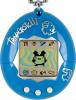
I'm not sure whether this article is serious, but I'll assume it is for the sake of discussion. "Tamagotchigogy is a new pedagogical framework that uses the Tamagotchi digital pet as a metaphor for learning itself. It emphasizes care, feedback, responsiveness, and engagement as essential to sustaining cognitive and emotional growth." Tamagotchi were popular some 30 years ago; they were a 'digital pet' that you cared for by feeding, showing attention, etc., by pressing buttons on the watch-sized display. You can still buy them, though nobody knows why you would. Anyhow, the idea here (in this surprisingly long article) is that education needs "pedagogies that balance cognitive development with care, adaptability, and presence." So "The educator's role is to monitor signals, regulate input, support development, and promote active, sustained engagement." Note: "The learner is not the pet. The metaphor applies to the learning process, not the person."
Web: [Direct Link] [This Post][Share]
Gmail is entering the Gemini era
Blake Barnes,
Google,
2026/01/09
From Slashdot: "anonymous reader quotes a report from Wired: Google is putting even more generative AI tools into Gmail as part of its goal to further personalize user inboxes and streamline searches." If the music added to the video of Google's announcement is anything to judge by, this new feature will be really annoying. The problem is that Google doesn't seem to understand what the problem is. The problem isn't that I am unable to read and respond to email messages quickly enough. The problem is that I get too many irrelevant emails, emails that were probably authored using the same annoying technology Google is promoting in this video. What I want is email that works more like RSS: it listens actively to a small number of people that I identify ahead of time, and allows me to go out looking if I want to hear from anyone else. Of course, that model doesn't really work well with advertising.
Web: [Direct Link] [This Post][Share]
X Is a Power Problem, Not a Platform Problem
Laurens Hof,
connectedplaces.online,
2026/01/09

"The implicit theory behind the open social web was that platform quality would determine outcomes." But "you cannot out-compete 'where the ruling faction radicalizes and coordinates' by having better moderation policies or algorithmic choice. X is not a platform problem anymore, it is a power problem, and building a different platform does not solve the power problem... It's easy to be highly cynical, and that point of view has been extensively validated over the years, but I do choose to hold to hope that we can build a better, more ethical, social internet out of the toxic waste ground of the current state of the internet." Me too. That's why I'm still working on it.
Web: [Direct Link] [This Post][Share]
How to Choose AI Video Tools That Actually Support Learning
Philippa Hartman,
Dr Phil's Newsletter, Powered by DOMS AI,
2026/01/09
This article first identifies a number of factors relevant to evaluating AI-generated instructional video, and then applies these to an evaluation of four platforms: Colossyan, Synthesia, HeyGen, and NotebookLM. I've tried the first and last; the middle two want me to sign up, which I don't feel like doing. The factors are mostly based on the idea of 'learning as remembering' and focus on such things as spacing and retrieval. Nothing about engagement, practice or application in real life. Philippa Hardman (or her AI) gives high marks to the first two, but to me the first is just a talking head with a slide turner - nothing compelling at all (though it's similar to the e-learning my employer offers as mandatory training). This tells me that either the criteria are wrong or the ranking is wrong. Or both.
Web: [Direct Link] [This Post][Share]
Cambridge college to target elite private schools for student recruitment
Richard Adams,
The Guardian,
2026/01/09

Never let it be said that the elite are going down without a fight. Two items in the Guardian describe efforts by a Cambridge college, Trinity Hall, to recruit privately educated students in order to stem 'reverse discrimination'. Lee Elliot Major, a professor from one of the lesser universities, commented, "At a time when the educational playing field is more unequal than ever, universities should be identifying academic potential wherever it exists, not mistaking polished performance, so often shaped by privilege, for greater raw talent." Alastair Campbell, some unimportant leftist politician, said "For the college to talk about pupils from the top private schools being 'ignored and marginalised' suggests a total departure from reality, which is not a great sign for an elite academic institution." Via Sophie Pender and Change.org.
Web: [Direct Link] [This Post][Share]
Alan Levine links to this application and web service that converts (almost) any document format to (almost) any other. For me, the biggest missing feature is the ability to convert PDF to anything. This is about 90% of my own use cases for document conversion, but your needs may vary.
Web: [Direct Link] [This Post][Share]
Funders "should mandate change in science publishing"
Research Information,
2026/01/09

In case we had forgotten, the authors of , The Drain of Scientific Publishing (12 page PDF) remind us that " academic publishing is dominated by profit-oriented, multinational companies for whom scientific knowledge is a commodity to be sold back to the academic community who created it" as well as to the wider community that funded it. Publishers have subverted open access mandates through the application of publication fees (aka 'article processing fees' (APC)) to earn even more than before. "APCs have exacerbated the distortions of commercial publishing. Whereas the Open Access movement aimed to make knowledge freely accessible, publishers found ways to shift paywalls from readers to authors." Via Octopus monthly updates.
Web: [Direct Link] [This Post][Share]
There are many ways to read OLDaily; pick whatever works best for you:
- Read in your web browser on this web page, updated weekdays
- Receive a daily or weekly email newsletter by subscribing here
- Subscribe to the RSS feed using your favourite feed reader
- Follow @OLDaily@mastodon.social on Mastodon or elsewhere in the fediverse
- Follow @OLDaily on Bluesky
- Read OLDaily as a LinkedIn Newsletter
- Integrate the open API using the JSON feed
This newsletter is sent only at the request of subscribers. If you would like to unsubscribe, Click here.
Know a friend who might enjoy this newsletter? Feel free to forward OLDaily to your colleagues. If you received this issue from a friend and would like a free subscription of your own, you can join our mailing list. Click here to subscribe.
Copyright 2026 Stephen Downes Contact: stephen@downes.ca
This work is licensed under a Creative Commons License.