
Solving the Puzzle of Cheating in Video Games
Charles Joshua Horn,
The Blackwell Philosophy and Pop Culture Series,
2025/12/03

This article discusses the definition of cheating in video games, and in particular the question of whether it is possible to cheat in a single-player game. I think the considerations also apply to education. The definition Charles Joshua Horn eventually settles on is 'to gain unfair advantage over others', which means it would be impossible in a single-player game. But I play No Man's Sky, and we often share things we've built or expeditions we've run in pictures and videos online, and 'glitch' builds allow some (console) but not all (PC) players to do certain things. So I can never do the great builds and hence suffer (oh! the pain) socially. As education slowly transitions from a competitive endeavour to a, if you will, single-player game, the same considerations seem to apply. Something to think about.
Web: [Direct Link] [This Post][Share]
Take Back Your Feed: A Simple Guide to Getting Started With RSS (Even If Tech Intimidates You)
Mike Taylor,
2025/12/03

If you're reading this on LinkedIn, this article serves as a simple reminder that you don't have to live that way... (You can follow OLDaily in your RSS reader with this URL).
Web: [Direct Link] [This Post][Share]
The Memory Paradox: Why Our Brains Need Knowledge in an Age of AI
Barbara Oakley, Michael Johnston, Kenzen Chen, Eulho Jung, Terrence Sejnowski,
SSRN,
2025/12/03
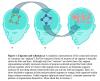
This is a very long and very detailed article (50 page PDF) arguing the following: "we explain how underuse of the brain's declarative and procedural memory systems undermines reasoning, impedes learning, and diminishes productivity. We critique contemporary pedagogical models that downplay memorization and basic knowledge, showing how these trends erode long-term fluency and mental flexibility." Now my own reaction is one of scepticism (especially in the use of terms like 'engram' and 'manifold', and even in the distinction between procedural and declarative memory (though I asked ChatGPT about this and it said the distinction is well-founded)). It should definitely be passed along because it's quite the summary of the argument, though I would be interested in what people with greater experience in actual neuroscience would have to say about it. The paper is dated from last May but was referenced by Graham Attwell today.
Web: [Direct Link] [This Post][Share]
5 tech predictions for 2026 and beyond, according to Amazon CTO Dr. Werner Vogels
Amazon Staff,
Amazon,
2025/12/03

The content of this article is attributed to Amazon's Chief Technology Officer (CTO) which makes it relevant to read. Other than that, it is laughably bad. "Our Astro team has documented people building genuine relationships with companion robots," write the ghost writers. "Developers who thrive in this AI-augmented world must become modern polymaths." And education? Citing Khan Academy as evidence, the authors write "for most of human history only the wealthy could afford a personal tutor. That's about to change." But somehow, teachers are not going away, which raises the question, what will they do? Become polymaths? Vogel's own version of the article on his website is much better, but still carries the same messages. "For adults, AI is a tool. For Generation Alpha, it's an extension of thinking. They've deleted "impossible" from their operating system and replaced it with 'not yet.'"
Web: [Direct Link] [This Post][Share]
Major AI conference flooded with peer reviews written fully by AI
Miryam Naddaf,
Nature,
2025/12/03

This article reports on an an analysis posted online by Pangram Labs that found around 21% of next year's International Conference on Learning Representations (ICLR) "peer reviews were fully AI-generated, and more than half contained signs of AI use... Among other things, they flagged hallucinated citations and suspiciously long and vague feedback on their work." It doesn't help that "many manuscripts that had been submitted to the conference with suspected cases of AI-generated text: 199 manuscripts (1%) were found to be fully AI-generated; 61% of submissions were mostly human-written; but 9% contained more than 50% AI-generated text." People may be quick to blame AI, which is fair, but I think we need to ask questions about the incentives at work and the ethics on display - especially as these same authors and reviewers are those teaching today's students. (This is one of those articles where enough content is posted online to attract reposters and search engines, but where the last six paragraphs are behind the paywall).
Web: [Direct Link] [This Post][Share]
L’IA au cœur du nouvel écosystème de communication
Pierre Levy,
Pierre Levy's Blog,
2025/12/03
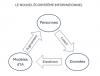
If you don't speak French you'll want to translate this item, but it's worth the effort. The headline says "AI at the heart of a new communications ecosystem". What does that mean? Pierre Levy writes (translated by Firefox "I invite my readers to stop considering AI models in isolation. In reality, they cannot be separated from the information ecosystem to which they belong and depend. This ecosystem can be described as a three-station circuit: people, data and models," thus leading to a point at the heart of my own thinking on the subject, "Once this point is acquired, it is clear that ethical problems cannot be limited to models but that they must extend to the creation of the data that drives them, that is to say to all of our online behavior."
Web: [Direct Link] [This Post][Share]
The Testing Effect: Why Retrieval Practice is Your Most Powerful Learning Tool
Mike Taylor,
2025/12/03

The problem to my mind with an article like this is that it sets up a straw man in an attempt to bolster (political?) support for one specific practice. In this case, the straw man is the practice of 'rereading' in order to remember a body of content, as opposed to interval-based testing, a.k.a. 'retrieval practice'. I suppose testing will be the best option is (a) your only learning object is to remember a body of content, though not necessarily to understand it, and (b) you have no practical application in which to employ the content other than testing. So why is the drill-and-kill method being proposed here? The applications tell the story: compliance training, CRM-system training, 'quick hits'. Learning where there is no utility or agency on the part of the learner.
Web: [Direct Link] [This Post][Share]
There are many ways to read OLDaily; pick whatever works best for you:
- Read in your web browser on this web page, updated weekdays
- Receive a daily or weekly email newsletter by subscribing here
- Subscribe to the RSS feed using your favourite feed reader
- Follow @OLDaily@mastodon.social on Mastodon or elsewhere in the fediverse
- Follow @OLDaily on Bluesky
- Read OLDaily as a LinkedIn Newsletter
- Integrate the open API using the JSON feed
This newsletter is sent only at the request of subscribers. If you would like to unsubscribe, Click here.
Know a friend who might enjoy this newsletter? Feel free to forward OLDaily to your colleagues. If you received this issue from a friend and would like a free subscription of your own, you can join our mailing list. Click here to subscribe.
Copyright 2025 Stephen Downes Contact: stephen@downes.ca
This work is licensed under a Creative Commons License.