
An Issue...
2025/12/02

Following from the 'future of university' posts here yesterday and today, we have this thread beginning with this post: "An issue we're seeing at all levels of university is that many students are simply refusing to do *anything*. They aren't reading the syllabus, aren't following assignment guidelines, aren't engaging with material, ignoring deadlines. And this might seem like old news, but it truly has ramped up." I don't know how true this is, but if true, is definitely a sign of things changing. Via Johannes Ernst, who comments, "Read this thread by a prof and weep."
Web: [Direct Link] [This Post][Share]
A Critically Informed Conversation with Terry Anderson: Visions on the Next Generation of Online and Distance Education
Aras Bozkurt, Terry Anderson,
Open Praxis,
2025/12/02

There's a bit of a surprise in this interview-style article (6 page PDF) as Terry Anderson says this: "I largely gave up work on the COI model as I found it couldn't really scale beyond the small group, constructivist pedagogical paradigm with in which it was built." He doesn't really see AI standing in: "teacher presence with the role modelling, care, affection and deep content knowledge will likely still be needed and will survive." At the same time, it's a mistake to simply reject AI. "Distance education has always been about access. Therefore, distance teachers and administrators will have to turn our social justice efforts towards insuring equitable and affordable access to the networks and machines of AI enhanced education."
Web: [Direct Link] [This Post][Share]
Is the future of education outside universities?
Annalee Newitz,
New Scientist,
2025/12/02

This article feels a bit overly optimistic, but at the same time I am sympathetic with the core argument, which is that higher education is to be found increasingly outside academic institutions. Professors and academics are taking to the open internet, writes Annalee Newitz, in response to things like funding cuts and limitations in what they can say in class. To quote Karen Attiah, "This is not the time for media literacy or historical knowledge to be held hostage by institutions bending the knee to authoritarianism and fear." This article describes people like Attiah and Abigail Thorn who runs Philosophy Tube. "When the public can't gain access to higher education, Hall suggested, then higher education should come to the public. And that is exactly what educators are doing now." Well, some of them are. A few. Probably not enough. (If you hit New Scientist's 'article limit', try here).
Web: [Direct Link] [This Post][Share]
Generative AI has access to a small slice of human knowledge
Deepak Varuvel Dennison,
Aeon,
2025/12/02

OK, to be clear, I don't believe that the author's father's tumour was cured by the traditional herbal concoction he was taking. My feeling is that, if this medicine really cured cancer, we'd know. But I do take the author's point that AI is missing out when it doesn't include the wide range of human languages - and therefore, human experiences - that exist. My view is essentially this, as stated by Deepak Varuvel Dennison: "I have my doubts about whether Indigenous knowledge truly works as claimed in every case. Especially when influencers and politicians invoke it superficially for likes, views or to exploit identity politics, generating misinformation without sincere enquiry. However, I'm equally wary of letting it disappear." Related: A team of African researchers has unveiled African Next Voices, the largest known AI-ready dataset for African languages.
Web: [Direct Link] [This Post][Share]
Representational Realism and the Problem of Tacit Belief
Eric Schwitzgebel,
The Splintered Mind,
2025/12/02

Does it make sense to treat our beliefs as though they were explicitly represented in the brain? Eric Schwitzgebel offers some arguments that show how this leads to confusion. It's based on what's called 'the problem of tacit belief', where a 'tacit belief' is a belief you have, but which is not explicitly represented (for example, that there are fewer that 2,342,609 beers in the fridge). Representationalists will say that these are derived from 'core beliefs', but what counts as a 'core belief'? "But the distinction has no practical importance, doesn't map onto ordinary patterns of belief attribution, and has no empirical support." Why does this matter? Think of all the (pseudo-)theories of education based on 'belief' as a distinct state of mind or brain. That's why.
Web: [Direct Link] [This Post][Share]
4 ways you can 'role play' with AI
Paul Bradshaw,
Online Journalism Blog,
2025/12/02
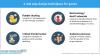
These are techniques trhat are used in design or development workshops to test ideas, and they can be used as well as a way to approach interacting with AI. There's nothing especially new about the idea of using role-play except that your AI can be more flexible in shifting from role to role. Of course, "AI responses can be sycophantic and gullible so use role prompting to give them a sceptical and stricter role." The article goes into each of the fopur roles in some detail and would be a good starter worksheet.
Web: [Direct Link] [This Post][Share]
There are many ways to read OLDaily; pick whatever works best for you:
- Read in your web browser on this web page, updated weekdays
- Receive a daily or weekly email newsletter by subscribing here
- Subscribe to the RSS feed using your favourite feed reader
- Follow @OLDaily@mastodon.social on Mastodon or elsewhere in the fediverse
- Follow @OLDaily on Bluesky
- Read OLDaily as a LinkedIn Newsletter
- Integrate the open API using the JSON feed
This newsletter is sent only at the request of subscribers. If you would like to unsubscribe, Click here.
Know a friend who might enjoy this newsletter? Feel free to forward OLDaily to your colleagues. If you received this issue from a friend and would like a free subscription of your own, you can join our mailing list. Click here to subscribe.
Copyright 2025 Stephen Downes Contact: stephen@downes.ca
This work is licensed under a Creative Commons License.